1. Differences in Working Mechanisms
| Parameter |
Pressure Filtration |
Vacuum Filtration |
| Basic Principle |
Oil is pressurized by a pump and passed through filter elements, filter paper, or adsorption media. |
Heated oil forms a thin film or atomized state in a vacuum chamber, where moisture and gases are vaporized and removed under low pressure, combined with fine filtration. |
| Primary Removal Targets |
Solid contaminants; can handle some free water when equipped with water-absorbing filter elements. |
Solid contaminants, free water, emulsified water, dissolved water, free gases, and dissolved gases. |
| Effect on Dissolved Water |
Limited |
Significant |
| Effect on Dissolved Gases |
Essentially ineffective |
Effective in degassing and reducing gas content. |
| Improvement in Dielectric Strength |
Mainly from particle removal; limited by moisture and gas content. |
Generally more pronounced, as it simultaneously dehydrates, degasses, and removes particulates. |
| Equipment & Operation |
Simple structure, high processing flow rate, low initial investment. |
Requires vacuum system, heating, and sealing controls; more demanding process requirements. |
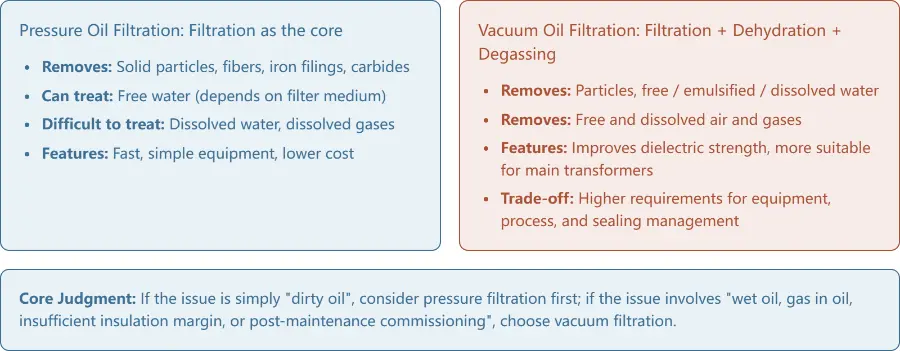
The essence of pressure filtration is mechanical interception or adsorption; vacuum filtration, on the other hand, leverages reduced absolute pressure to lower the vaporization conditions for water and gases, thereby separating them from the oil. These are therefore not equivalent treatment methods.
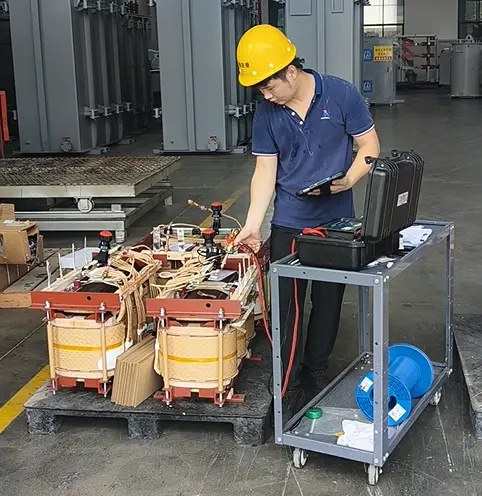
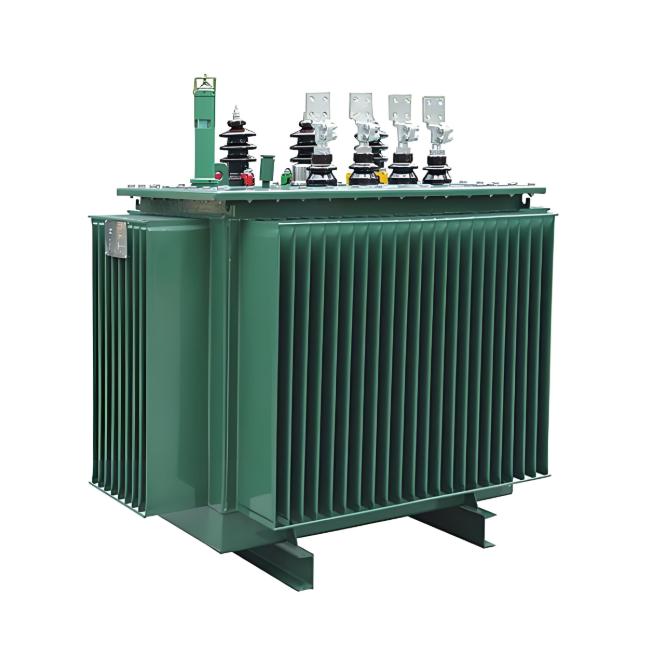
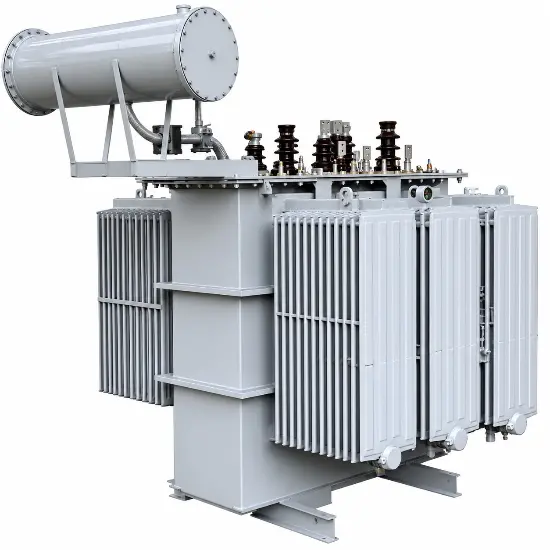
Rockwill Oil-Immersed Transformer – Factory Test in Progress
Rockwill Technical Perspective: Rockwill transformers are subjected to vacuum drying and vacuum oil filling per IEC 60076 before leaving the factory, ensuring an excellent initial insulation system condition. On this basis, the on-site filtration process should aim to "maintain this initial state" rather than "remedy" a deteriorated state. Rockwill provides users with clear reference benchmarks for oil quality indicators, facilitating rapid on-site deviation assessment.
2. When to Use Pressure Filtration
Suitable for the following situations:
-
Receiving, storing, or transferring new oil
Focuses on intercepting particulate contaminants introduced by transportation, storage tanks, and piping.
-
Routine cleanliness maintenance of in-service oil
Oil samples indicate that particulate, fibrous, or carbonaceous solids are the primary issue, while moisture and gas parameters remain normal.
-
Online bypass purification
For continuous cleanliness maintenance on equipment that cannot be taken offline; note that flow rates and oil sampling/return points should avoid disturbing settled deposits inside the tank.
-
Pre-filtration before vacuum treatment
Reducing the contaminant load beforehand minimizes the risk of clogging the fine filters in the vacuum unit, improving continuous operational stability.
Do not treat pressure filtration as a "recovery measure" for moisture-contaminated oil. Even if the oil appears clear to the naked eye, dissolved water may still be present; this moisture significantly affects the electrical performance of the insulating medium and can migrate into paper insulation.
Rockwill Practical Recommendation: Rockwill recommends routine particle contamination testing (e.g., NAS or ISO cleanliness levels) before transformer commissioning and during regular service as a scientific basis for determining the need for pressure filtration. Rockwill provides cleanliness benchmark values and standardized sampling procedures to help maintenance personnel establish a standardized monitoring workflow.
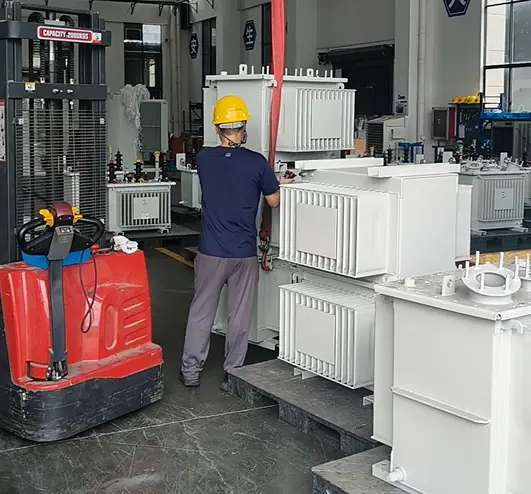
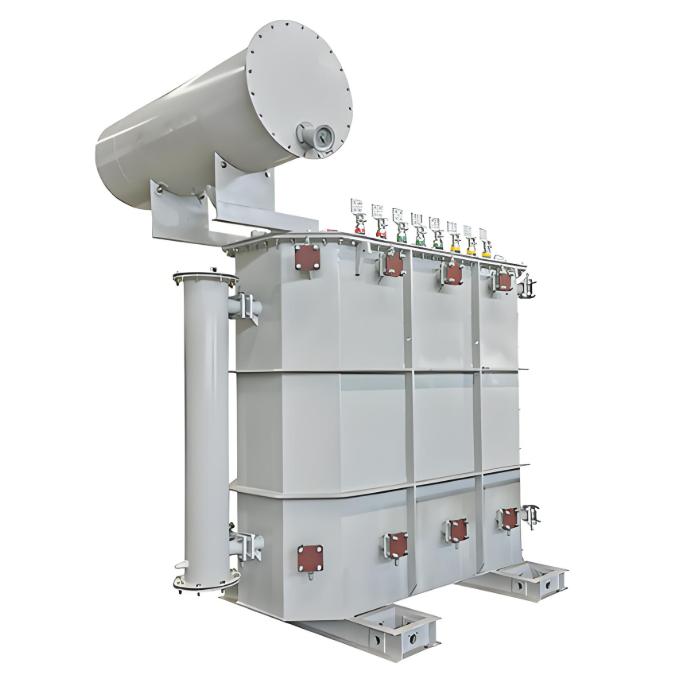
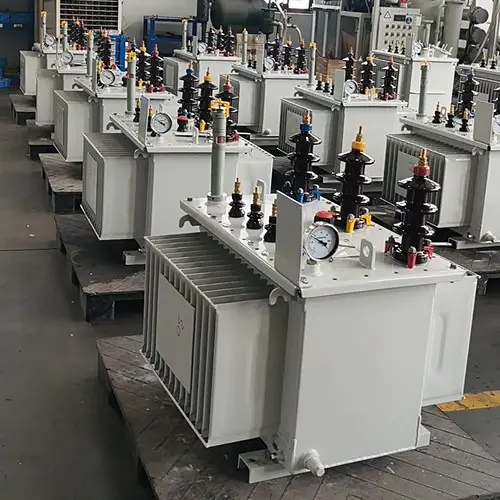
Rockwill Oil-Immersed Transformer – Assembly View
3. When to Use Vacuum Filtration
Priority should be given in the following scenarios:
-
Elevated moisture content in the oil or decreased breakdown voltage
Especially for equipment in humid environments, with failed breathers, seal leaks, prolonged shutdowns, or after maintenance involving cover removal.
-
Post-maintenance oil filling, oil replenishment, and pre-commissioning treatment
After replacing bushings, tap-changer overhauls, tank lifting, or manhole opening, vacuum dehydration and degassing are essential to reduce the risk of moisture and air ingress into the oil and insulation system.
-
Main transformers, high-voltage-class, or mission-critical equipment
Such equipment has higher insulation margin requirements and is more sensitive to moisture and gas content with respect to partial discharge, dielectric loss, and breakdown risk.
-
Abnormal dissolved gas analysis (DGA) results, after excluding fault gas sources
Vacuum degassing can remove residual air and some dissolved gases from the oil; however, it is not a substitute for fault diagnosis. If gas analysis indicates thermal faults, arcing, or partial discharge characteristics, the root cause must be investigated first.
-
When improvement in the dielectric properties of the oil is required
High-vacuum processes typically achieve simultaneous dehydration, degassing, and fine filtration; published equipment data also define their function as removing free/emulsified/dissolved water, free/dissolved gases, and particulates, thereby improving dielectric performance.
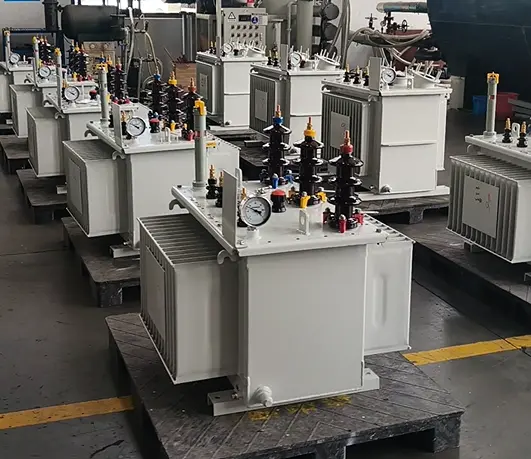
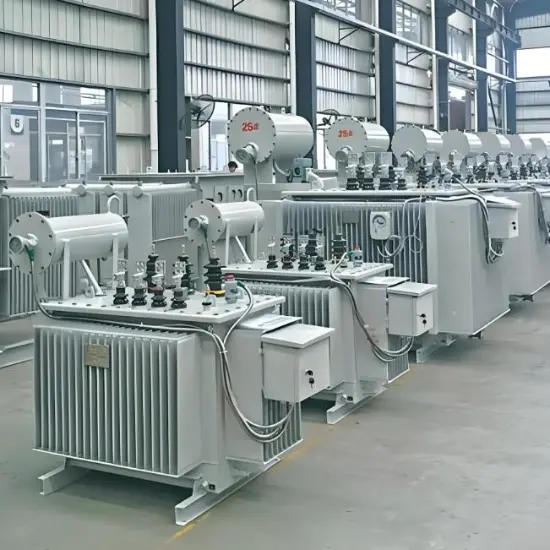
Rockwill Oil-Immersed Transformer – Factory Floor View
Rockwill Product Assurance: Rockwill transformers incorporate high-performance seals and anti-clogging breather designs, effectively reducing the risk of external moisture and air ingress into the tank, thereby minimizing the probability of moisture and gas intrusion during operation from the equipment side. Even if on-site vacuum treatment is required, Rockwill's sealing structure is designed with adequate negative-pressure tolerance under vacuum conditions, avoiding additional stress damage to the tank and accessories during filtration.
4. On-Site Selection Recommendations
Choose pressure filtration when:
-
The oil issue is primarily particle contamination;
-
Moisture content, breakdown voltage, dielectric loss, and gas levels are all normal or near-normal;
-
The goal is routine maintenance, oil transfer, pre-filtration, or online bypass cleaning;
-
The equipment does not have the provisions or permits for vacuum processing.
Choose vacuum filtration when:
-
Oil samples indicate elevated moisture, reduced breakdown voltage, or high gas content;
-
The equipment has undergone cover opening, tank lifting, component replacement, prolonged exposure, or has a risk of water ingress;
-
The equipment is a main transformer, step-up transformer, or critical distribution transformer;
-
The goal is not merely "filtering clean" but restoring the oil's function as an insulating and cooling medium.
Rockwill Selection Support: Rockwill provides comprehensive pre-service diagnostic services, assisting users in determining the optimal filtration plan based on oil test reports—addressing key factors such as "whether filtration is needed, which method to choose, target treatment indicators, and estimated processing time"—thus avoiding the uncertainty of on-site decisions based on experience alone.
5. Common Misconceptions
-
"If the oil looks clear, vacuum filtration is unnecessary."
Incorrect. Clarity only indicates that visible particles and emulsification may not be severe; it does not confirm that dissolved water and dissolved gases are within acceptable limits.
-
"One vacuum filtration cycle can fully resolve insulation moisture."
Not necessarily. Oil dehydration proceeds faster than paper insulation dehydration. If the paper insulation is deeply moistened, simple vacuum oil circulation may only provide temporary improvement in the oil sample; combined measures such as hot oil circulation and in-tank vacuum drying may be required.
-
"If gas levels are abnormal, just degas the oil."
Diagnosis should not be postponed until after treatment. Degassing may mask subsequent DGA trends; sample and record data first, and determine whether an internal fault exists.
-
"Higher vacuum and higher temperature are always better."
Not entirely. Control over oil temperature, flow rate, spray/film formation, system sealing, oil return method, and the equipment's permissible negative pressure must all be considered to avoid localized overheating, air ingress, or pressure-related risks to accessories.
Rockwill Training and Standards Delivery: Rockwill offers filtration maintenance technical training for users, covering oil sampling standards, interpretation of test indicators, key operational points for filtration equipment, and safety considerations—helping on-site personnel build a correct understanding of filtration practices, moving from "knowing how to operate" to "understanding why we operate that way."
Recommended Strategy
For routine oil-immersed transformer maintenance, the following approach is recommended:
Oil sampling and diagnostics → Pressure pre-filtration (if needed) → Vacuum dehydration and degassing → Re-testing of oil samples → Decision on whether further drying of the core/insulation is required
In this framework, pressure filtration is a "cleaning" tool, while vacuum filtration is a "restoring insulation integrity" tool. For operating conditions involving high humidity, cold climates, coastal salt spray, or frequent maintenance, vacuum filtration is recommended as a routine deep-maintenance measure for critical equipment, rather than being reserved only for severely deteriorated oil conditions.
Rockwill not only provides high-quality transformer equipment but is also committed to building a full life-cycle service system—from design and manufacturing to operation and maintenance support. Rockwill supports the establishment of oil history databases and trend analysis, helping users proactively identify deterioration trends in insulation performance, precisely plan filtration maintenance intervals, and avoid "over-maintenance" or "under-maintenance," thereby optimizing operational costs while ensuring equipment reliability.
Edited From:Echo

 Login
Login