
Search


Rockwill Earthing Transformer: Complete Comparison of Epoxy Cast Dry-Type vs Oil-Immersed

Rockwill earthing transformer: dry-type vs oil-immersed complete comparison for neutral grounding applications in power systems.

Rockwill
Field: Manufacturing
10Year<
China
Add us on Google
 
In power systems, the earthing transformer plays a critical role by providing an artificial neutral point for ungrounded systems, ensuring safe and stable network operation. Rockwill offers both epoxy cast dry-type and oil-immersed earthing transformers, which differ fundamentally in structure and application. The following comparison covers eight core dimensions.
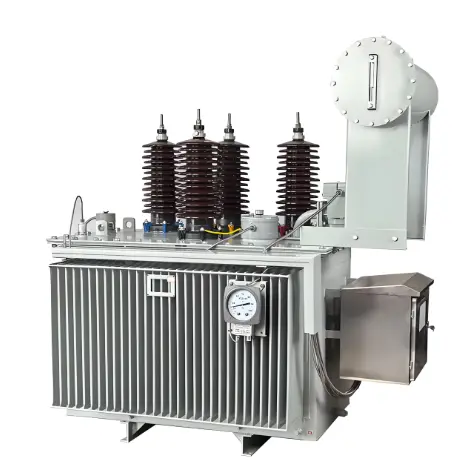
Customization Three - phase 11kV 20kV 22kV 30kV grounding/earthing transformers Original Manufacturer

1. Core Structure and Insulation Principle

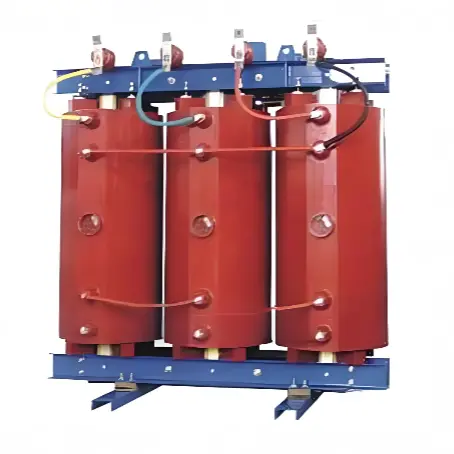
Epoxy cast dry-type: The high-voltage and low-voltage windings and core are tightly encapsulated using high-purity epoxy resin vacuum casting, forming a high-strength solid epoxy insulation body. Air serves as the cooling medium (air natural AN / air forced AF), achieving 100% oil-free operation. It features extremely low partial discharge (PD) levels and excellent short-circuit mechanical strength, compliant with IEC 60076-11.

Three Phase Cast Resin Dry Type Zigzag (Z-Type) Grounding Transformer 35kV 36kV 44kV 66kV

Cast Resin Dry Type Zigzag (Z-Type) Grounding Transformer 

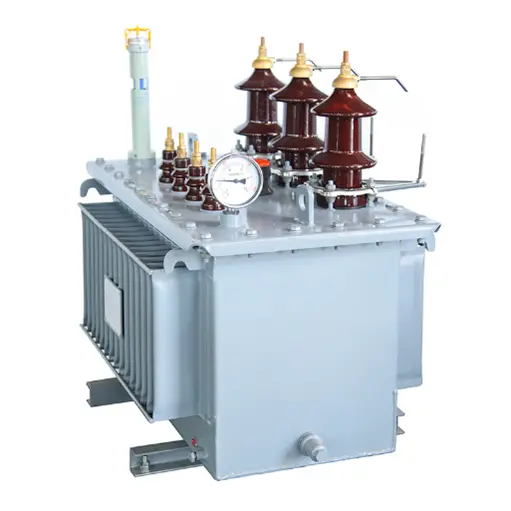
Oil-immersed earthing transformer: Windings and core are fully immersed in mineral insulating oil, which simultaneously provides electrical insulation and heat dissipation. The external assembly includes a sealed tank, conservator (oil expansion tank), Buchholz relay, and cooling system, representing the traditional liquid insulation technical approach, compliant with IEC 60076-1.

2. Fire Safety Performance (Key Selection Differentiator)

Dry-type (intrinsically safe): Epoxy resin offers Class F/H insulation thermal ratings (155 °C / 180 °C). The material itself is flame-retardant and self-extinguishing, with no risk of oil leakage, explosion, or fire. It is especially suited for indoor substations, underground tunnels, subways, data centers, hospitals, and other densely occupied or enclosed spaces.

Oil-immersed (requires passive protection): Insulating oil is combustible. Internal short-circuit faults present risks of oil ejection and fire. Generally recommended only for outdoor open-type substations. When installed indoors, mandatory fire protection measures such as firewalls and oil collection pits must be provided.

3. Installation Environment and Site Adaptability

Dry-type (space-friendly): Compact size, light weight, no need for oil pits or firewalls. Can be installed close to load centers or arranged densely against walls, significantly reducing civil works costs. For harsh environments such as high altitude or salt spray, custom protective coatings and stainless steel enclosures are available.

Oil-immersed (site-constrained): Heavier and bulkier equipment requiring independent foundations and oil pits, occupying more space. In underground spaces or retrofit projects, civil works costs are often very high.

4. Maintenance Difficulty and Total Cost of Ownership (TCO)

Dry-type (low maintenance, high initial cost): Oil-free system eliminates the need for oil sampling, dissolved gas analysis, and oil filtration. Routine inspection is limited to visual checks and temperature monitoring, resulting in very low long-term maintenance costs. However, initial procurement cost is typically 20%–40% higher than a comparable oil-immersed unit. If the cast resin layer is internally damaged, repair is difficult and usually requires factory return.

Oil-immersed (high maintenance, low initial cost): Lower initial procurement cost but requires periodic oil quality testing, seal and desiccant replacement, and is prone to oil leakage. The advantage lies in field repairability — winding faults can be addressed through core lifting for on-site repair.

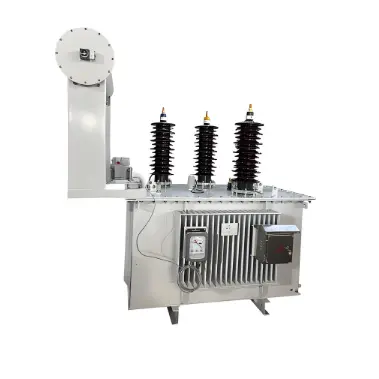
Customization 15kV 30kV 33kV 34.5kV 36kV Three Phase Neutral Grounding/earthing Transformer direct supply

Three Phase Neutral Grounding/earthing Transformer 

5. Electrical Performance and Operating Conditions

Heat dissipation and overload: Oil-immersed transformers offer higher heat dissipation efficiency and greater short-time earth fault current withstand capability, making them suitable for high-capacity, long-duration single-phase-to-earth fault conditions. Dry-type transformers rely on forced air cooling (AF) under earth fault conditions; prolonged operation under such conditions results in a higher temperature rise, requiring attention to the risk of fan failure leading to overtemperature.

Partial discharge and noise: The vacuum casting process gives dry-type transformers excellent partial discharge control, making them suitable for overvoltage-sensitive urban cable distribution networks. Oil-immersed transformers offer greater insulation margin at high capacity and high voltage ratings. Regarding noise: dry-type transformers under forced air cooling (AF) generate fan-dominated noise (high frequency), while under natural cooling (AN) their noise level is comparable to oil-immersed types. Oil-immersed transformer noise is primarily core vibration (low frequency).

6. Environmental Compliance and Service Life

Environmental performance: Dry-type transformers present no oil leakage risk and no hazardous waste disposal burden, making them the preferred choice for green buildings and urban environmental projects. Oil-immersed transformers carry the risk of oil leakage contaminating soil and groundwater, and waste oil must be disposed of as hazardous waste.

Service life: Under normal operating conditions, both types have a design life of 20–30 years. In humid underground environments, properly protected dry-type transformers offer more stable long-term life. In outdoor exposure environments, oil-immersed transformer seals are more prone to aging.

7. Zero-Sequence Impedance Characteristics

Zero-sequence impedance is the defining parameter that distinguishes an earthing transformer from a standard power transformer, directly determining fault current magnitude and protection coordination accuracy.

Dry-type: The epoxy casting process provides fixed winding spacing and uniform insulation, resulting in consistent zero-sequence impedance with high temperature stability. This suits applications requiring strict zero-sequence impedance accuracy for protection coordination. However, its zero-sequence impedance is typically slightly higher than a comparable oil-immersed unit, which must be accounted for in design.

Epoxy Resin Cast Dry-Type Earthing/grounding Transformer 30kV 34.5kV 35kV

Epoxy Resin Cast Dry-Type Earthing/grounding Transformer 

Oil-immersed: Under oil-paper insulation, zero-sequence impedance is more influenced by oil temperature and flow conditions. However, in high-capacity designs, lower zero-sequence impedance can be achieved through optimized core cross-section and winding arrangement, meeting the high-current requirements of long-duration earth faults. Note that rising oil temperature may cause zero-sequence impedance drift, affecting protection setting accuracy.

8. Accessories and Online Monitoring Capability

The accessory configuration of an earthing transformer directly affects maintenance efficiency and fault warning capability.

Dry-type: Standard includes PT100 platinum resistance temperature sensors and an intelligent temperature controller (automatic fan start/stop, overtemperature alarm/trip). Optional additions include partial discharge (PD) online monitoring, core earthing current monitoring, and winding hotspot temperature monitoring. Data is transmitted via RS485 / Modbus protocol to the station monitoring system for remote inspection and condition assessment.

Oil-immersed: Standard includes Buchholz relay (gas alarm / trip), oil level gauge, oil temperature gauge, pressure relief device, and breather. Optional additions include dissolved gas analysis (DGA), online moisture monitoring, and bushing dielectric loss monitoring, enabling condition assessment and fault warning for the oil-paper insulation system.

Summary

The epoxy cast dry-type and oil-immersed earthing transformers are not substitutes but complementary solutions for different application scenarios:

  • Choose dry-type when installation space is limited, fire protection requirements are strict, maintenance resources are scarce, or the project is located indoors, underground, or in environmentally sensitive areas. Its intrinsically safe, low-maintenance, compact design significantly reduces total cost of ownership.
  • Choose oil-immersed when the project is in an outdoor open area, requires high capacity, involves long-duration single-phase-to-earth faults, or has a limited initial budget with a professional maintenance team. Oil-immersed transformers offer lower procurement cost and proven field repairability.

The core of the selection lies in matching the specific project's installation environment, fire protection class, zero-sequence impedance requirements, load characteristics, and maintenance capability. Rockwill offers both technology routes, ensuring safe and reliable neutral point earthing protection for power systems across all application scenarios.

Edited From:Echo

Give a tip and encourage the author!
Related Products

Comments

Share your question or perspective
WhatsApp
Send inquiry
+86
Click to upload file
Download
Get the IEE Business Application
Use the IEE-Business app to find equipment, obtain solutions, connect with experts, and participate in industry collaboration anytime, anywhere—fully supporting the development of your power projects and business.
Login
or continue with
New here?
Register








