Transmission lines and distribution lines are both used to carry electrical power from one location to another. However, they differ significantly in key aspects such as primary function, voltage levels, phase configuration, and conductor placement. These differences are essential for understanding their distinct roles in the power system.
The Difference Between Transmission and Distribution Line is given below in the tabulated form.
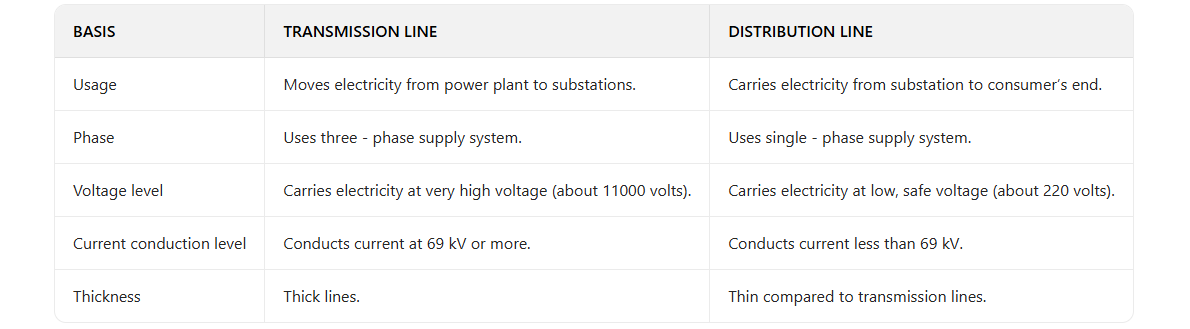
Electricity generation is a critical component of the power system, but equally important is how this electricity is delivered—from power plants to substations, and ultimately to end consumers. This vital process is accomplished through transmission and distribution lines.
Transmission lines are high-voltage circuits that transport large amounts of electrical power over long distances from power plants to substations. At the substations, voltage is stepped down for safe distribution. Distribution lines, operating at lower voltages, then deliver the electricity from the substations to homes, businesses, and other end users for residential, commercial, and industrial use.

 Login
Login