• Product
  • Suppliers
  • Manufacturers
  • Solutions
  • Free tools
  • Knowledges
  • Experts
  • Communities
Search


Free Expert Guides on Power Systems, Circuit Design & Electrical Troubleshooting

Access free engineering resources from IEE Business—covering power design, circuit layout, equipment selection, and troubleshooting. Expert-developed guides help engineers, procurement, and project teams make better decisions. Stay ahead on smart grids, renewables, efficiency, and AI tools. Improve reliability, reduce downtime, and enhance outcomes with real-world solutions. Explore our knowledge hub today.
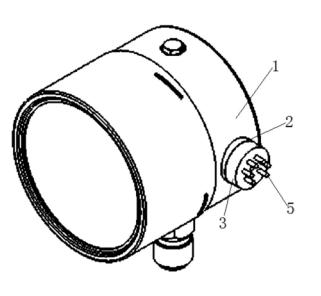
Sealing Structure for Oil-Filled SF6 Gas Density Relay Contact Lead Wires
I. CLAIMS A sealing structure for lead wires of contacts in an oil-filled SF6 gas density relay, characterized by comprising a relay housing (1) and a terminal base (2); the terminal base (2) comprising a terminal base housing (3), a terminal base seat (4), and conductive pins (5); the terminal base seat (4) being disposed inside the terminal base housing (3), the terminal base housing (3) being welded onto the surface of the relay housing (1); a central through-hole (6) being provided at the ce
10/27/2025
Consult
Tip
Consult
Tip
SF6 Density Relay Oil Leakage: Causes, Risks & Oil-Free Solutions
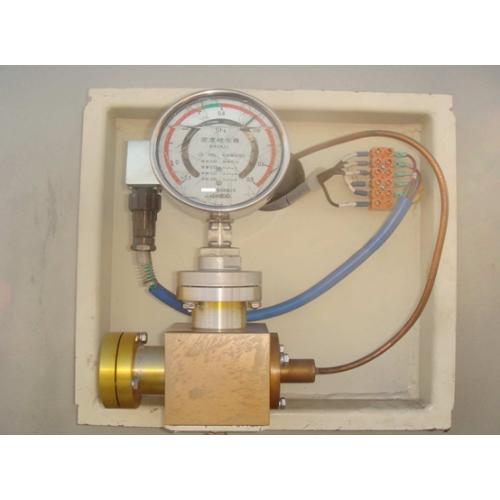
1. Introduction SF6 electrical equipment, renowned for its excellent arc-quenching and insulating properties, has been widely applied in power systems. To ensure safe operation, real-time monitoring of SF6 gas density is essential. Currently, mechanical pointer-type density relays are commonly used, providing functions such as alarm, lockout, and on-site display. To enhance vibration resistance, most of these relays are filled internally with silicone oil.However, oil leakage from density relays
10/27/2025
Consult
Tip
Consult
Tip
On-Site Testing of SF6 Gas Density Relays: Relevant Issues
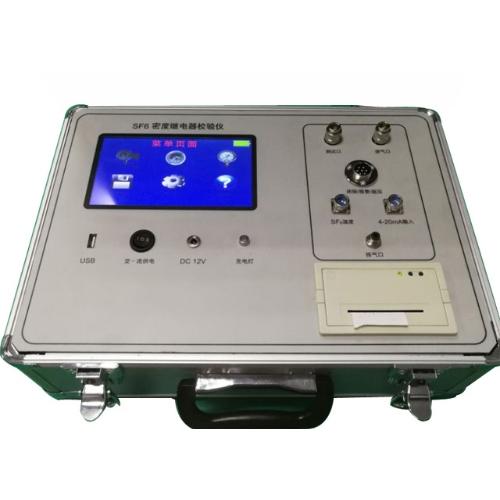
IntroductionSF6 gas is widely used as an insulating and arc-quenching medium in high-voltage and extra-high-voltage electrical equipment due to its excellent insulation, arc-extinguishing properties, and chemical stability. The insulation strength and arc-quenching capability of electrical equipment depend on the density of SF6 gas. A decrease in SF6 gas density can lead to two main hazards: Reduced dielectric strength of the equipment; Decreased interrupting capacity of circuit breakers.Additio
10/27/2025
Consult
Tip
Consult
Tip
Send inquiry
+86
Click to upload file
Download
Get the IEE Business Application
Use the IEE-Business app to find equipment, obtain solutions, connect with experts, and participate in industry collaboration anytime, anywhere—fully supporting the development of your power projects and business.