• Product
  • Suppliers
  • Manufacturers
  • Solutions
  • Free tools
  • Knowledges
  • Experts
  • Communities
Search


Free Expert Guides on Power Systems, Circuit Design & Electrical Troubleshooting

Access free engineering resources from IEE Business—covering power design, circuit layout, equipment selection, and troubleshooting. Expert-developed guides help engineers, procurement, and project teams make better decisions. Stay ahead on smart grids, renewables, efficiency, and AI tools. Improve reliability, reduce downtime, and enhance outcomes with real-world solutions. Explore our knowledge hub today.
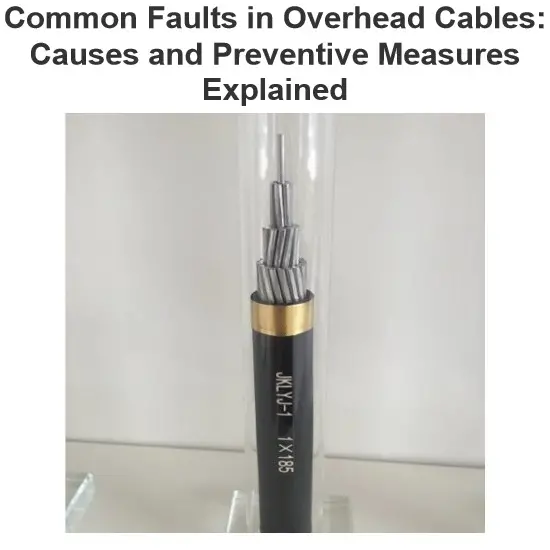
Common Faults in Overhead Cables: Causes and Preventive Measures Explained
Overhead cables, due to their exposure to external environments, are subject to various influences that can lead to different types of faults. Below are some common types of faults in overhead cables and their causes:1. Mechanical Damage Caused by external forces such as falling trees, vehicle collisions, or construction accidents. Prolonged vibrations or swinging can also cause material fatigue in cables.2. Weather-Related Faults Lightning Strikes: Direct hits or nearby lightning strikes can ca
07/29/2025
Consult
Tip
Consult
Tip
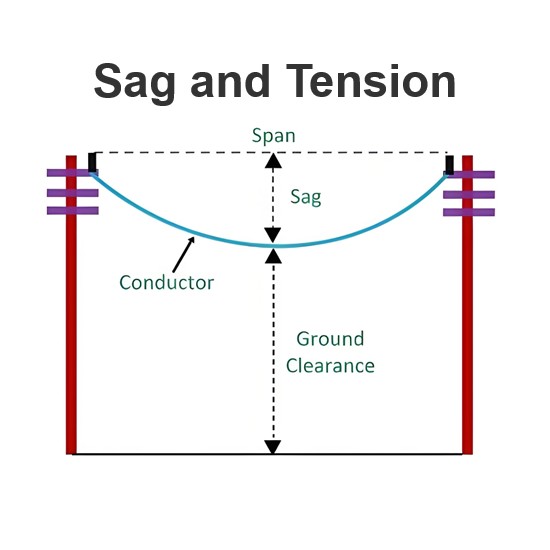
Sag and Tension
For safety purpose, the ground clearance of the conductors at maximum temperature and minimum loading condition should be maintained. Analysis of the sag and tension is important in the transmission line for the continuity and quality of electrical services. If the tension of the conductor is increased beyond the limit, it may get broken, and the power transmission of the system get erupt.The dip of the conductor between the two level supports is called sag. In other words, the vertical distance
05/13/2025
Consult
Tip
Consult
Tip
Why are Overhead Power Lines Loose on Electric Poles & Towers?
Why are Overhead Power Lines Loose on Utility Poles and Transmission Towers?In today's era of rapid technological advancement, the transportation of people, goods, and services has become significantly easier. Geographical distance is no longer a formidable obstacle. Just as these tangible entities can be efficiently conveyed over long distances, electricity also needs to be transmitted far and wide. However, unlike physical goods, electricity requires a medium for its journey.You may have frequ
05/05/2025
Consult
Tip
Consult
Tip
What is the classification of a transmission line?
Classification of Transmission LinesTransmission lines are facilities used in power systems to transmit electrical energy generated by power plants to substations or end-users. Depending on different criteria, transmission lines can be classified in various ways. Below are the main classifications of transmission lines based on key standards:1. Classification by Voltage LevelTransmission lines are typically categorized by their operating voltage as follows: High Voltage Transmission Lines (HV):
12/05/2024
Consult
Tip
Consult
Tip
What are high-voltage power cables and the key features of high voltage power cables?
A high-voltage power cable is a type of cable used for transmitting and distributing high-voltage electrical energy, typically in power transmission and distribution networks. The design and manufacturing of high-voltage power cables must meet strict standards to ensure safe and reliable operation under high voltage and high current conditions. Here are the main features of high-voltage power cables:1. Complex Structure Conductor: Usually composed of multiple strands of copper or aluminum wire t
11/26/2024
Consult
Tip
Consult
Tip
How does changing the size of a wire in an electrical circuit affect the current?
Changing the thickness of wires in a circuit can have a significant impact on the current, which is reflected in several aspects:1. Resistance changeThe thickness of a wire directly affects its resistance. According to Ohm's Law, resistance is directly proportional to the length of the conductor and inversely proportional to its cross-sectional area. Therefore, thinner wires have higher resistance, while thicker wires have lower resistance.2. Power LossDue to the presence of resistance, when cur
11/26/2024
Consult
Tip
Consult
Tip
Does the cable tail protection block autorecloser?
The relationship between the tail protection of the cable and the automatic reclosing.The problem of reclosing in cable line protectionIn cable line protection, the application of automatic reclosing has certain limitations. Automatic reclosing is usually used for overhead line transmission and power supply lines as an effective accident prevention measure. However, for cable lines, due to their characteristics, the application of automatic reclosing is not common.The characteristics of cable li
10/26/2024
Consult
Tip
Consult
Tip
What type of cable can be used to supply electricity to the consumer using overhead?
The following types of cables can mainly be used to supply power to consumers through overhead cables:I. Overhead insulated conductorsCharacteristicsOverhead insulated conductors are based on traditional overhead bare conductors and have an insulating layer added. This insulating layer is usually made of materials such as polyethylene or cross-linked polyethylene and has good insulating properties and weather resistance.Compared with overhead bare conductors, overhead insulated conductors can ef
10/19/2024
Consult
Tip
Consult
Tip
Is it necessary to adjust the wire size when the supply voltage is increased?
Whether to adjust the wire diameter when the power supply voltage increasesWhen the supply voltage increases, the need to adjust the wire diameter depends on a number of factors, including the original design of the line, the load requirements, and the specific circumstances of the voltage increase. Here's an analysis based on search results:Factors affecting wire diameterLine loss problemToo small power supply line diameter will lead to increased line resistance, increase the loss of electrical
10/09/2024
Consult
Tip
Consult
Tip
What is the reason for using low voltage to transmit power and high voltage in our homes?
Why low-voltage transmission for household electricityHousehold electricity is usually used low-voltage transmission, rather than high-voltage transmission, mainly for the following reasons: Safety considerations: The voltage of the home electricity is low (usually 220 volts), and this voltage is designed to ensure the safety of the user. While high-voltage transmission can reduce line losses, it also brings higher risks, such as the possibility of electric shock. Low-voltage transmission reduce
10/09/2024
Consult
Tip
Consult
Tip
Send inquiry
+86
Click to upload file
Download
Get the IEE Business Application
Use the IEE-Business app to find equipment, obtain solutions, connect with experts, and participate in industry collaboration anytime, anywhere—fully supporting the development of your power projects and business.