• Product
  • Suppliers
  • Manufacturers
  • Solutions
  • Free tools
  • Knowledges
  • Experts
  • Communities
Search


Free Expert Guides on Power Systems, Circuit Design & Electrical Troubleshooting

Access free engineering resources from IEE Business—covering power design, circuit layout, equipment selection, and troubleshooting. Expert-developed guides help engineers, procurement, and project teams make better decisions. Stay ahead on smart grids, renewables, efficiency, and AI tools. Improve reliability, reduce downtime, and enhance outcomes with real-world solutions. Explore our knowledge hub today.
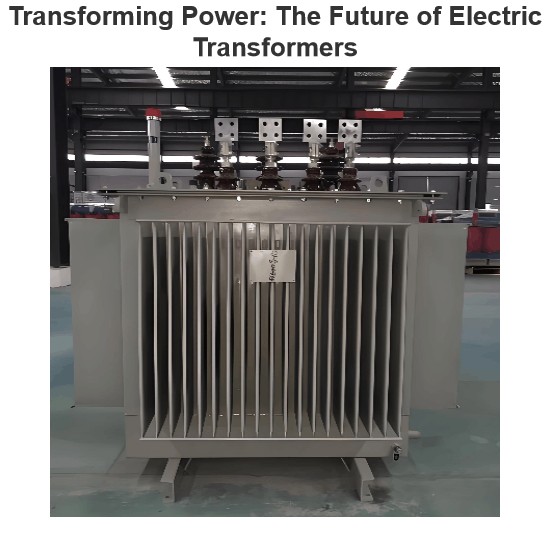
Transforming Power: The Future of Electric Transformers
Transformers are the "unsung heroes" of the modern world. These seemingly unremarkable devices, either hidden on utility poles or installed in substations, play an indispensable role in the power grid system—it is through them that electrical energy can be efficiently converted, transmitted, and utilized. Today, as humanity stands at the crossroads of an accelerating transformation in the energy landscape, recognizing the transformative potential of transformers and exploring how they will shape
09/06/2025
Consult
Tip
Consult
Tip
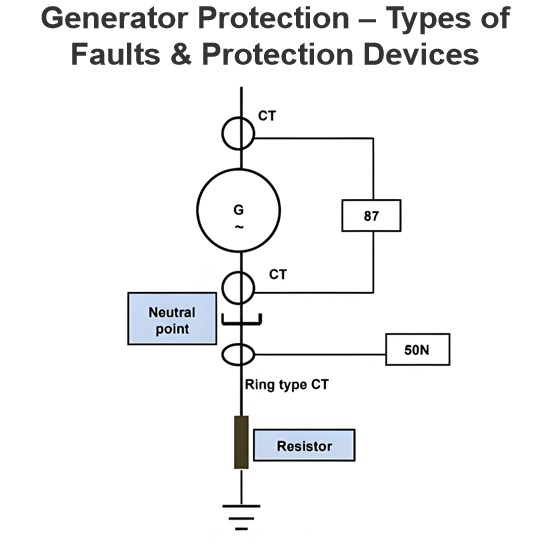
Generator Protection – Types of Faults & Protection Devices
Common Generator Faults and Protection SystemsClassification of Generator FaultsGenerator faults are primarily categorized into internal and external types: Internal Faults: Arise from issues within generator components. External Faults: Stem from abnormal operating conditions or external network issues.Faults in prime movers (e.g., diesel engines, turbines) are mechanical in nature and defined during equipment design, though they must integrate with generator protections for tripping purposes.T
06/05/2025
Consult
Tip
Consult
Tip
Armature Reaction in a DC Generator
Definition and Magnetic Field Effects of Armature ReactionDefinition: Armature reaction fundamentally describes the interaction between the armature magnetic field and the main field, specifically characterizing how the armature flux influences the main field flux. The armature magnetic field is generated by current-carrying armature conductors, while the main field is excited by magnetic poles. The armature flux exerts two primary effects on the main field flux: Distortion of the Main Field: Ar
05/27/2025
Consult
Tip
Consult
Tip
EMF Equation of a Synchronous Generator
Synchronous Generator and EMF Equation DerivationA generator operating at synchronous speed is termed a synchronous generator, which converts mechanical power into electrical energy for grid integration. The derivation of the EMF equation for a synchronous generator is as follows:Notation: P= number of poles ϕ = flux per pole (Weber) N= rotational speed (revolutions per minute, r.p.m) f= frequency (Hertz) Zph = number of series-connected conductors per phase Tph = number of series-connected turn
05/27/2025
Consult
Tip
Consult
Tip
Parallel Operation of the Alternators
Interconnection of Electric Power SystemsThe interconnection of electric power systems is critical for economic efficiency, reliability, and parallel operation. Interconnecting AC power systems requires synchronous generators to operate in parallel, a practice commonly employed in generating stations where two or more generators are connected via transformers and transmission lines, forming a grid-connected network. Under normal operation, all generators and synchronous motors in an interconnect
05/26/2025
Consult
Tip
Consult
Tip
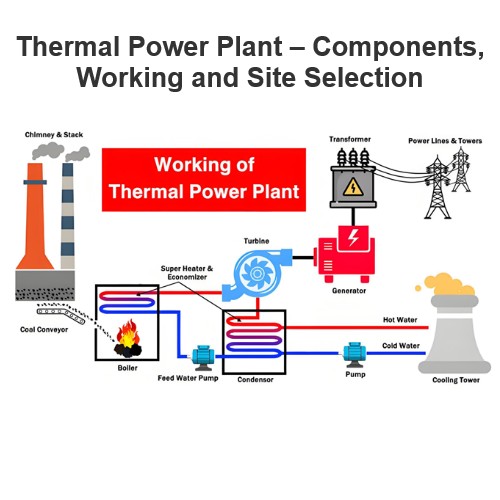
 Thermal Power Plant – Components, Working and Site Selection
What is a Thermal Power Plant?The law of energy conservation states that energy cannot be created or destroyed; rather, it can only be transformed from one form to another. Electrical energy, in particular, can be harnessed from a variety of energy sources. Facilities designed to generate large - scale electrical energy are commonly referred to as power plants or power stations.A thermal power plant is a type of power generation facility that converts heat energy into electrical energy. Heat ene
05/07/2025
Consult
Tip
Consult
Tip
Source short circuit current definition and curves in generator circuit breakers according to IEEE & IEC standard
Rated System - Source Short - Circuit Breaking CurrentThe rated system - source short - circuit breaking current refers to the maximum system - source short - circuit current that occurs at the moment of contact separation. A generator circuit - breaker is required to be able to interrupt this current under the conditions specified in relevant standards. This particular current is observed in a circuit where the power - frequency recovery voltage aligns with the rated voltage of the generator ci
04/25/2025
Consult
Tip
Consult
Tip
Cooling of a Synchronous Generator
Cooling of Synchronous Generators: Methods, Advantages, and LimitationsImportance of CoolingCooling is a critical aspect of synchronous generator operation. Natural cooling mechanisms are insufficient to dissipate the substantial amount of heat generated within alternators. To address this, forced air cooling systems are employed. In such systems, air is actively pushed into the alternator, ensuring a larger volume of air passes over its surfaces, effectively removing a significant amount of hea
04/24/2025
Consult
Tip
Consult
Tip
Verification of time quantities in commissioning test for Generator circuit breaker (GCB) according to IEC/IEEE
Commissioning Tests for Generator Circuit BreakersOnce a Generator circuit breaker has been installed, comprehensive commissioning tests must be conducted. The primary objectives of these tests are to: Ensure that no damage has occurred during transportation and storage. Verify the compatibility of individual components. Confirm that the assembly has been carried out correctly. Validate the proper performance of the fully assembled generator circuit breaker.Verification of Generator Circuit Brea
04/24/2025
Consult
Tip
Consult
Tip
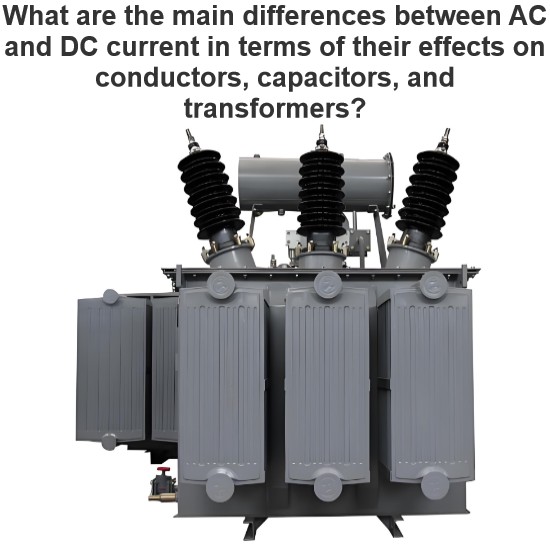
What are the main differences between AC and DC current in terms of their effects on conductors, capacitors, and transformers?
Differences in the Impact of AC and DC on Conductors, Capacitors, and TransformersThe effects of alternating current (AC) and direct current (DC) on conductors, capacitors, and transformers differ significantly, primarily in the following aspects:Impact on Conductors Skin Effect: In AC circuits, due to electromagnetic induction, the current tends to flow near the surface of the conductor, a phenomenon known as the skin effect. This results in a reduced effective cross-sectional area of the condu
02/15/2025
Consult
Tip
Consult
Tip
Send inquiry
+86
Click to upload file
Download
Get the IEE Business Application
Use the IEE-Business app to find equipment, obtain solutions, connect with experts, and participate in industry collaboration anytime, anywhere—fully supporting the development of your power projects and business.