• Product
  • Suppliers
  • Manufacturers
  • Solutions
  • Free tools
  • Knowledges
  • Experts
  • Communities
Search


Free Expert Guides on Power Systems, Circuit Design & Electrical Troubleshooting

Access free engineering resources from IEE Business—covering power design, circuit layout, equipment selection, and troubleshooting. Expert-developed guides help engineers, procurement, and project teams make better decisions. Stay ahead on smart grids, renewables, efficiency, and AI tools. Improve reliability, reduce downtime, and enhance outcomes with real-world solutions. Explore our knowledge hub today.
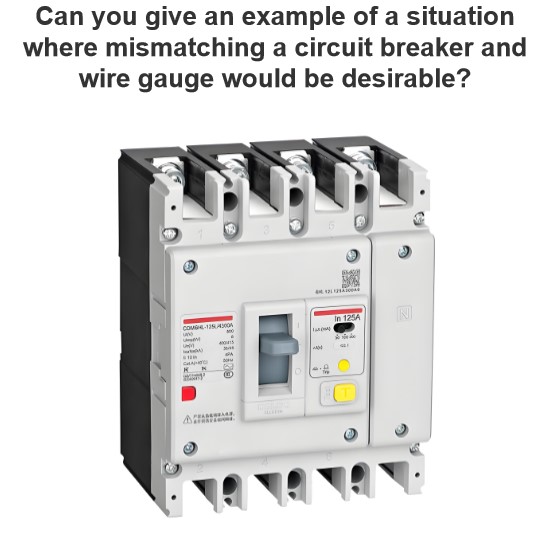
Can you give an example of a situation where mismatching a circuit breaker and wire gauge would be desirable?
Of course. Matching circuit breakers (Circuit Breaker) with wire gauge (Wire Gauge) is crucial to ensure the safety and reliability of an electrical system. When circuit breakers and wire gauges do not match, it can lead to overloads, fires, or other safety issues within the electrical system. Here are examples of situations where circuit breakers and wire gauges do not match:1. Circuit Breaker Rating Less Than Wire RatingScenario DescriptionSuppose a residential circuit uses AWG 12 gauge wire,
10/14/2024
Consult
Tip
Consult
Tip
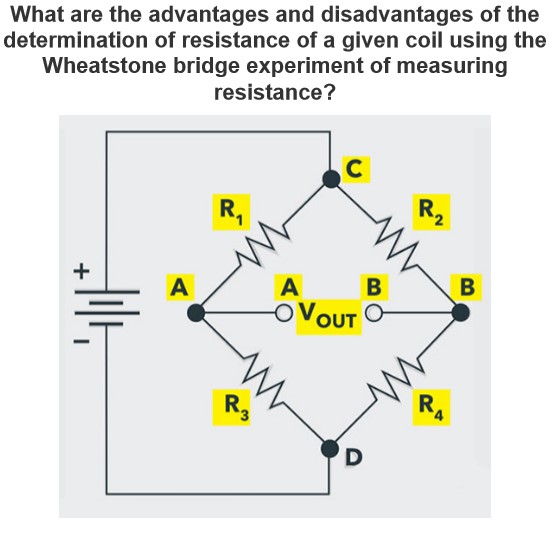
What are the advantages and disadvantages of using Wheatstone bridge to measure resistance experiments?
Advantages and Disadvantages of Measuring the Resistance of a Given Coil with a Wheatstone Bridge1. Advantages(I) High precision and accuracyThe Wheatstone bridge is based on the principle of proportional measurement, measuring by comparing known and unknown resistances (in this case, the unknown resistance is the resistance of the given coil). This method of measurement is highly sensitive to changes in resistance values and can achieve a high degree of measurement accuracy. For example, under
10/12/2024
Consult
Tip
Consult
Tip
Secondary control circuit diagram of isolation switch and ground switch in 110kV combined electric
Secondary control circuit diagram of isolation switch and ground switch in combined electricSP:Limit deviceCX:Closing contactorSFA:selector switchSFB:selector button89KT:Thermal relayTX:Dc switching contactor
Consult
Tip
Consult
Tip
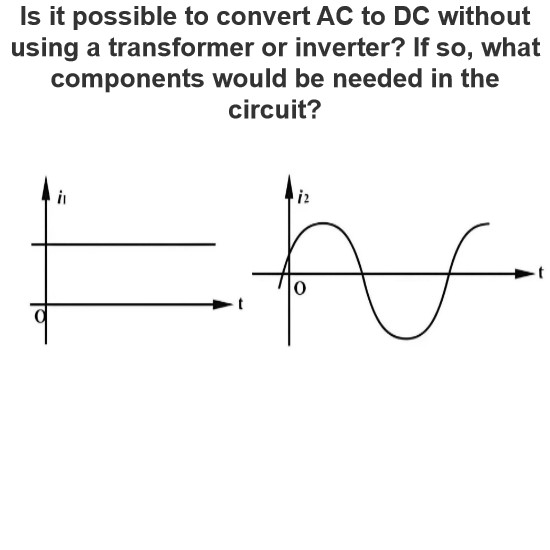
Is it possible to convert AC to DC without using a transformer or inverter? If so, what components would be needed in the circuit?
Converting alternating current (AC) to direct current (DC) is typically achieved using a rectifier (Rectifier). While transformers and inverters play crucial roles in power systems, they are not essential for converting AC to DC. In fact, this conversion can be accomplished with a basic rectifier circuit. Here is how AC can be converted to DC without using transformers or inverters and the main components required in the circuit:1. RectifierA rectifier is a circuit that converts AC to DC. Common
10/12/2024
Consult
Tip
Consult
Tip
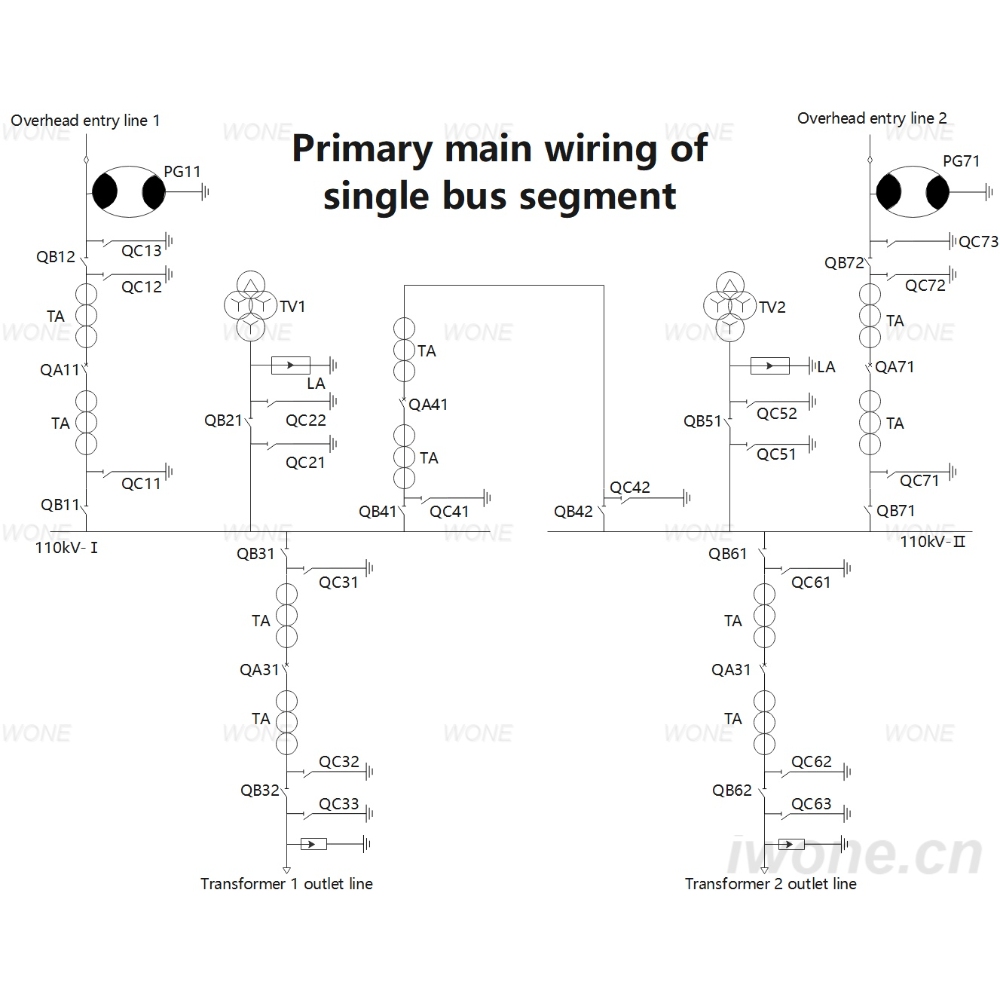
Primary main wiring of 110kV single bus segment
Primary main wiring of single bus segmentTA:Current transformerTV:Voltage transformerPG:Pressure GaugeQA:Circuit breakerQB:Disconnecting switchQC:Ground switch
Consult
Tip
Consult
Tip
The control and signal circuit of the three-out-of-two incoming circuit breaker
The control and signal circuit of the three-out-of-two incoming circuit breakerFU:FuseSFA:change-over switchSFB:change-over buttonKFM:Intermediate relayCBC:Closing coilQA:Travel switchCBO:Opening coilPGR:Red signal lightPGG:Greensignal lightPGW:Whitesignal lightBG1:Circuit breaker hand test positionBG2:Circuit breaker hand working position1-The incoming line isolation cabinet2-Metering cabinet3-Self-disconnecting circuit breaker cabinet
Consult
Tip
Consult
Tip
VD4-12 Spring-operated circuit breaker control, signal circuit(Module operating mechanism)
VD4-12 Spring-operated circuit breaker control, signal circuit(Module operating mechanism)SFA:change-over switchSFB:change-over buttonBB:Thermal relayBT:Temperature measurementMS:Energy storage motorQF:Dc air circuit breakerQC:Ground switchWCC:Wire Connection CenterV:Rectifier bridgeThe inside of the frame is divided into the inside of the circuit breaker car
Consult
Tip
Consult
Tip
VD4-12 Spring-operated circuit breaker control, signal circuit(Traditional operating mechanism)
VD4-12 Spring-operated circuit breaker control, signal circuitSFA:change-over switchSFB:change-over buttonQF:Dc air circuit breakerQC:Ground switchWCC:Wire Connection CenterV:Rectifier bridgeThe inside of the frame is divided into the inside of the circuit breaker car
Consult
Tip
Consult
Tip
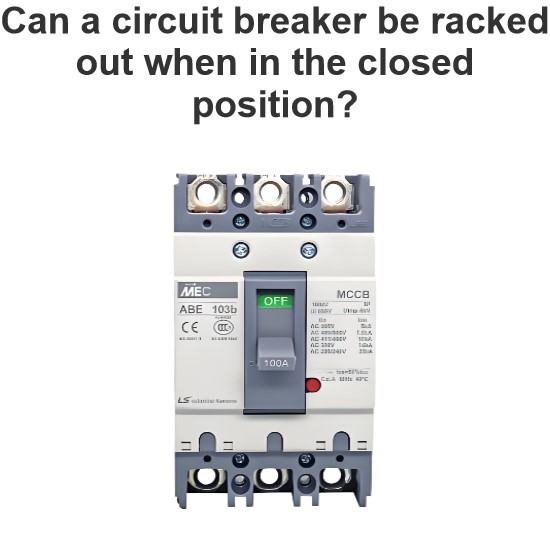
Can a circuit breaker be racked out when in the closed position?
The circuit breaker cannot normally be pulled out directly while in the closed position.First, safety design considerationsPrevent arc hazardsWhen the circuit breaker is in the closed position, current usually passes through the circuit. If the circuit breaker is forcibly pulled out at this time, an electric arc may occur. Arcing is a high-temperature, high-energy discharge phenomenon that can pose a serious burn and electric shock hazard to operators. For example, in high-voltage circuits, the
10/11/2024
Consult
Tip
Consult
Tip
The control and signal circuit of the three-out-of-two section circuit breaker
The control and signal circuit of the three-out-of-two incoming circuit breakerFU:FuseSFA:change-over switchSFB:change-over buttonKFM:Intermediate relayCBC:Closing coilQA:Travel switchCBO:Opening coilPGR:Red signal lightPGG:Greensignal lightPGW:Whitesignal lightBG1:Circuit breaker hand test positionBG2:Circuit breaker hand working position
Consult
Tip
Consult
Tip
Send inquiry
+86
Click to upload file
Download
Get the IEE Business Application
Use the IEE-Business app to find equipment, obtain solutions, connect with experts, and participate in industry collaboration anytime, anywhere—fully supporting the development of your power projects and business.