• Product
  • Suppliers
  • Manufacturers
  • Solutions
  • Free tools
  • Knowledges
  • Experts
  • Communities
Search


Free Expert Guides on Power Systems, Circuit Design & Electrical Troubleshooting

Access free engineering resources from IEE Business—covering power design, circuit layout, equipment selection, and troubleshooting. Expert-developed guides help engineers, procurement, and project teams make better decisions. Stay ahead on smart grids, renewables, efficiency, and AI tools. Improve reliability, reduce downtime, and enhance outcomes with real-world solutions. Explore our knowledge hub today.
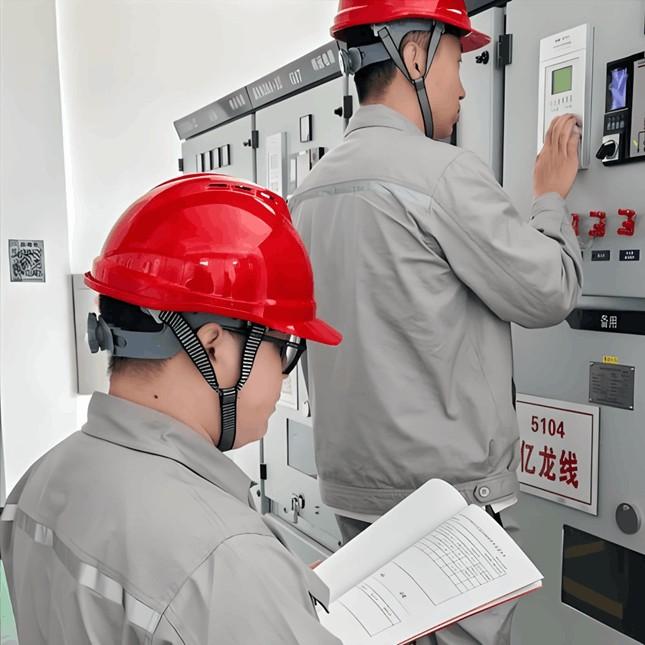
How to improve the operational efficiency and safety of low-voltage distribution networks?
Optimization and Key Considerations for Operation and Maintenance Management of Low-Voltage Distribution NetworksWith the rapid development of China's power industry, operation and maintenance (O&M) management of low-voltage distribution networks has become increasingly important. A low-voltage distribution network refers to the power supply lines between a power transformer and end-user equipment, forming the most fundamental and critical part of the power system. To ensure its normal opera
10/28/2025
Consult
Tip
Consult
Tip
Low-Voltage Distribution Cabinet Maintenance Steps and Safety Guide
Maintenance Procedure for Low-Voltage Power Distribution FacilitiesLow-voltage power distr ibution facilities refer to the infrastructure that delivers electrical power from a power supply room to end-user equipment, typically including distribution cabinets, cables, and wiring. To ensure the normal operation of these facilities and guarantee user safety and power supply quality, regular maintenance and servicing are essential. This article provides a detailed introduction to the maintenance pro
10/28/2025
Consult
Tip
Consult
Tip
Six Key Differences Between Ring Main Units and Switchgear Explained
Differences Between Ring Main Units (RMUs) and SwitchgearIn power systems, both ring main units (RMUs) and switchgear are common distribution equipment, but they differ significantly in function and structure. RMUs are primarily used in ring-fed networks, responsible for power distribution and line protection, with the key feature being multi-source interconnection through a closed-loop ring network. Switchgear, as a more general-purpose distribution device, handles power reception, distribution
10/28/2025
Consult
Tip
Consult
Tip
Designing Reliable 24kV Air & Gas-Insulated Gear
Currently, China's medium-voltage distribution networks predominantly operate at 10kV. With rapid economic development, power loads have surged, increasingly exposing the limitations of the existing power supply methods. Due to the outstanding advantages of 24kV high-voltage switchgear in meeting higher load capacity demands, it has quietly gained traction within the industry. Following the State Grid Corporation's "Notice on Promoting the 20kV Voltage Level," the 20kV voltage class has seen a r
10/28/2025
Consult
Tip
Consult
Tip
SST Technology: Full-Scenario Analysis in Power Generation, Transmission, Distribution, and Consumption
I. Research BackgroundPower System Transformation NeedsChanges in energy structure are placing higher demands on power systems. Traditional power systems are transitioning toward new-generation power systems, with the core differences between them outlined as follows: Dimension Traditional Power System New-Type Power System Technical Foundation Form Mechanical Electromagnetic System Dominated by Synchronous Machines and Power Electronic Equipment Generation-Side Form M
10/28/2025
Consult
Tip
Consult
Tip
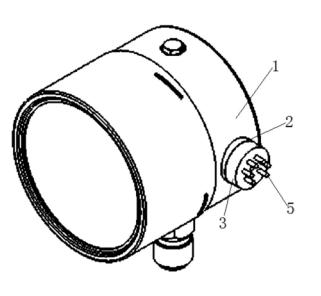
Sealing Structure for Oil-Filled SF6 Gas Density Relay Contact Lead Wires
I. CLAIMS A sealing structure for lead wires of contacts in an oil-filled SF6 gas density relay, characterized by comprising a relay housing (1) and a terminal base (2); the terminal base (2) comprising a terminal base housing (3), a terminal base seat (4), and conductive pins (5); the terminal base seat (4) being disposed inside the terminal base housing (3), the terminal base housing (3) being welded onto the surface of the relay housing (1); a central through-hole (6) being provided at the ce
10/27/2025
Consult
Tip
Consult
Tip
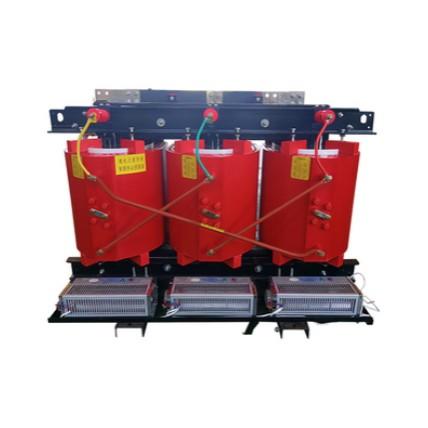
Rectifier vs Power Transformer: Key Differences
Differences Between Rectifier Transformers and Power TransformersRectifier transformers and power transformers both belong to the transformer family, but they differ fundamentally in application and functional characteristics. The transformers commonly seen on utility poles are typically power transformers, while those supplying electrolytic cells or electroplating equipment in factories are usually rectifier transformers. Understanding their differences requires examining three aspects: working
10/27/2025
Consult
Tip
Consult
Tip
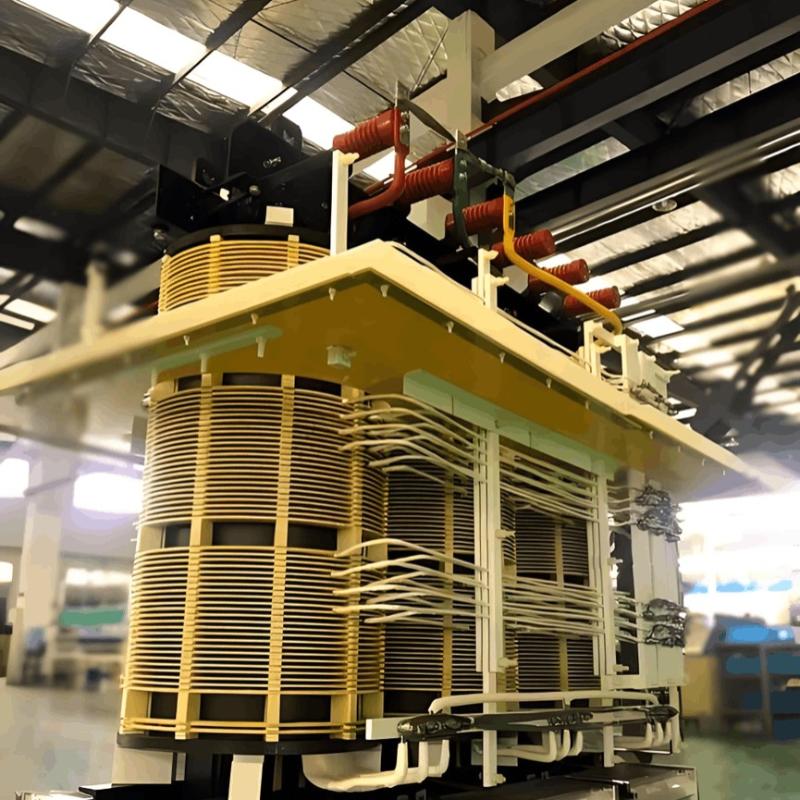
SST Transformer Core Loss Calculation and Winding Optimization Guide
SST High-Frequency Isolated Transformer Core Design and Calculation Material Characteristics Impact:Core material exhibits varying loss behavior under different temperatures, frequencies, and flux densities. These characteristics form the foundation of overall core loss and require precise understanding of nonlinear properties. Stray Magnetic Field Interference:High-frequency stray magnetic fields around windings can induce additional core losses. If not properly managed, these parasitic losses
10/27/2025
Consult
Tip
Consult
Tip
Upgrade Traditional Transformers: Amorphous or Solid-State?
I. Core Innovation: A Dual Revolution in Materials and StructureTwo key innovations:Material Innovation: Amorphous AlloyWhat it is: A metallic material formed by ultra-rapid solidification, featuring a disordered, non-crystalline atomic structure.Key Advantage: Extremely low core loss (no-load loss), which is 60%–80% lower than that of traditional silicon steel transformers.Why it matters: No-load loss occurs continuously, 24/7, throughout a transformer’s lifecycle. For transformers with low loa
10/27/2025
Consult
Tip
Consult
Tip
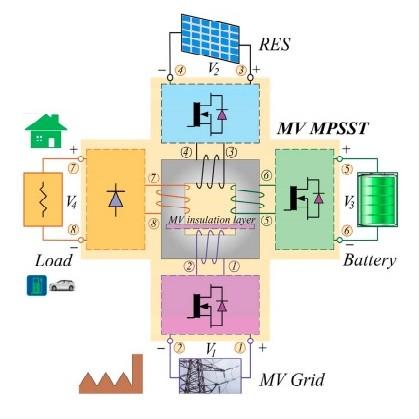
Design of a Four-Port Solid-State Transformer: Efficient Integration Solution for Microgrids
The use of power electronics in industry is increasing, ranging from small-scale applications such as chargers for batteries and LED drivers, to large-scale applications like photovoltaic (PV) systems and electric vehicles. Typically, a power system consists of three parts: power plants, transmission systems, and distribution systems. Traditionally, low-frequency transformers are used for two purposes: electrical isolation and voltage matching. However, 50-/60-Hz transformers are bulky and heavy
10/27/2025
Consult
Tip
Consult
Tip
Send inquiry
+86
Click to upload file
Download
Get the IEE Business Application
Use the IEE-Business app to find equipment, obtain solutions, connect with experts, and participate in industry collaboration anytime, anywhere—fully supporting the development of your power projects and business.