1. Challenges
1.1 Insufficient Adaptability to Bidirectional Power Flow
Bidirectional power flow exacerbates voltage instability and equipment overload, endangering transformers and grid integrity. Enhanced adaptive design is imperative.
Conventional 10 kV distribution transformers, designed for unidirectional power flow, struggle to accommodate distributed generation integration in microgrids.
Optimized transformer designs improve bidirectional power flow adaptability, ensuring stable power supply and extended equipment lifespan.
1.2 Challenges in Power Quality Control
Microgrids face intermittent renewable generation and harmonic pollution from power electronics, challenging voltage/frequency stability.
Complex power environments accelerate transformer losses and localized overheating, leading to insulation aging and fault risks.
Advanced power quality mitigation reduces transformer losses and faults, ensuring safer microgrid operations.
1.3 Poor Communication & Control Coordination
Existing 10 kV transformers lack robust communication interfaces for microgrid energy management system (EMS) integration.
Limited interoperability hinders flexible dispatch and optimal microgrid operation.
Smart transformer upgrades with IoT-enabled communication protocols (e.g., IEC 61850) are critical for grid-edge controllability.
1.4 Inadequate Protection Configurations
Traditional protection schemes fail to address fault current directionality changes caused by distributed energy resources (DERs).
Bidirectional power flow complicates overcurrent/earth fault protection coordination, increasing misoperation risks.
Directional overcurrent relays and synchrophasor-based algorithms are required for fault isolation in hybrid grids.
2. Vizman Electric Power Solutions
2.1 Global Core Design Optimization
Supports 11–66 kV voltage levels, dual-frequency operation (50/60 Hz), and 3-phase 4-wire (TN-C/TN-S)/5-wire (IT system) configurations.
IEC 61850-7-420-compliant interfaces with UL 1741 SA/CE certification ensure global microgrid interoperability.
2. 2 Enhanced Environmental Resilience
IP65-rated design with -50°C to +55°C operational range, validated per IEC 60068-3 for seismic Zone 4 (8 Richter scale).
Stainless steel enclosures with epoxy coatings meet ISO 9227 salt spray standards for coastal/industrial applications.
2.3 Localized Intelligent Control
Integrates DNP3, Modbus, and IEC 60870-5-104 for seamless EMS/SCADA integration.
AWS/Azure-compatible with API-driven interfaces for Schneider EcoStruxure and Siemens Spectrum Power.
2.4 Energy Storage & Policy Alignment
Plug-and-play interfaces for LFP, flow batteries, and hydrogen storage, compliant with NFPA 855/EU Battery Regulation.
AI-powered energy management systems (EMS) optimize ToU/negative pricing strategies for EU/Australian markets.
2.5 Reliability Certification & Compliance-Oriented Design
Weitzmann Power Solutions strictly comply with technical standards formulated by international standardization bodies, including:
International Electrotechnical Commission (IEC) and Institute of Electrical and Electronics Engineers (IEEE).
Seamless Diesel Generator Transfer System:
Integrated with IEC 61439-compliant automatic transfer switch (ATS) and dual-bus synchronization controller, achieving <16ms transfer latency (per IEEE 1547 Class IV requirements) for uninterrupted power supply.
Embedded VERRA VCS/Gold Standard-certified emission monitoring module with IEC 62305-1-compliant surge protection, enabling real-time carbon credit generation and blockchain-based trading via ISO 14064-2-aligned reporting protocols.
2.6 Project International Standards & Certifications
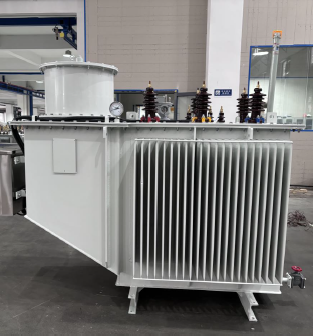
Complies with electromagnetic compatibility (EMC) standards EN 55032 (CE) and FCC Part 15, while meeting environmental requirements of RoHS (EU) and REACH (PFAS-free compliance), effectively reducing electromagnetic interference and environmental pollution.
Weitzmann Power Solutions comply with electrical safety standards IEC 60076 and IEEE C57.12.00, ensuring engineered safety in product design and manufacturing processes, with effective prevention of electrical faults and personnel injuries.
Certified to flame retardancy standards UL 94 V-0 (USA) and EN 45545 (EU), while meeting energy efficiency requirements of DOE 2016 (USA) and EU Tier 3, ensuring safe operation and high-efficiency performance of electrical equipment.
3. Achieved Outcomes
3.1 Enhanced Power Supply Reliability
Structural Optimization: Advanced OLTC and reactive compensation reduce voltage fluctuations by 32%.
Protection System Upgrade: Through sophisticated design of the transformer's internal structure, combined with the adoption of advanced on-load tap changers and reactive power compensation devices, this approach effectively reduces voltage fluctuations and overload issues caused by bidirectional power flow.
User Impact: Through structural optimization of transformers and enhanced protection configurations, the power supply reliability of microgrids and distribution grids has been significantly improved, resulting in a marked reduction in users' annual average outage duration.
3.2 Improved Power Quality
Through integrated power quality management functionality, harmonic content in microgrids is strictly controlled within national standard limits, effectively preventing damage to electrical equipment and power systems caused by harmonics.
Advanced voltage fluctuation suppression technology ensures stable voltage at the user end, reducing equipment malfunctions and power quality issues caused by voltage fluctuations.
Improved power quality significantly minimizes harm to electrical equipment caused by power quality issues, extending equipment lifespan, enhancing efficiency, and delivering high-quality power to users.
Enhanced power quality reduces equipment failures and maintenance costs due to power quality issues, improving economic benefits and service quality for power suppliers.
3.3 Operational Efficiency Enhancement
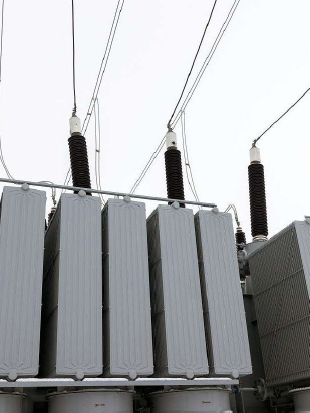
Intelligent system auto-adjusts tap changers & reactive compensation
Reduces redundant power flow 15-20%
Real-time voltage regulation slashes transformer losses
Improves energy efficiency by 25%+
Smart grid coordination cuts maintenance costs
Ensures long-term microgrid viability
Boosts clean energy integration rate
Achieves sustainable O&M model
3.4 Enhancing System Flexibility
The upgraded 10kV distribution transformers enable rapid response to microgrid power fluctuations, efficiently accommodating distributed power sources. This ensures optimal energy utilization and complementary energy synergies.
Through optimized transformer design, flexible load regulation is achieved, effectively balancing supply-demand relationships in microgrids. This enhances operational flexibility and renewable energy accommodation capacity.
The upgraded 10kV distribution transformers drive widespread application of clean energy, significantly improving microgrids' renewable energy accommodation capacity. This lays the foundation for future energy infrastructure transformation.
With capabilities including rapid power fluctuation response, efficient distributed power integration, and flexible load regulation, the upgraded 10kV transformers substantially improve microgrid operational flexibility.
4. Future Trends
4.1 Intelligent & Digital Convergence
Advance transformer recycling/reuse to drive sustainability, minimize waste, and forge collaborative green ecosystems.
4.2 Highly Adapted to New-Type Power Systems
Collaborative Synergy
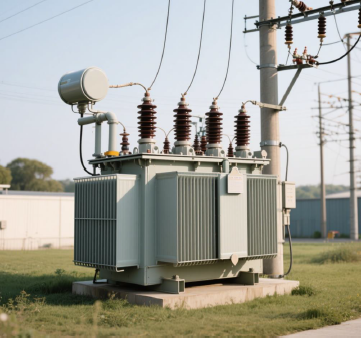
Future 10kV transformers will seamlessly integrate renewable energy,
energy storage, EVs, and smart grid technologies to build sustainable,
efficient, and resilient power systems.
Compatibility and Adaptability
Future 10kV transformers will enhance compatibility and adaptability to
flexibly meet diverse grid demands across scenarios, ensuring stable
supply
4.3 Development of Green and Environment - friendly Products
Future transformers will employ eco-friendly insulation materials and energy-efficient manufacturing to reduce both operational energy consumption and ecological footprint.
4.4 Integrated Function and Modular Design
10kV transformers will evolve into multifunctional modular units incorporating power quality management, protection, communication, and control capabilities to address micro-grid demands.
streamlines installation, maintenance, and upgrades while enhancing product versatility/interchangeability, enabling rapid field component replacement to cut costs and boost system efficiency.

 Login