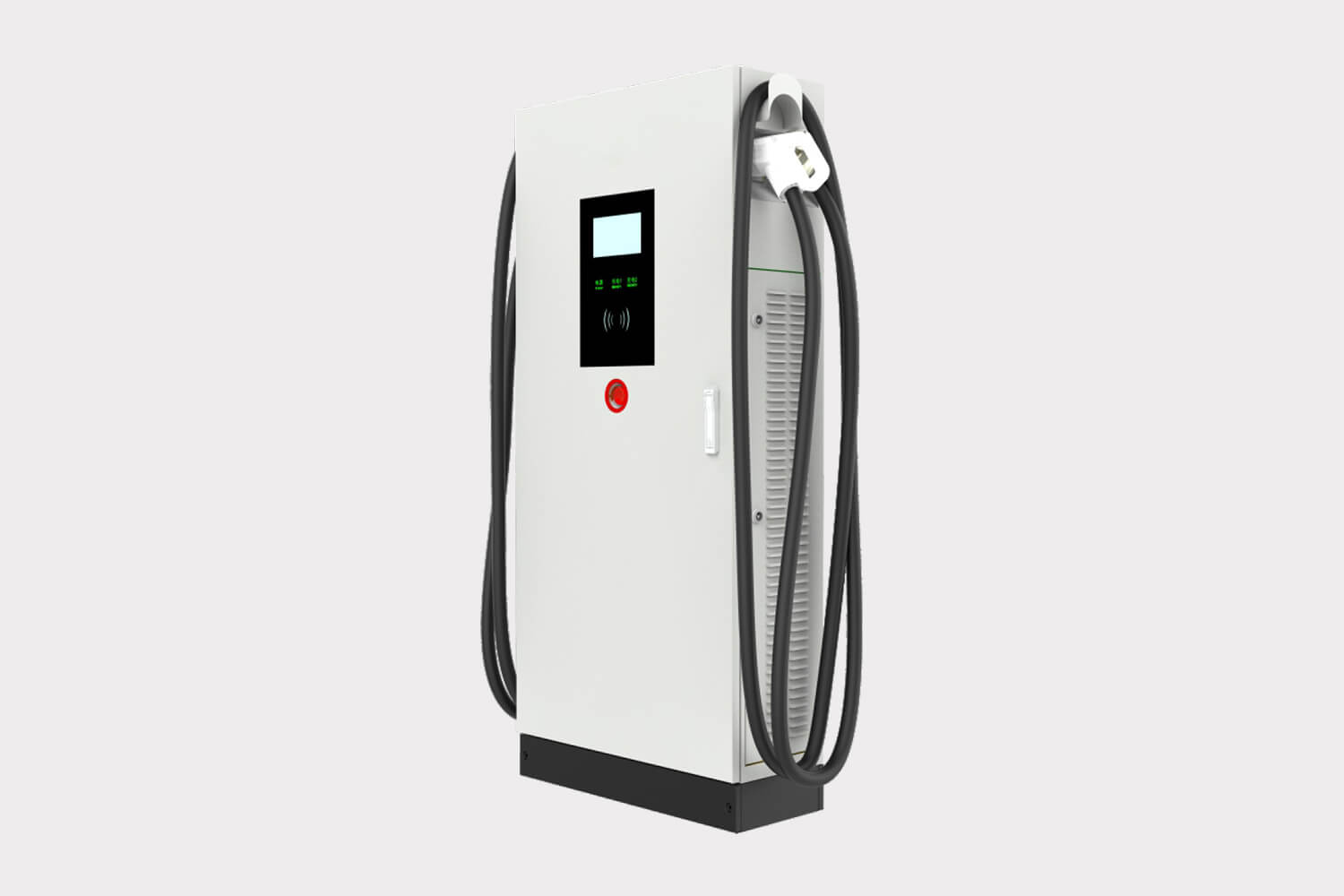
European Charging Station Solution: Meeting AFIR Mandates with Ultra-Fast Charging & Smart Deployment

Discover European ultra‑fast charging station solutions – AFIR‑ready, smart‑deployed, scalable, and designed for seamless EV integration.

RW Energy
Zhejiang Rockwell Energy Technology Co., Ltd.
Add us on Google

Ⅰ. Market Background and Policy Drivers

Policy-Driven Deployment

EU AFIR Regulation (Effective 2023):

  • Requires the deployment of ≥150kW fast charging stations (for passenger cars) every 60 km along the TEN-T transport network.

  • Requires the deployment of ≥350kW ultra-fast charging stations (for heavy-duty trucks) every 100 km.

  • Urban nodes must be equipped with 1800kW heavy-duty truck charging capacity by 2030.

National Subsidies:

  • Germany: Up to €30,000 subsidy per DC fast charger.

  • France: 50% subsidy (capped at €2,700) for corporate charging station construction.

  • Austria: €15,000 subsidy per public charging point.

Significant Market Gap

  • Germany's EV-to-charger ratio was 23:1 (2024), significantly higher than reasonable levels (target: 1 million chargers by 2030).

  • Although the Netherlands has the highest density (170,000 chargers), the low proportion of fast chargers results in poor user satisfaction.

Ⅱ. Technical Solution Design

Ultra-Fast Charging Technology (EU Standards Compliant)

Power Upgrade:

  • Adopts 1500V high-voltage platform (e.g., Yonglian Technology UXC150030 module), supporting 200-1500V wide voltage range and 98.5% conversion efficiency, suitable for passenger cars and heavy trucks.

  • Liquid-cooled modules (e.g., LCR100040A) ensure high protection + silent heat dissipation, suitable for coastal/mining environments.

Compatibility:

  • Supports CCS2 (EU mainstream), CHAdeMO, GB/T interfaces.

Battery Swap Model Supplement

  • Advantages:

    • Swapping reduces user vehicle purchase cost by 40% and extends battery lifespan by 30%.

  • Implementation: Collaborate with local enterprises to pilot battery swap services.

Intelligent Management System

  • OCPP Protocol + Cloud Platform:

    • Remote fault diagnosis, OTA upgrades, multi-language payment (Stripe/PayPal).

  • V2G (Vehicle-to-Grid):

    • Supports grid peak shaving and enhances renewable energy integration.

III. Localized Deployment Strategy

Precise Site Selection & Scenario Adaptation

Scenario

Solution

Case Reference

Highway Arteries

Deploy 350kW ultra-fast charging stations every 60 km

EU AFIR mandate

Urban Nodes

Install ≥150kW fast chargers at malls/hospitals

Germany mandates chargers at fuel stations

Residential Areas

Simplify private charger approval + supplement with public slow chargers

UK subsidies for apartment chargers

PV-Storage-Charging Integration

Integrates photovoltaics + energy storage to reduce grid pressure, adapt to peak/off-peak electricity prices in Germany/Nordic countries.

Ⅳ. Business Model and Partnerships

Diversified Revenue Models

  • Electricity retail margin: Premium for fast charging service (€0.4–€0.6/kWh).

  • Battery echelon utilization: Retired batteries used in energy storage systems, reducing costs by 30%.

  • Government subsidies + carbon trading: Germany subsidizes €0.08–€0.15/kWh for public charging.

Ecosystem Partnership Network

  • Partner with local automakers, charging operators, and grid companies to promote co-construction, sharing, and collaborative operation of charging infrastructure.

Leave your contact information to receive the full technical documentation and a free consultation from our engineers.

Comments

Share your question or perspective
WhatsApp
Send inquiry
+86
Click to upload file
Download
Get the IEE Business Application
Use the IEE-Business app to find equipment, obtain solutions, connect with experts, and participate in industry collaboration anytime, anywhere—fully supporting the development of your power projects and business.
Login
or continue with
New here?
Register