Abstract
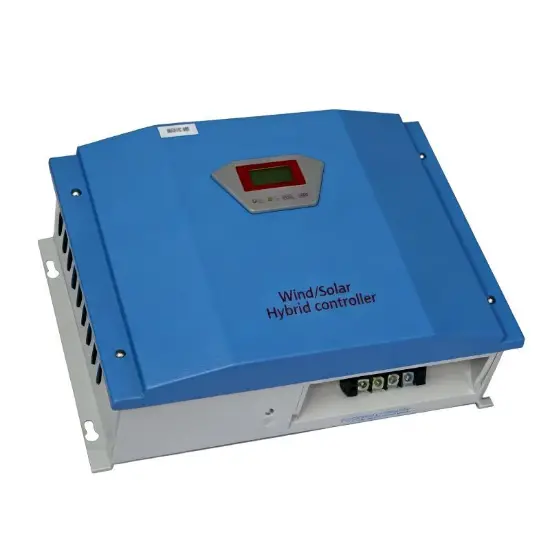
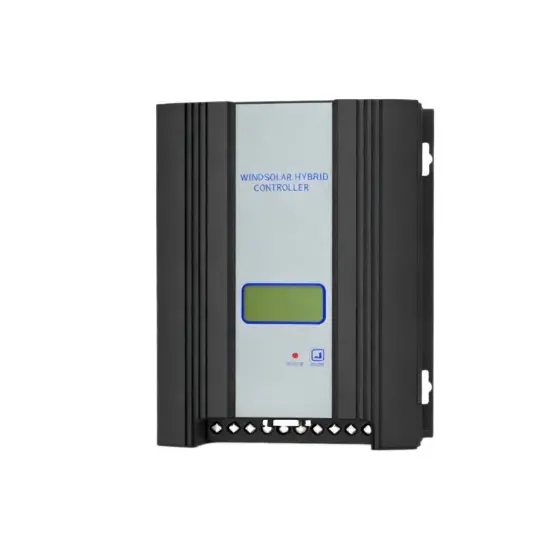
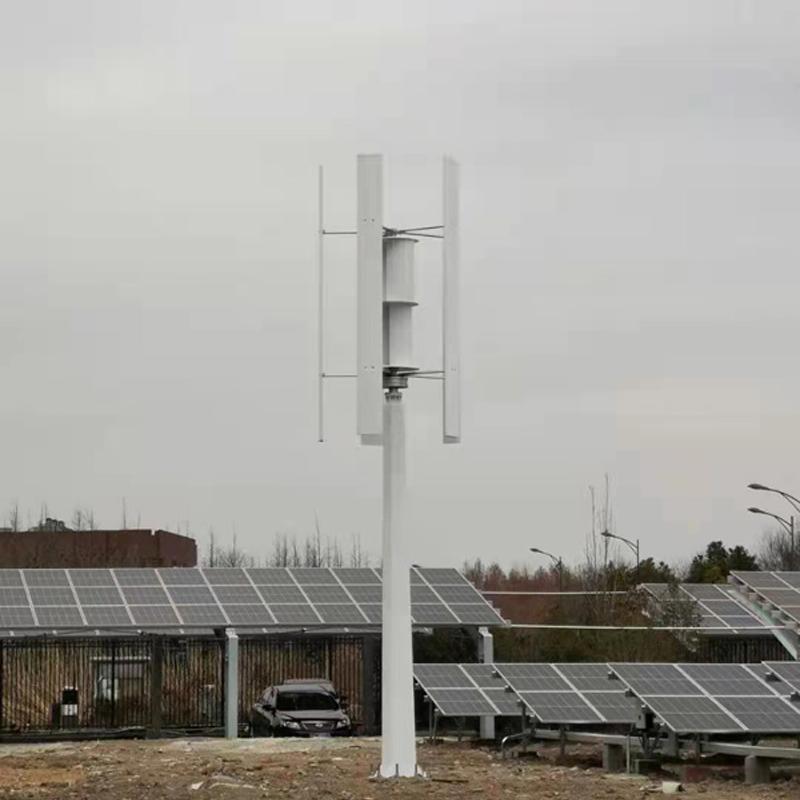
Kini nga solusyon nagproporsyona og usa ka bag-ong mataas na efektibong sistema sa pag-generate sa hybrid wind-solar power. Ang sistema nagsangpot sa mga pangunahon nga kahibaw-hibaw sa kasinatngan nga teknolohiya sama sa mababa nga paggamit sa energy, maikling lifespan sa battery, ug dili matinud-anon nga estabilidad sa sistema, gamiton ang fully digitally controlled buck-boost DC/DC converters, interleaved parallel technology, ug intelligent three-stage charging algorithm. Kini nagpadayon sa Maximum Power Point Tracking (MPPT) sa mas maluwas nga rango sa hangin ug solar irradiation, siguraduhon ang pag-improve sa efisiyensiya sa pagkuha sa energy, pag-extend sa lifespan sa battery, ug pagbawas sa kabuuang gasto sa sistema.
1. Introduction: Industry Pain Points & Existing Deficiencies
Ang tradisyonal nga mga sistema sa hybrid wind-solar adunay mga significante nga drawback nga limita ang ilang widespread nga aplikasyon ug cost-effectiveness:
- Narrow Voltage Input Range: Ang mga sistema kasagaran gamiton ang simple nga buck converters, nga lang makapag-charge sa battery kung ang voltage nga gengenerado sa turbine sa hangin o solar panels adunay labi sa voltage sa battery. Sa panahon sa mababa nga hangin o dili kaluoy nga lihok, ang gengeneradong voltage wala mahimong sapat, resulta sa sayop nga renewable energy.
- Severe Energy Waste: Kapag sobrang damo ang wind o solar energy, ang tradisyonal nga mga sistema kasagaran gamiton ang resistive braking (dummy loads) aron maputli ang excess electrical energy isip init aron maprevent ang overcharging sa battery, resulta sa significant energy waste.
- Short Battery Lifespan: Tungod sa wala maayo nga pagkuha sa energy ug dili maayo nga mekanismo sa overcharge protection, ang batteries kasagaran adunay estado sa undercharge o overcharge, drastic nga pagbawas sa cycle life ug pag-increase sa maintenance costs.
- Low Control Precision & Poor Stability: Ang daghang sistema gamiton ang simple nga control strategies, wala precise nga regulation sa voltage ug current, resulta sa unstable power quality. Aron masiguro ang reliable load operation, kinahanglanon ang mas dako nga capacity generation ug storage equipment, nagresulta sa pag-increase sa initial investment.
2. Core Components of the Solution
Kini nga sistema gisangpot sa 11 core components nga nagtrabaho ngadto sa usa ka intelligent, efficient energy capture, storage, ug distribution network.
|
Component No.
|
Name
|
Core Function
|
|
1
|
Solar Panel
|
Pag-convert sa light energy isip DC electricity; usa ka primary energy source.
|
|
2
|
Wind Turbine
|
Pag-convert sa wind energy isip AC electricity; usa ka primary energy source.
|
|
3
|
Wind Power Converter
|
Core is a buck-boost DC/DC converter; controls wind-generated voltage/current.
|
|
4
|
Solar Power Converter
|
Core is a buck-boost DC/DC converter; controls solar-generated voltage/current.
|
|
5
|
Fully Digital Controller
|
System brain (MCU/DSP); implements intelligent control (MPPT, three-stage charging, interleaving).
|
|
6
|
Battery/Load Interface
|
Connects battery and load; enables intelligent energy distribution.
|
|
7
|
Lead-Acid Battery
|
Stores excess energy to power the load during periods without wind/sun.
|
|
8
|
Load
|
Power consumption end, e.g., remote base stations, residential use, border posts.
|
|
9
|
Communication Interface
|
Supports CAN/RS485/422 bus for communication with host PC; enables remote monitoring.
|
|
10
|
Keyboard/Display
|
Provides local HMI for parameter setting and status monitoring.
|
|
11
|
Wind Power Rectifier Circuit
|
Rectifies AC output from the wind turbine to DC for subsequent converter use.
|
3. Core Technical Advantages
3.1 Buck-Boost DC/DC Converter with Wide Input Voltage Range
- Core Technology: Both wind and solar converters utilize a Buck-Boost DC/DC topology.
- Pain Point Solved: Overcomes the voltage limitations of traditional buck converters.
- Low Input Voltage (Boost Mode): When wind speed is below rated value (rpm < ω₀) or light is insufficient, and generated voltage is below battery voltage, the converter automatically operates in Boost mode to raise the voltage for charging.
- High Input Voltage (Buck Mode): When wind/solar resources are abundant and generated voltage exceeds battery voltage, the converter automatically switches to Buck mode for charging.
- Two Implementation Schemes:
- Cascaded Buck-Boost DC/DC: Uses 2 power switches for separate boost/buck control; offers high precision, suitable for high-performance scenarios.
- Basic Buck-Boost DC/DC: Uses 1 power switch controlled by a single PWM duty cycle (<50% Buck, >50% Boost); simpler structure, lower cost.
3.2 Interleaved Parallel Control (Key Innovation)
- Technical Principle: The digital controller drives the PWM signals for two parallel DC/DC converters with a 180-degree phase shift, unlike traditional in-phase parallel operation.
- Technical Effects:
- Reduced Ripple: Output current ripples cancel each other, significantly reducing the peak-to-peak value of the total ripple current, providing cleaner, more stable DC power to the load.
- Doubled Frequency, Reduced Losses: The ripple frequency of the total output current becomes twice the switching frequency of a single converter, allowing the use of a lower switching frequency to meet ripple requirements, thereby reducing switching losses and improving overall system efficiency.
3.3 Intelligent Three-Stage Charging Mode
The digital controller dynamically adjusts the charging strategy based on the battery's State of Charge (SOC), achieving an optimal balance between efficiency and protection:
|
Charging Mode
|
Trigger Condition
|
Control Strategy
|
Primary Objective
|
|
Mode I: Constant Current + MPPT
|
When battery SOC is low.
|
If wind/solar energy is sufficient, charges battery with max allowed constant current; if energy is scarce, prioritizes MPPT, using all captured energy for charging.
|
Rapidly replenishes charge, maximizes energy capture, prevents battery damage from prolonged undercharging.
|
|
Mode II: Constant Voltage + MPPT
|
When battery voltage reaches float charge setpoint.
|
Maintains constant battery terminal voltage to prevent overcharge. If surplus energy remains, switches to MPPT mode to power the load or capture extra energy.
|
Prevents overcharging, extends lifespan, while continuing efficient energy utilization.
|
|
Mode III: Trickle Charge
|
When battery is fully charged.
|
Applies a small float charge to compensate for self-discharge, maintaining full charge.
|
Maintains battery health, ensures readiness, further extends service life.
|
3.4 Fully Digital Intelligent Control
Centered on a high-performance MCU or DSP, the system collects real-time voltage and current data from the wind turbine, solar panels, and battery. Using embedded algorithms, it:
- Performs real-time MPPT calculations to ensure optimal energy capture.
- Intelligently determines and switches charging modes.
- Precisely generates PWM signals to drive the converters and implement interleaved control.
4. Benefits and Scalability
4.1 Core Technical Benefits
- Greatly Enhanced Resource Utilization: The wide input voltage range allows the system to harness low-grade energy (e.g., light breezes, dawn/dusk weak light) that traditional systems cannot capture, significantly broadening the usable range of wind and solar energy.
- Significantly Improved System Efficiency: The MPPT algorithm ensures generating units operate at their optimal power point. Combined with reduced losses from interleaving technology, the overall system energy efficiency far exceeds that of traditional solutions.
- Substantially Extended Battery Life: The intelligent three-stage charging algorithm effectively prevents overcharging and deep discharge, increasing battery cycle life by over 50% and significantly reducing maintenance and replacement costs.
- Reduced Comprehensive System Cost: Enhanced power supply stability eliminates the need for over-sizing generation and storage capacity for reliability, reducing initial investment.
- High Output Power Quality: Interleaving technology provides low-ripple, highly stable DC output, protecting sensitive loads and improving power supply quality.
4.2 Flexible Capacity Expansion Scheme
The system offers excellent scalability for flexible capacity increases based on demand:
- Component-Level Expansion: The inputs of two DC/DC converters can be connected in parallel to the same solar panel or wind turbine. The digital controller provides unified interleaved control, doubling the peak output power for that particular source (solar or wind).
- System-Level Expansion: Expanded solar and wind power units are connected in parallel on the DC bus to easily supply power to larger battery banks and loads. All control units are interconnected via communication interfaces (e.g., CAN bus) for centralized monitoring and management.