I. Project Background and Critical Issues to Address
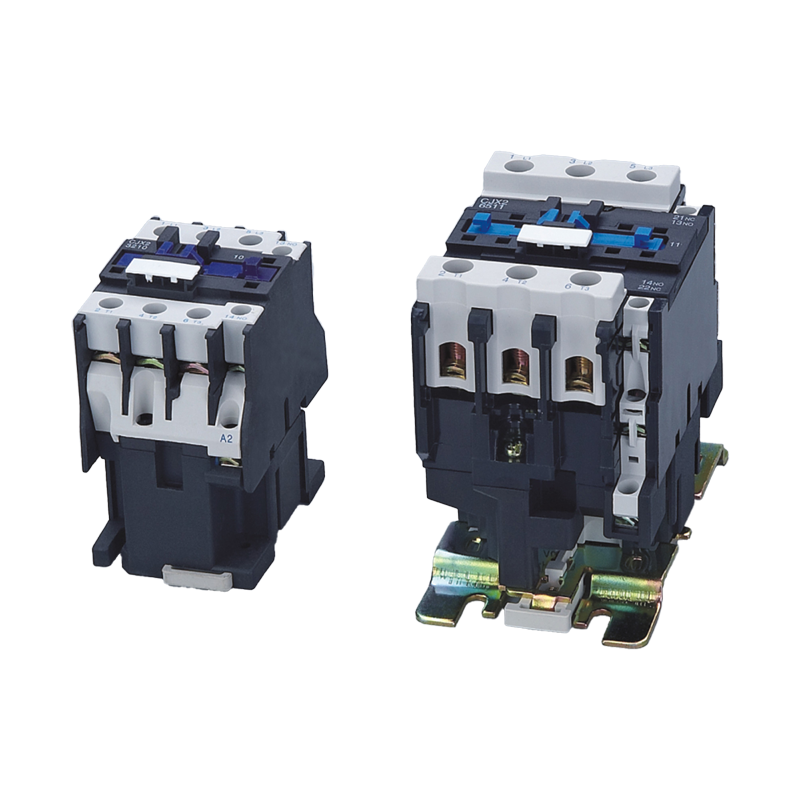
As one of the most widely used low-voltage electrical devices, AC contactors play a key role in long-term operation systems. However, their traditional design has a fundamental flaw: the contacts inevitably generate an arc when breaking the circuit.
This inherent defect leads to a series of serious problems:
Severely limited electrical endurance: Arcs cause significant electrical wear on the contacts, resulting in an electrical lifespan (approximately 2–2.5 million operations) far shorter than the mechanical lifespan (20–25 million operations), typically only one-tenth of the latter.
Electromagnetic pollution: Arcs pollute the power grid, generate radio frequency interference, and affect other electrical equipment.
Safety risks: The overvoltage surge generated when breaking inductive loads may damage connected equipment and also limits the contactor’s operating frequency.
II. Core Solution: Arc-Free Breaking Principle
The core innovation of this solution lies in adopting a hybrid structure combining main contacts + a parallel thyristor module, with precise triggering control circuitry to accurately synchronize their switching sequences.
Core Design Approach:
• Use bidirectional thyristors as contactless switches to achieve make-first, break-last current switching, completely avoiding arc generation.
• Utilize traditional mechanical contacts to carry current during steady-state conduction, overcoming the drawbacks of pure contactless switches (e.g., using thyristors alone), such as poor surge current resistance, high conduction voltage drop, high cost, and the need for large heat sinks.
• Millisecond-level precise synchronization between the mechanical contacts and semiconductor devices (thyristors) via triggering control circuitry is key to the success of this solution.
Key Workflow (Taking CJ20-40A Contactor as an Example):
Operating Phase |
Time Node |
Action Process |
Core Objective and Effect |
Connection |
|
|
|
| |
10ms after coil energization |
Trigger circuit sends signal; three pairs of bidirectional thyristors instantly conduct. |
Make-first: Current path established first, preparing for contact closure → arc-free connection. |
| |
15ms after coil energization |
Contactor main contacts close, short-circuiting the thyristors. |
Switchover: Mechanical contacts carry main circuit current; thyristors turn off automatically due to zero voltage difference → energy-efficient. |
Disconnection |
|
|
|
| |
After coil de-energization |
Contact pressure decreases; contact resistance increases; voltage drop across contacts rises to ~0.10V. |
Preparation: Voltage drop signal triggers control circuit → thyristors conduct immediately. |
| |
12ms after coil de-energization |
Main contacts begin to open. |
Arc-free breaking: Current fully transferred to thyristor path → contacts break at zero current → completely arc-free. |
| |
18ms after coil de-energization |
Trigger circuit stops signal; thyristors turn off naturally at current zero-crossing. |
Break-last: Completes arc-free breaking of the entire circuit. |
III. Process Implementation and Modification Plan
This solution adheres to the principle of "targeted modification based on mature products," significantly reducing industrialization barriers and costs.
Specific Modifications:
Electromagnetic System: Slight adjustments and optimizations to ensure its actuation time meets the precision requirements for synchronization with the thyristor circuit.
Contacts and Arc Extinction System:
o As arc-free breaking is achieved, the original arc suppression chamber becomes unnecessary and can be removed.
o Replaced with a high-temperature-resistant insulated housing. This new housing integrates three bidirectional thyristors, the trigger control circuit, and other essential electronic components.
Appearance and Compatibility: The modified contactor’s external dimensions, mounting holes, and wiring method remain entirely consistent with standard contactors. Users can replace and upgrade without changing any mounting bases or wiring logic, greatly facilitating market adoption.
IV. Test Conclusions and Significant Value
The AC contactor developed based on this solution has passed rigorous mechanical and electrical endurance tests, verifying its safety, reliability, and feasibility.
Core Value Delivered:
• Revolutionary Performance Improvement: Complete elimination of switching arcs increases electrical endurance by tens of times, theoretically reaching the level of mechanical lifespan. Also reduces contact maintenance and increases allowable operating frequency.
• Expanded Application Fields: The arc-free特性 enables safe application in high-risk environments with strict explosion-proof and fire-proof requirements, such as petrochemical plants, coal mines, aerospace, etc., making it a highly reliable core component in control systems and power distribution systems.
• Eco-Friendly: Significantly reduces arc-induced grid pollution and electromagnetic interference, aligning with the development trend of modern green electrical appliances.

 Login