Problem Background
Electrical cables are diverse in type and exhibit significant differences in performance parameters. Mismatched selection for application scenarios may lead to equipment damage, low transmission efficiency, or even safety hazards. Scientific classification and scenario-based selection are core to ensuring system stability.
I. Selection by Voltage Level Classification
Category |
Typical Voltage Range |
Core Application Scenarios |
Key Technical Requirements |
Recommended Model Examples |
Low-voltage Cable |
≤1 kV |
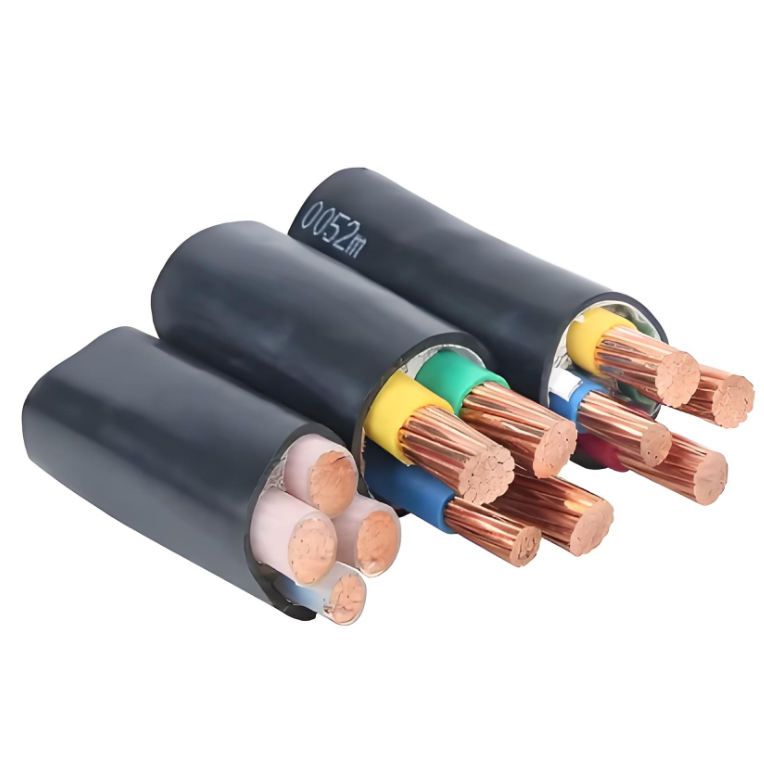
- Household/office building power distribution
- Small equipment power supply (AC, lighting)
- Temporary power lines |
- High flexibility (for easy conduit routing)
- Bend resistance (for frequent movement)
- Flame-retardant sheathing (enhanced safety) |
YJV, VV series (Copper-core PVC insulated) |
Medium/High-voltage Cable |
1 kV~500 kV |
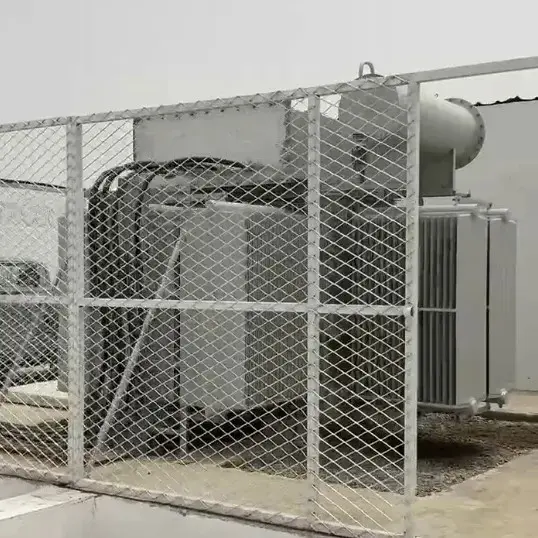
- Urban main power grids
- Substation power transmission/distribution
- Large-scale industrial power hubs |
- Multi-layer insulation shielding (anti-breakdown)
- Forced cooling design (e.g., oil-filled/water-blocking structures)
- Mechanical tensile strength (for direct burial) |
YJLV62 (XLPE-insulated aluminum-core armored) |
Note: Cables above 35kV require additional partial discharge monitoring systems to prevent insulation aging failure.
II. Selection by Functional Classification
Category |
Signal Type |
Core Application Scenarios |
Core Advantages |
Typical Models |
Coaxial Cable |
High-frequency EM signals |
- CCTV systems
- Satellite communication receivers
- RF equipment interconnection |
- Dual-layer EMI shielding (foil + braid)
- Stable impedance matching (75Ω/50Ω standards) |
RG-6 (residential), SYV-75-5 (surveillance) |
Fiber Optic Cable |
Optical signals (photons) |
- 5G/6G base station backhaul networks
- Inter-city data center interconnects
- HD video dedicated lines |
- Ultra-low attenuation (≤0.2dB/km)
- EMI immunity (non-metallic)
- Single-mode 100Gbps+ transmission |
G.652D (single-mode), OM4 (multi-mode) |
Key Comparison: Coaxial cables are suitable for high-frequency signals within 300 meters, while fiber maintains lossless transmission over kilometer-level distances.
III. Implementation Process Recommendations
Requirement Diagnosis
• Define scenarios: Indoor/outdoor, fixed/mobile, EMI complexity
• Quantify parameters: Transmission distance, power/bandwidth, ambient temp/humidity
Matching Matrix Generation (See mermaid diagram visualization in original)
Verification & Optimization
• Low-voltage scenarios: Validate current-carrying capacity via temperature rise tests
• Communication scenarios: Detect fiber loss using OTDR (Optical Time Domain Reflectometer)
IV. Common Misconceptions Avoidance
• Misconception 1: Using aluminum-core cables for home wiring
Correction: Service entrance cables must use copper-core (BV/BVR) to avoid oxidation/overheating.
• Misconception 2: Using standard Ethernet cables for surveillance systems
Correction: For POE power over >50 meters, use Cat6A (with cross separator against crosstalk).
• Misconception 3: Using PVC sheathing in flammable environments
Correction: Chemical storage areas must use halogen-free flame-retardant types (e.g., WDZ-YJY).
Execution Key Points: Power cable selection must comply with GB/T 12706 (Chinese National Standard for Power Cables). Communication cables should reference YD/T 901. Special scenarios (mines, ships) must meet mandatory industry protection levels.

 Login