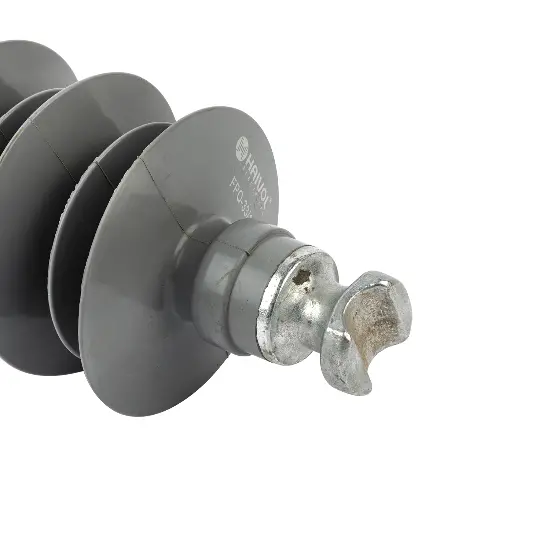
| Brand | HAIVO |
| Series | FPW |
| Rated voltage(kV) | 12-36kV |
| Specified Mechanical load(kN) | 5kN |
| Spacing H (mm) | 248-393mm |
| Minimum Creepage distance | 315-900mm |
Silicone rubber polymer insulators are core components for overhead power infrastructure, providing mechanical support for conductors and electrical insulation across distribution lines, substations and transmission networks. Silicone rubber is a widely adopted polymeric insulation material for high-voltage insulator production. HAIVO manufactures a full range of silicone rubber composite insulators to fit diverse voltage requirements in power systems, with product types including pin, strain, suspension, post, long rod, horizontal post, railway, shackle and stay insulators.
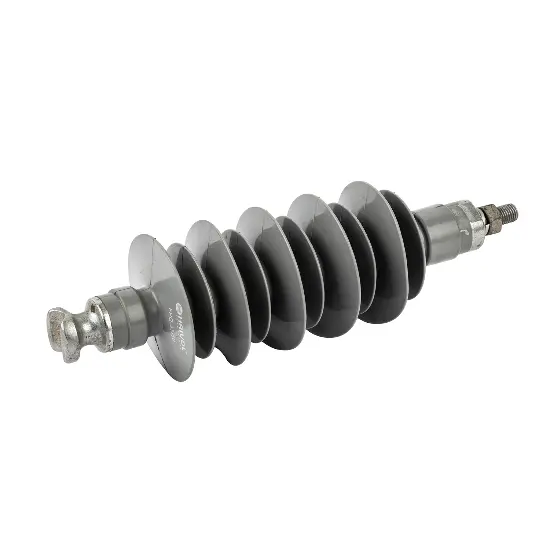
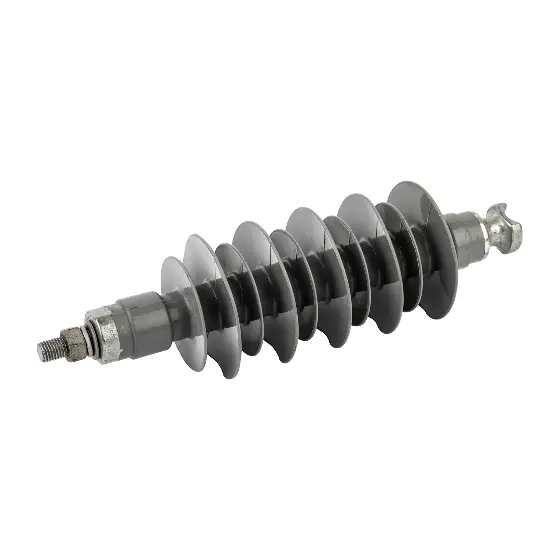
This page focuses on the pin type silicone rubber polymer insulator designed for distribution line applications. Rated for voltages up to 36kV, the insulator is used for supporting, suspending and insulating conductors in AC power distribution systems. It is manufactured in compliance with IEC 61952:2008, ANSI and other international standards, and is compatible with the insulation demands of industrial power facilities and commercial distribution networks. The composite structure integrates silicone rubber sheds, a fiberglass reinforced core rod and metal end fittings, balancing mechanical load capacity and electrical insulation performance.
The pin insulator features a lightweight and shatter-resistant structure, with earthquake resistance for deployment in seismically active areas. It adopts a compact design with low overall weight, which reduces transportation difficulty and cost for commercial procurement projects. The product also has anti-vibration performance, maintaining stable structure under long-term conductor vibration.
The silicone rubber housing provides hydrophobicity and hydrophobic migration properties, along with pollution resistance, which helps reduce the risk of pollution flashover incidents in heavy pollution areas. The insulator has resistance to ozone and UV radiation, as well as anti-moisture capability for humid operating environments. It also has anti-aging performance, suitable for operation in high-altitude conditions.
The composite pin insulator supports stable operation with sufficient mechanical strength for distribution line loads. Its integrated structure reduces daily maintenance workload, and the installation process is compatible with standard line construction procedures. These characteristics help lower long-term operation costs for power network operators and enterprise customers.
The silicone rubber housing is formed through one-piece injection molding. This molding method ensures consistent hydrophobicity, hydrophobic migration and pollution resistance of the housing, along with stable electrical insulation properties and aging resistance. The structure can reduce pollution flashover accidents and support safe operation of high-voltage transmission lines.
The insulator uses a modified ECR fiberglass reinforced epoxy resin rod as the internal load-bearing structure. This material has resistance to high temperature, stress corrosion and acid attack, with damping performance. Its tensile strength exceeds 1200Mpa, with resistance to creep and fatigue failure, which guarantees the internal insulation quality and mechanical strength of the insulator.
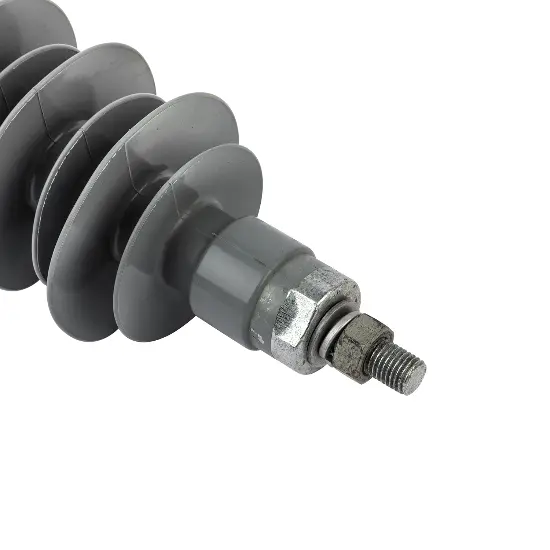
End fittings are crimped onto the fiberglass rod with a voice-operated displacement type crimper. This crimping technique ensures high mechanical strength of the finished insulators, with small dispersion of mechanical performance across batches.
The connection position between end fittings and the core rod is fused with the sheds housing via overall high-temperature vulcanized silicone rubber injection molding. This process minimizes the number of internal interfaces inside the insulator.
The insulator adopts an internal radial multi-seal structure at the connection between end fittings and the core rod. This structure ensures long-term sealing reliability at the connection position, preventing internal moisture ingress.
The table below lists the main technical parameters of the pin silicone rubber polymer insulator, with all specifications consistent with standard product testing data.
| Model |
Rated voltage(KV) |
Specified Mechanical load(KN) |
Spacing H (mm) |
Arcing distance (>mm)) |
Minimum Creepage distance |
Lightning impulse Withstand voltage (>=KVp) |
Wet power frequency withstand voltage (>=KVr.m.s.) |
| FPW-12/5 |
12 |
5 |
248 |
195 |
315 |
100 |
45 |
| FPW-12/5 |
12 |
5 |
228 |
195 |
315 |
100 |
45 |
| FPW-15/5 |
15 |
5 |
268 |
215 |
450 |
120 |
50 |
| FPW-15/5 |
15 |
5 |
248 |
215 |
450 |
120 |
50 |
| FPW-24/8 |
24 |
5 |
308 |
250 |
480 |
150 |
60 |
| FPW-24/8 |
24 |
5 |
288 |
250 |
480 |
150 |
60 |
| FPW-36/5 |
36 |
5 |
413 |
340 |
900 |
180 |
80 |
| FPW-36/5 |
36 |
5 |
393 |
340 |
900 |
180 |
80 |
Pin silicone rubber polymer insulators are mainly used in AC power distribution systems, with applications covering overhead distribution lines, substations and low-voltage transmission networks. They are suitable for deployment in various operating environments, including high-altitude areas, heavy pollution regions, humid climates and seismically active zones. The product range fits the insulation needs of industrial power facilities, commercial distribution networks and public power infrastructure projects. Besides pin type insulators, HAIVO also supplies long rod composite insulators up to 500kV, post composite insulators up to 252kV and line post composite insulators up to 36kV for different power system demands.
These pin composite insulators are manufactured in accordance with IEC 61952:2008, ANSI, GB and other international standards. Custom design based on project-specific standards is also available for commercial procurement requirements.
The pin type silicone rubber insulators cover rated voltages up to 36kV, including common distribution voltage levels of 12kV, 15kV, 24kV and 36kV, with corresponding mechanical load and insulation distance configurations.
Yes, custom design is available based on specific application requirements. The standard color options for the composite insulator include red, gray and white, and other structural parameters can be adjusted according to actual project needs.
For distribution line construction and upgrade projects, HAIVO provides matched insulator solutions and technical support. You can contact our team to get detailed quotation and product customization information for your commercial procurement needs.








 Login
Login