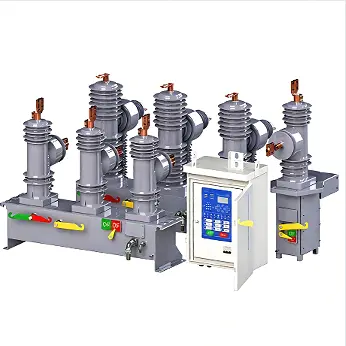
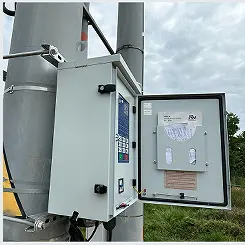
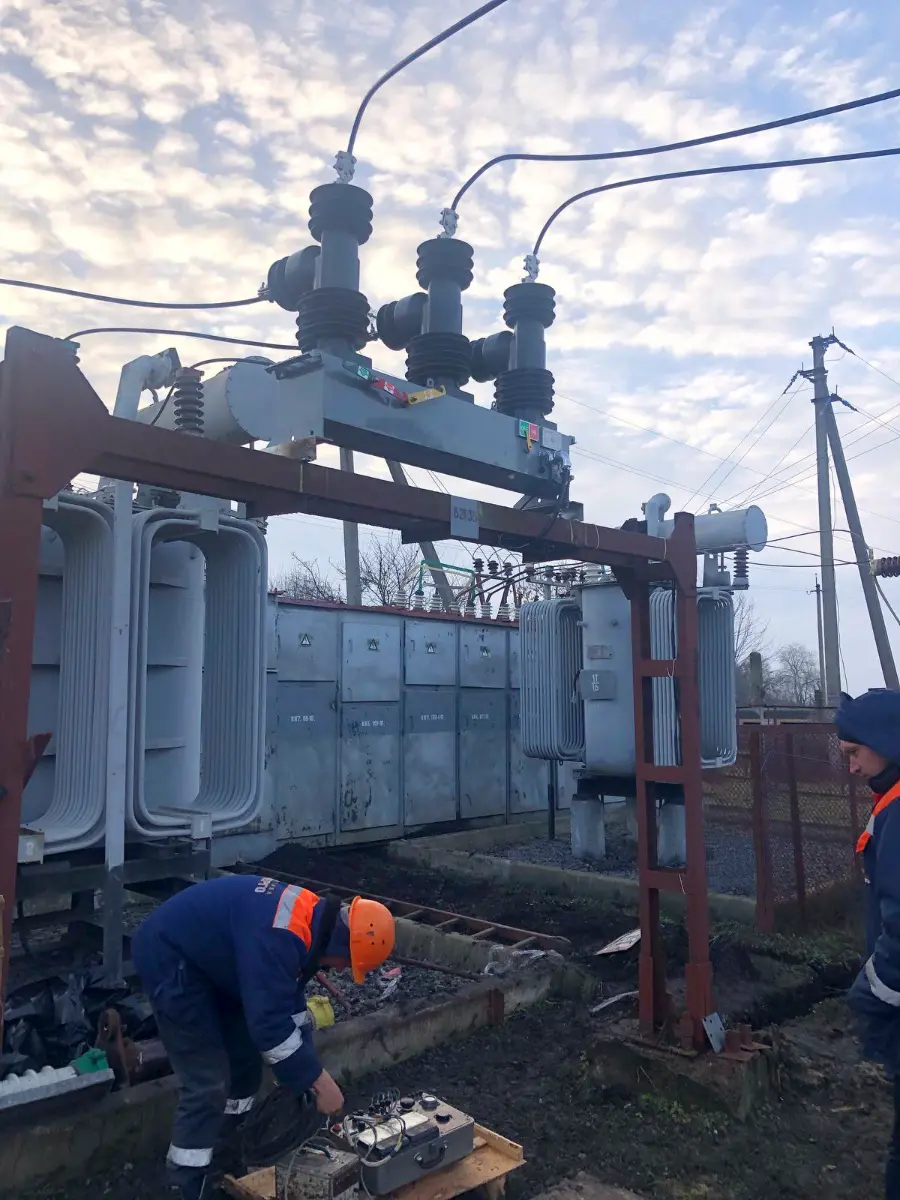
In the intelligent transformation of distribution networks, a core concept that has been repeatedly clarified is that the medium voltage auto recloser is by no means an "automatic circuit breaker." As Rockwill experts have consistently emphasized, equating a circuit breaker equipped with a motor-operated chassis and an external control unit to a recloser represents the greatest hidden risk in engineering selection. Whether viewed through the mandatory IEC/IEEE standard systems or the common product characteristics of global leaders such as ABB, Eaton, Noja Power, and Rockwill themselves, the recloser is a distinct piece of equipment independently designed for the "mission of automatic reclosing." The precise realization of minimum tripping current and the reliable execution of sequential reclosing logic are fundamental capabilities that no makeshift circuit breaker solution can inherently match.
I. Conclusive Evidence from Standards: Completely Different Type Test Sequences
Under the IEC system, reclosers must specifically comply with IEC 62271-111, whereas circuit breakers only need to meet IEC 62271-100. IEC 62271-111 establishes unique type test sequences for reclosers:
-
Automatic reclosing cycle test: The recloser must continuously perform a complete O-0.3s-CO-1s-CO-lockout sequence under fault current, testing the mechanism's ability to withstand multiple electromechanical and mechanical shocks in a very short time.
*Note: IEC 62271-111 permits O – 0.3s/0.5s – CO – 2s – CO – 5s – CO, allowing even shorter intervals.*
-
Multiple fault interruption test: Repeatedly interrupting the same short-circuit current to simulate severe conditions under a permanent fault.
-
Minimum tripping current test: Verifies that the device trips accurately at the declared minimum operating current (primary current can be as low as 5A or even 0.5A) and strictly complies with the time-current curve.
-
Integrated controller function verification: Includes all local functions such as reclosing logic, curve selection, and inrush current blocking.
Correspondingly, in the IEEE system, IEEE C37.60 also specifies design tests for reclosers, requiring verification of the rated reclosing cycle and minimum tripping current, while circuit breakers are tested according to C37.04/C37.09, which do not cover these requirements. A permanent-magnet circuit breaker that has only passed circuit breaker standards—regardless of any external additions—has never been proven at the standard level to safely perform the continuous reclosing and low-current tripping required of a recloser.
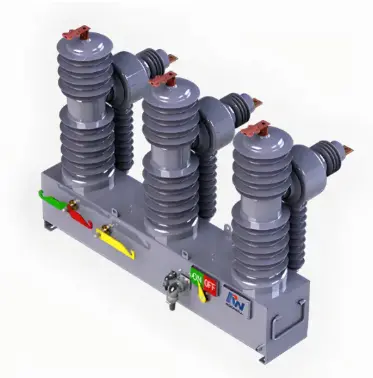
Physical Photograph of Rockwill RCW Series Three-phase outdoor vacuum recloser
II. Common Characteristics of Leading Global Products: A Dedicated Gene for Reclosing
Looking at recloser products from professional manufacturers such as ABB, Eaton, Noja Power, and Rockwill, a set of highly consistent common features emerges—features that are absent from circuit breaker product lines.
-
Integrated Design, a Complete System from the Factory
The OVR series from ABB, NOVA series from Eaton, OSM series from Noja Power, and RCW series from Rockwill all embed high-precision current/voltage sensors (Rogowski coils, capacitive dividers, etc.) directly inside the epoxy resin poles, with the controller installed locally on the unit. At the installation site, users need only connect power and communication cables, set the minimum tripping current, protection curves, reclosing attempts, and intervals on the controller panel, and the device is ready for independent operation—no external protection relays or PLCs required.
-
Operating Mechanism Reinforced for Multiple Continuous Reclosing Operations
These products consistently adopt magnetic latching mechanisms or specially designed high-life spring mechanisms, where the design cycle is no longer a simple open-close-open but a rated reclosing sequence. Noja Power's magnetic actuator mechanism is rated for millions of operations, with opening/closing speeds unaffected by coil heating throughout the reclosing sequence. Eaton's reclosers must complete the standard severe cycle in type tests. Rockwill's reclosers similarly employ long-life permanent-magnet mechanisms, verified during factory tests to meet the demanding O-0.2s-CO-1s-CO-1s-CO cycle, with mechanical life far exceeding that of circuit breakers at the same voltage level.
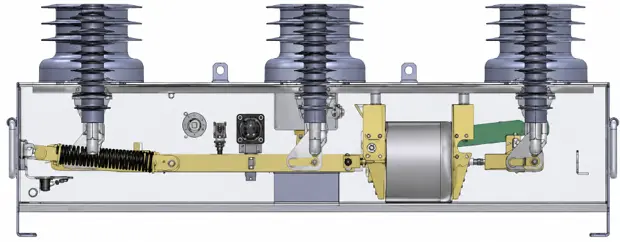
Schematic Diagram of Permanent Magnet Actuator for Rockwill RCW Series
-
Wide-Range, High-Precision Sensing for True Low-Current Tripping
The built-in sensors in reclosers from ABB, Eaton, Noja Power, and Rockwill maintain linear accuracy over an extremely wide range. Typical phase minimum tripping primary current can be set as low as 5A or even lower on-site, and sensitive ground fault minimum tripping current can be below 0.5A for high-impedance fault detection. This capability is the watershed differentiating reclosers from circuit breakers. Protection-class CTs externally connected to circuit breakers, designed with large cores to avoid saturation under short-circuit currents, cannot guarantee accuracy at currents of just a few amperes. Even with an additional zero-sequence CT and external controller, angular and ratio errors plus noise in signal transmission make it impossible to pass the minimum tripping current tolerance requirements of IEC 62271-111.
-
Locally Programmable Continuous Reclosing Logic
Leading reclosers feature fully integrated protection and reclosing logic engines. From the control panel, users can select ANSI/IEC inverse-time curves, program reclosing attempts (typically 1–4), interval times, lockout conditions, and advanced functions like fault current segmentation sequencing. These dedicated systems are validated through type testing. Rockwill's controller offers an equally intuitive menu that seamlessly integrates reclosing sequences, protection settings, and communication protocols—with no external programming required.
III. Why a Circuit Breaker Patchwork Solution Can Never Match the Core Performance of a Recloser
Even if a circuit breaker is equipped with the same external controller as a recloser and fitted with a motor-operated chassis, it can never achieve the minimum tripping current or continuous reclosing logic operation required of a standard recloser. Rockwill experts provide a clear technical assessment:
-
Limitations of the Physical Measurement Chain
The measurement circuit of a circuit breaker is not designed from the outset for wide-range, low-current measurement. External CTs have fixed ratios; selecting a CT for high fault currents inevitably sacrifices low-current accuracy. Achieving a minimum tripping current of 5A requires adding precision CTs, but the resulting secondary circuit switching and controller acquisition matching introduce delays and interference, making it impossible to pass type testing.
-
Mismatch of Mechanism Characteristics
The O-0.2s-CO cycle required by some recloser standards means completing a close followed by an open within 0.2 seconds (0.2s-0.5s adjustable), demanding extremely high opening/closing speeds, buffering, and bounce resistance from the mechanism. Even with a motor operator, a circuit breaker mechanism is not optimized for such rapid repeated duty in terms of motion characteristics, energy storage time, or thermal capacity. The correct commands from an external controller cannot translate into reliable responses from the mechanism.
-
Disconnect Between Real-Time Logic and the System
Continuous reclosing logic requires millisecond-level feedback of mechanism status, real-time recording of interrupted current, and fast reset. An external controller interacting via hardwired signals suffers tens of milliseconds of delay and poor noise immunity. During the second reclosing attempt after the first fails, such makeshift arrangements are highly prone to timing errors or false lockouts, completely failing to achieve the millisecond-level precision coordination of a genuine recloser.
IV. Conclusion
The medium voltage auto recloser is an independent switching device designed integrally—from sensors and operating mechanism to protection logic and control platform—in compliance with the dedicated standards IEC 62271-111 / IEEE C37.60. Products from professional manufacturers such as ABB, Eaton, Noja Power, and Rockwill all embody the common characteristics of wide-range sensing, continuous-reclosing-reinforced mechanisms, and integrated programmable logic. A patchwork combination of "circuit breaker + motor-operated chassis + external control" cannot, in physical realization or standard compliance, meet even the minimum requirements of a recloser, no matter how similar the feature list may appear. In distribution feeder automation, the core device ensuring power supply reliability can only be a true auto recloser—a technical principle that Rockwill and other professional manufacturers consistently uphold and rigorously practice, and which remains irreplaceable.
Edited From:Garca

 Login