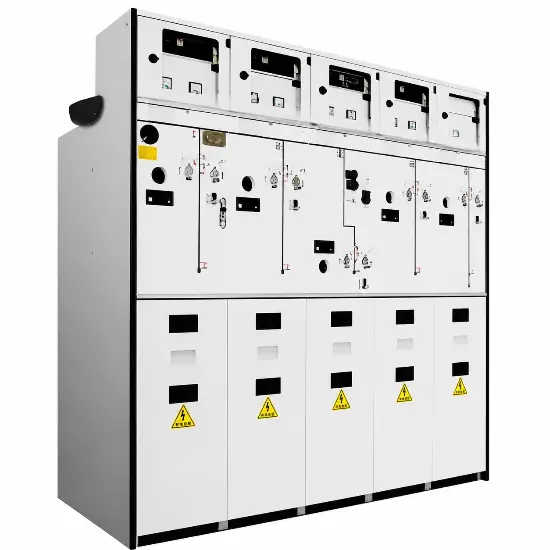
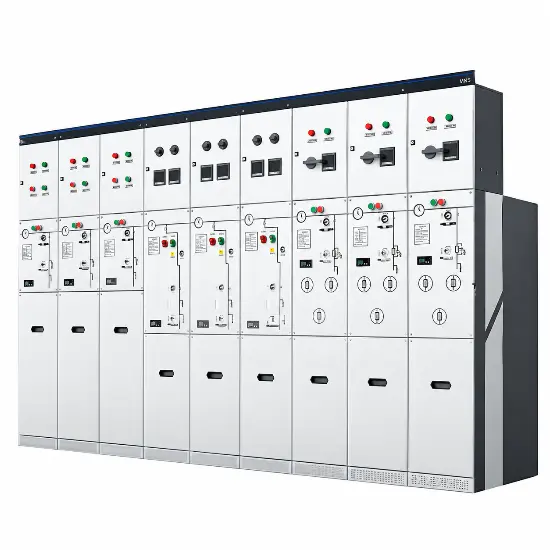
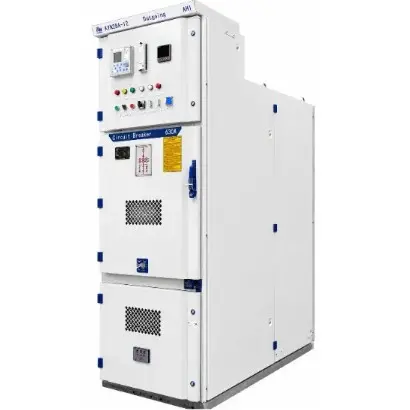
Air-insulated switchgears (AIS), such as the common KYN series, predominantly adopt metal-clad construction, with the core consideration being superior operational safety and fault isolation capability. The specific reasons can be attributed to the following five key technical advantages:
1. Strict Fault Isolation and Arc Containment
The defining feature of metal-clad construction is the strict segregation of high-voltage live components within the switchgear into three independent high-voltage compartments (busbar compartment, circuit breaker/withdrawable truck compartment, and cable compartment), while the relay and instrument compartment serves as an independent secondary low-voltage compartment. These compartments are physically isolated from each other by grounded metal partition plates.
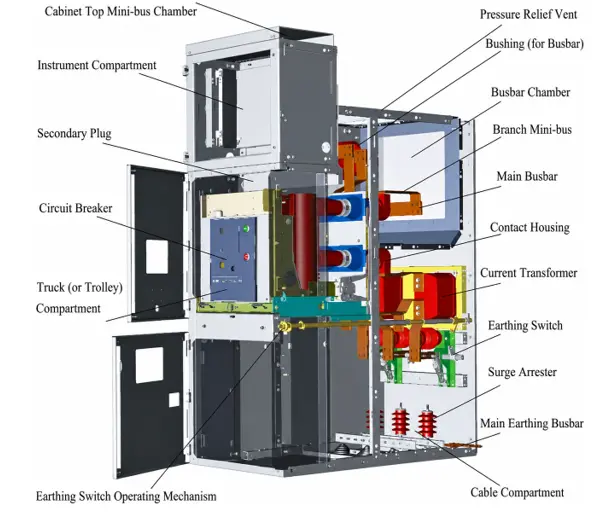
Structural Diagram of KYN28 Switchgear
Should an insulation breakdown or short circuit occur in any compartment (e.g., the cable compartment) triggering an arc, the metal partitions effectively confine the high-temperature arc, ionized gases, and molten metal within that compartment, preventing the fault from spreading to the main busbar compartment or adjacent switchgear cabinets, thus averting the escalation of a localized fault into a large-scale blackout.
2. Internal Arc Withstand (IAC) and Directed Pressure Relief
In air-insulated systems, arc faults cause gases to expand rapidly, generating enormous pressure. Metal-clad construction provides each high-voltage compartment (busbar, circuit breaker, and cable compartments) with independent overhead pressure relief channels and pressure release panels. In the event of an internal arc, the high-pressure gases and flames are directed upwards through the rupture of the top release panels, rather than blasting open the front cabinet doors, thereby maximizing the protection of operating personnel standing in front of the switchgear.
3. Maintenance Safety and Operational Continuity (LSC2B Level)
When combined with withdrawable (truck-type) vacuum circuit breakers, metal-clad construction enables exceptionally high operational continuity.
-
Metal Shutter Mechanism: When the circuit breaker truck is withdrawn from the "service" position to the "test/disconnected" position, the grounded metal shutters automatically close, completely shielding the live fixed contacts from access.
-
Maintenance personnel can safely enter the circuit breaker compartment for servicing while the busbar and cable compartments remain energized. This grounded metallic safety barrier is irreplaceable by conventional insulation barriers.
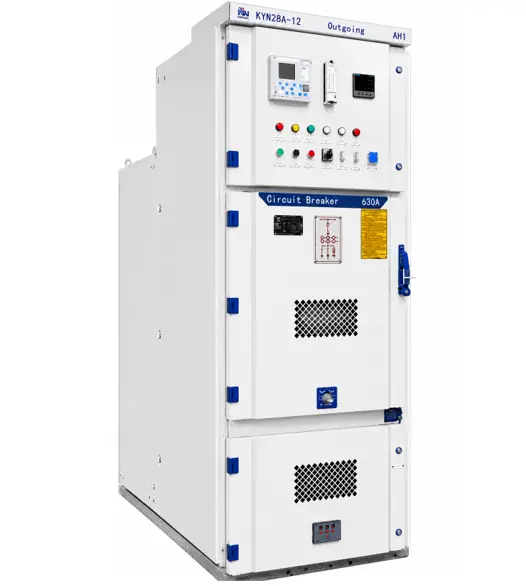
Rockwill Indoor metal-clad withdrawable switchgear
4. Improved Electric Field Distribution and Electromagnetic Shielding
-
Electric Field Control: The grounded metal partitions define clear electric field boundaries between live parts and ground, contributing to a more uniform electric field distribution.
-
Electromagnetic Shielding: High voltage and high current generate intense electromagnetic interference during switching operations or short circuits. The grounded metal-clad enclosure functions as a Faraday cage, effectively shielding electromagnetic fields and protecting the microprocessor-based protection devices and secondary weak-current circuits within the relay and instrument compartment from interference, thereby preventing maloperation.
5. Enhanced Ingress Protection (IP) Rating
Compared to SF6, air has a lower dielectric strength and is highly sensitive to ambient humidity, dust, and condensation. The fully enclosed metal housing provides a robust IP protection rating (typically IP4X), effectively preventing small animals (such as rodents or insects) from entering and causing phase-to-phase short circuits, while also reducing dust accumulation to maintain the reliability of air insulation clearances.
Summary
Although metal-clad construction increases manufacturing costs, it remains the critical technological pathway for achieving intrinsic safety in air-insulated switchgear. Through an integrated "Isolate–Release–Lock–Protect" four-in-one design philosophy, this structure perfectly balances the inherent conflict between equipment miniaturization and operational reliability, solidifying its position as the unshakable mainstream choice for core equipment in medium-voltage distribution networks.
Building upon this mature technology, to further address the requirements of digital substations demanding high reliability, minimal maintenance, compact footprint, and IEC/German/British standards certification, an upgraded solution employing Rockwill eco-friendly gas-insulated C-GIS integrated with the IEE Business full lifecycle management platform is recommended. This combination delivers a compact, maintenance-free architecture with fully transparent digital management, establishing a new paradigm for future-oriented intelligent power distribution.
Edited By:Garca

 Login