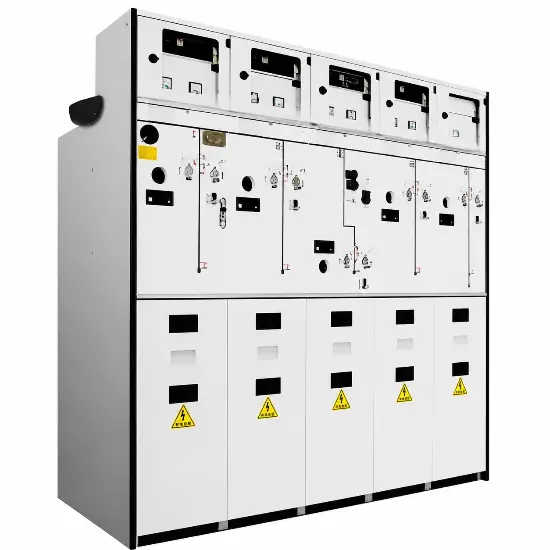
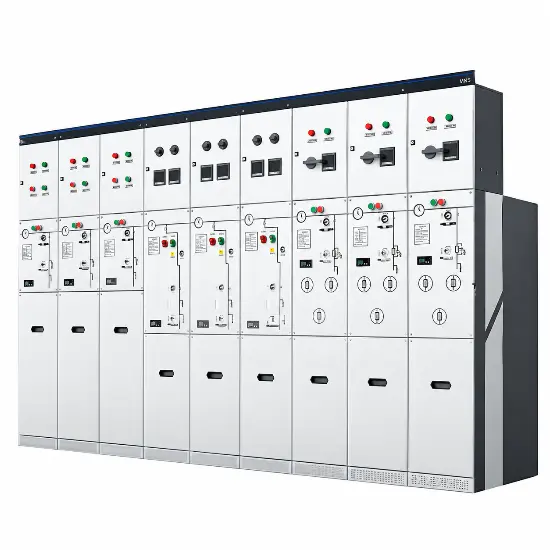
When the current-carrying contacts of a circuit breaker separate, an arc forms and persists briefly after contact separation. This arc is hazardous due to the heat energy it generates, which can produce explosive forces.
A circuit breaker must extinguish the arc without damaging equipment or endangering personnel. The arc significantly influences the breaker’s performance. Interrupting a DC arc is inherently more challenging than an AC arc. In an AC arc, the current naturally reaches zero during each waveform cycle, causing the arc to vanish momentarily. This zero-crossing creates an opportunity to prevent arc restrike, leveraging the brief interval of current absence to deionize the gap and inhibit re-ignition.
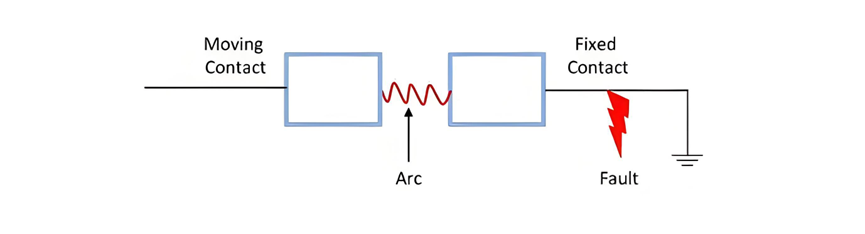
The conductance of an arc is proportional to the electron density (ions per cubic centimeter), the square of the arc diameter, and the inverse of the arc length. For arc extinction, it is essential to reduce free electron density (ionization), shrink the arc diameter, and increase arc length.
Methods of Arc Extinction
There are two primary methods for arc extinction in circuit breakers:
High Resistance Method
Principle: The arc’s effective resistance is increased over time, reducing the current to a level where heat generation can no longer sustain the arc, leading to extinction.
Energy Dissipation: Due to the arc’s resistive nature, most system energy is dissipated within the circuit breaker, a significant drawback.
Techniques to Increase Arc Resistance:
Cooling: Reduces ion mobility and electron density.
Arc Lengthening: Separating contacts increases the path length, raising resistance.
Cross-Section Reduction: Narrowing the arc’s diameter decreases conductance.
Arc Splitting: Dividing the arc into smaller segments (e.g., via metal grids or chutes) increases total resistance.
Low Resistance (Zero Current Interruption) Method
Applicability: Exclusive to AC circuits, leveraging the natural current zero-crossings (100 times per second for 50 Hz systems).
Mechanism:
The arc resistance is maintained at low levels until the current reaches zero.
At the zero-crossing, the arc extinguishes naturally. Dielectric strength is rapidly restored across the contacts to prevent restriking, leveraging the brief absence of current to deionize the gap.
Advantage: Minimizes energy dissipation within the breaker by utilizing the AC waveform’s inherent zero points, making it highly efficient for arc interruption.

 Login