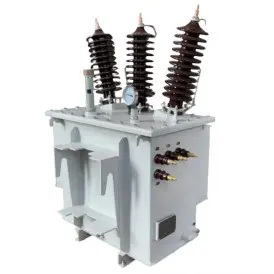
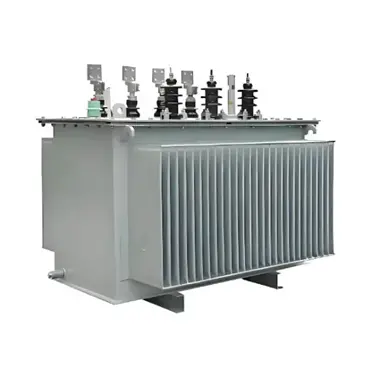
The Vziman Distribution Transformer H61 is a pole-mounted oil-immersed distribution transformer specifically designed to meet the grid standards of Africa and certain French-speaking countries.
For the low-voltage or high-current side of such transformers, the adoption of a helical coil structure with longitudinal oil ducts is a highly targeted design. Its core advantages are primarily reflected in three aspects: heat dissipation efficiency, mechanical strength (short-circuit withstand capability), and electrical insulation.
1. Superior Heat Dissipation and Temperature Rise Control
One of the greatest challenges faced by power grids in tropical regions like Africa is the extremely high ambient temperature.
-
Three-dimensional cooling channels: Conventional helical coils typically rely only on transverse (interlayer) cooling. In contrast, the "helical coil with longitudinal oil ducts" incorporates vertical oil passages within the winding or between the core and the outer winding. When the transformer oil expands upon heating, a natural thermal convection (chimney effect) is formed from bottom to top.
-
Elimination of local hotspots: The cooling oil can smoothly flow through the longitudinal oil ducts, coming into direct contact with the deep conductors of the coil to rapidly dissipate the Joule heat generated by high currents. This effectively eliminates "hotspots" inside the winding, significantly extending the long-term full-load service life of the Vziman H61 transformer under high-temperature conditions and preventing the insulation paper from premature aging due to overheating.
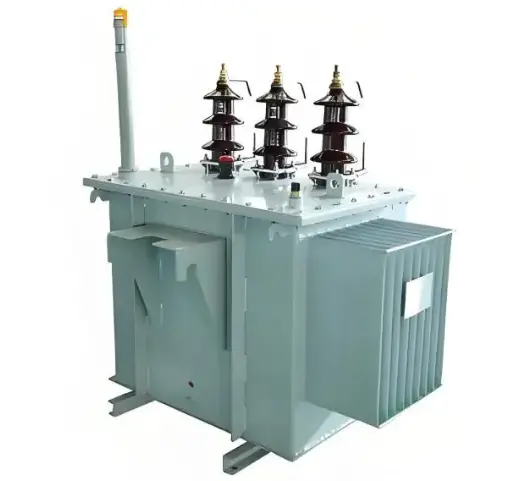
Vziman H61 Distribution Transformer
2. Exceptional Mechanical Strength Against Short Circuits
Distribution networks at the end of the grid are often prone to external short-circuit faults, during which transformer windings are subjected to enormous electromagnetic mechanical stresses.
-
Compact structure: The helical coil itself is wound like a spring using multiple parallel flat conductors, resulting in a continuous and tight construction.
-
Support and stress distribution: The longitudinal oil ducts are typically formed by high-strength insulating spacers (such as laminated wood or pressboard). These spacers not only form the oil passages but also serve as a robust skeletal support. When the radial and axial electromagnetic forces generated by short-circuit currents impact the coil, these longitudinal spacers effectively distribute and resist the stresses, preventing winding deformation, distortion, or collapse, thereby greatly enhancing the transformer's ability to withstand short circuits.
3. Optimized Current Distribution and Low Losses
-
Reduced eddy current losses: The low-voltage side of the H61 distribution transformer often carries large currents. Using a single thick conductor would result in severe skin effects and eddy current losses. The helical coil structure allows the use of multiple parallel flat conductors with smaller cross-sections, and through proper transposition techniques, ensures uniform current distribution among the parallel conductors.
-
Suppression of circulating currents: The design incorporating longitudinal oil ducts facilitates better arrangement of transposition points, effectively reducing circulating current losses between parallel conductors, thereby enabling the entire transformer to achieve lower load loss standards.
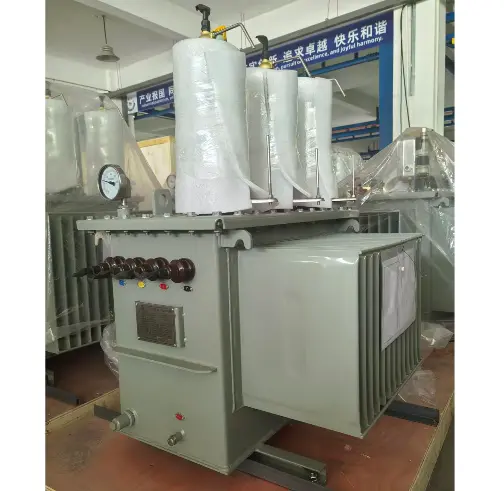
Vziman H61 Distribution Transformer Site Photo
4. More Reliable Electrical Insulation
-
Optimized oil-paper insulation coordination: The presence of longitudinal oil ducts makes the internal oil-paper composite insulation structure more reasonable. Transformer oil serves not only as a cooling medium but also as an insulating medium. The longitudinal oil passages ensure that the insulation between layers and turns is always surrounded by high-quality insulating oil, eliminating dead zones and improving the overall withstand voltage capability and lightning impulse withstand capacity of the winding.
Summary
For the Vziman Distribution Transformer H61, the adoption of the helical coil structure with longitudinal oil ducts represents the optimal winding process choice to simultaneously address high-current heat dissipation, energy efficiency with low losses, and robust resistance to external short circuits in harsh high-temperature environments such as those found in Africa.
Edited From:Echo

 Login