

Search


Core Material Differences Between Oil-Immersed Amorphous Alloy Distribution Transformers and Conventional Silicon Steel Distribution Transformers

Amorphous alloy vs silicon steel core differences in distribution transformers: lower no‑load losses, better efficiency, and application benefits.

Vziman
Field: Manufacturing
10Year<
China
Add us on Google
 
An oil-immersed amorphous alloy distribution transformer is a transformer whose core is made of amorphous alloy ribbon and immersed in insulating oil. This fully sealed structure not only meets the operational requirements of various harsh environments but also achieves ultra-low no-load losses, aligning with the direction of low-carbon energy efficiency.
The core material differences compared with conventional oil-immersed silicon steel distribution transformers are as follows:
iee-business

1. Internal Structure and Physical Form

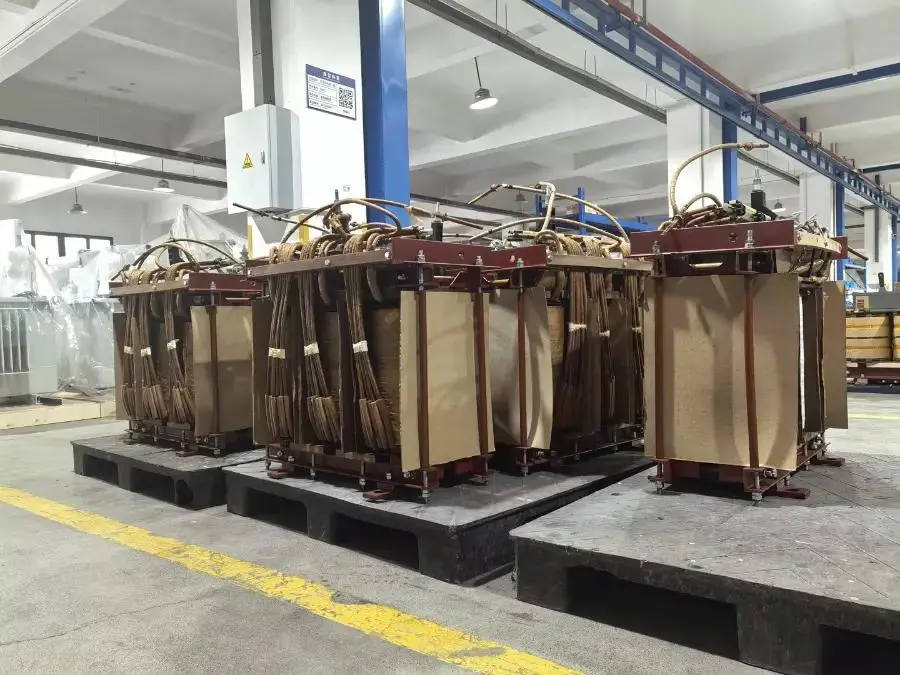
Amorphous alloy transformer: The core material is an extremely thin amorphous magnetic ribbon. The atoms within this material are arranged in a disordered non-crystalline structure (also known as metallic glass). Because the material is extremely thin and brittle, it is difficult to shear and is therefore typically formed into a wound-core structure.

Conventional silicon steel transformer: The core is usually assembled from stacked silicon steel sheets with a high silicon content. The surface of each sheet is coated with insulating varnish. This is a crystalline structure material.

2. Electromagnetic Performance and Losses

Amorphous alloy transformer: Because the amorphous structure has no magnetocrystalline anisotropy and no grain boundaries, it offers high magnetic permeability and low coercivity. In addition, the electrical resistivity of amorphous alloy is 2–3 times that of silicon steel, which effectively reduces eddy current losses. As a result, no-load losses are significantly lower than those of conventional silicon steel transformers.

iee-business

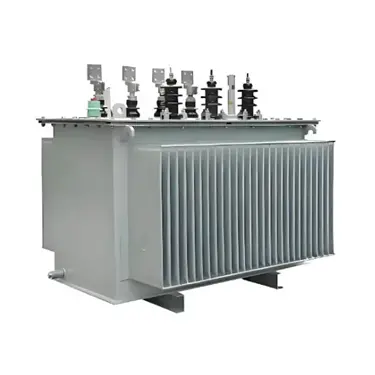
Oil-Immersed Amorphous Alloy Power distribution Transformer

Conventional silicon steel transformer: Although silicon steel sheets also offer good magnetic performance, their hysteresis and eddy current losses at the same working flux density remain substantially higher than those of amorphous alloy material.

3. Core Stacking Factor, Weight, and Dimensions

Amorphous alloy transformer: Due to material characteristics and winding process limitations, the core stacking factor is lower. For the same rated capacity, the weight and dimensions of an amorphous alloy transformer are typically larger than those of a conventional silicon steel transformer.

Conventional silicon steel transformer: The lamination stacking factor of silicon steel sheets is higher, allowing a more compact overall structure and lighter weight.

4. Operating Characteristics and Mechanical Strength

Amorphous alloy transformer: Amorphous alloy exhibits higher magnetostriction, meaning greater deformation under alternating electromagnetic fields. As a result, operating noise is usually higher than that of silicon steel transformers. In addition, amorphous ribbon is highly stress-sensitive and relatively brittle, giving it slightly weaker short-circuit withstand capability. If damaged, on-site repair is generally not possible and the unit must be returned to the factory.

Conventional silicon steel transformer: Silicon steel sheets offer high mechanical strength and strong short-circuit withstand capability. Vibration and noise during operation are relatively low, and subsequent maintenance is more convenient.

5. Thermal Stability and Overload Capability

Amorphous alloy transformer: Amorphous alloy material is temperature-sensitive. When the operating temperature exceeds its crystallization temperature, the amorphous structure is destroyed, causing severe degradation of magnetic properties. Consequently, its long-term overload capability is inferior to that of silicon steel transformers, and the design typically requires a reduced working flux density.

Conventional silicon steel transformer: Silicon steel sheets have a crystalline structure with higher Curie temperature and crystallization temperature, offering excellent thermal stability. They can withstand significant short-term overloads and long-term high-load operation.

6. Winding Structure and Short-Circuit Resistance Mechanism

Amorphous alloy transformer: Because the amorphous ribbon is extremely thin and brittle, it cannot be stacked like silicon steel sheets and must use a rectangular wound-core structure. This requires both the high-voltage and low-voltage windings to be formed as rectangular coils. Under short-circuit conditions, radial electromagnetic forces on rectangular windings tend to cause deformation, resulting in weaker short-circuit resistance. Additionally, to avoid stress damage to the core, the amorphous core is typically suspended, which further reduces overall mechanical support strength.

Conventional silicon steel transformer: Uses conventional circular windings and a laminated core structure. The core and windings support each other, providing high overall mechanical strength and excellent short-circuit withstand capability.

7. Cost and Economic Benefits

Amorphous alloy transformer: Because the manufacturing and processing of amorphous alloy ribbon is more complex, the initial procurement cost is generally higher than that of conventional silicon steel transformers. However, the ultra-low no-load losses mean the additional upfront investment is typically recovered within a few years of operation, after which significant electricity cost savings accrue.

Conventional silicon steel transformer: Initial manufacturing cost is lower, but due to relatively higher operating losses, the long-term total cost of electricity consumption is higher.

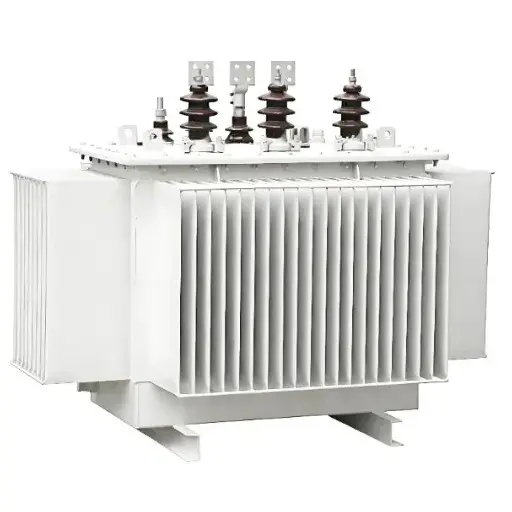
Sealed Oil-Immersed power Transformer-6kV to 11kV

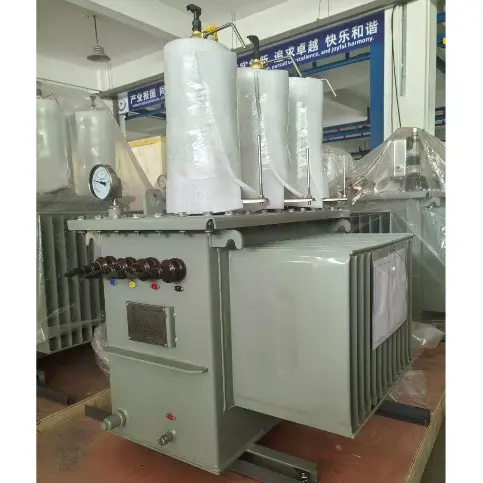
Sealed Oil-Immersed power Transformer

8. Environmental Benefits and Life Cycle

Amorphous alloy transformer: Beyond energy savings during operation, the production process for amorphous alloy ribbon is substantially simplified, with manufacturing energy consumption only 20%–25% of that required for silicon steel sheet production. Furthermore, the extremely low operating losses and reduced temperature rise significantly slow the aging rate of the insulating oil, reducing harmful gas emissions and delivering high environmental value.

Conventional silicon steel transformer: Silicon steel sheet production is an energy-intensive process, and the higher operating losses and temperature rise accelerate insulating oil aging.

Summary

The amorphous alloy transformer's core advantage lies in its ultra-low no-load losses, making it the ideal choice for long-duration continuous operation and energy-sensitive applications. However, it has limitations including higher initial cost, larger dimensions, higher noise, and weaker impact resistance. The conventional silicon steel transformer, while having higher no-load losses, remains the market leader due to its lower cost, high mechanical strength, and compact size. The actual selection should consider load factor, operating environment, and budget to find the optimal balance between initial investment and life-cycle energy efficiency.

Edited From:Leon

Give a tip and encourage the author!

Comments

Share your question or perspective
WhatsApp
Send inquiry
+86
Click to upload file
Download
Get the IEE Business Application
Use the IEE-Business app to find equipment, obtain solutions, connect with experts, and participate in industry collaboration anytime, anywhere—fully supporting the development of your power projects and business.
Login
or continue with
New here?
Register








