1. Paghigayon
Sa nakaraang mga tuig, sama sa maong pag-usbong ug mabilis nga pag-abot sa ekonomiya sa nasod, ang demand sa kuryente nagsugyot siguro. Sa mga rural na grid sa kuryente, ang patuloy nga pagtaas sa load, gilabay sa dili rasonable nga distribusyon sa lokal nga imumano ug limitado nga kapabilidad sa pag-regulate sa voltage sa main grid, nagresulta sa daghan kaayo nga 10 kV long feeders—espesyalmente sa mga layo nga mga bukid o rehiyon nga may dili matibay nga grid structure—nga ang radius sa supply adunay gipasabot sa national standards. Taliwala, ang kalidad sa voltage sa katapusan sa mga 10 kV lines mahadlok pang mapahimulos, ang power factor wala mogamit sa mga requirements, ug ang line losses padayon na mataas.
Tungod sa mga limitasyon sama sa limitado nga pondo sa pagbuhat sa grid ug mga pagbalik sa investment, dili praktikal ang pag-solve sa tanang problema sa low-voltage-quality sa 10 kV distribution feeders pinaagi lang sa pag-deploy og daghang high-voltage distribution substations o pagpalit sa grid. Ang 10 kV feeder automatic voltage regulator nga gi-introduce isip teknikal nga solusyon aron masolbaran ang problema sa dili magandang kalidad sa voltage sa mga long-distance distribution lines nga may extended supply radii.
2. Pamaagi sa Pagtrabaho sa Voltage Regulator
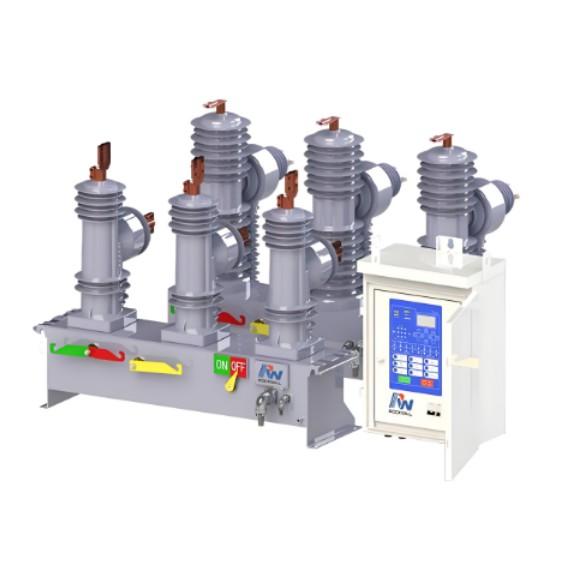
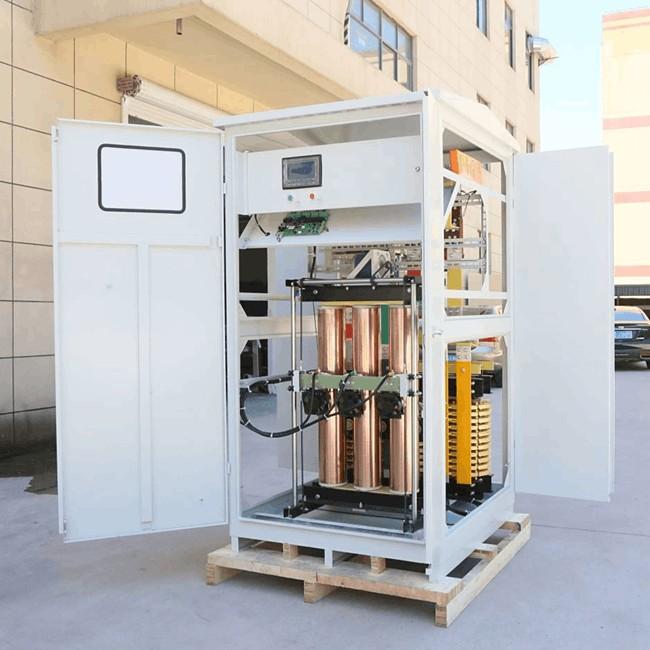
Ang SVR (Step Voltage Regulator) automatic voltage regulator gibuhat sa usa ka main circuit ug voltage regulation controller. Ang main circuit gikuha sa usa ka three-phase autotransformer ug usa ka three-phase on-load tap changer (OLTC), sama sa gipakita sa Figure 1.
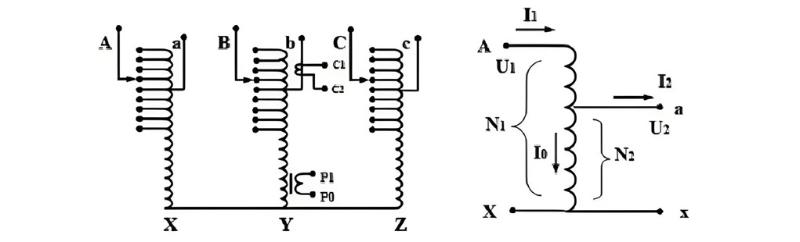
Ang winding system sa regulator adunay usa ka shunt winding, series winding, ug control voltage winding:
Ang series winding usa ka multi-tap coil nga giconnect tali sa input ug output pinaagi sa iba't ibang contacts sa tap changer; direktang regulate niini ang output voltage.
Ang shunt winding usa ka common winding sa autotransformer, nga gipagana ang magnetic field nga kinahanglan para sa energy transfer.
Ang control voltage winding, gipalihok sa shunt winding, nagserbisyo isip secondary sa shunt coil aron mobulig sa operating power sa controller ug motor, samtang ipahibalo usab ang voltage signals para sa output measurement.
Ang pamaagi sa pagtrabaho kasagaran: Pinaagi sa pag-connect sa taps sa series winding sa iba't ibang posisyon sa on-load tap changer, ang turns ratio tali sa input ug output windings giusab pinaagi sa controlled switching sa tap positions, resulta niini ang adjustment sa output voltage. Batasan sa application requirements, ang on-load tap changers kasagaran giconfigure og 7 o 9 tap positions, nga molihok sa users nga pilian ang appropriate configuration batasan sa aktwal nga voltage regulation needs.
Ang turns ratio tali sa primary ug secondary windings sa regulator consistent sa usa ka conventional transformer, i.e.:

3.Aplikasyon Example
3.1 Kasamtangan nga Kahimtang sa Line
Isa ka 10 kV distribution line adunay main feeder length nga 15.138 km, gipatukod pinaagi sa duha ka klase nga conductor: LGJ-70 mm² ug LGJ-50 mm². Ang total capacity sa mga distribution transformers tali sa line 7,260 kVA. Durante sa peak load periods, ang voltage sa 220 V side sa mga distribution transformers sa middle-to-end sections sa line mubo ngadto sa 175 V.

Ang LGJ-70 conductor adunay resistance nga 0.458 Ω/km ug reactance nga 0.363 Ω/km. Taliwala, ang total resistance ug reactance gikan sa substation hangtod Pole #97 sa main feeder:
R = 0.458 × 6.437 = 2.95 Ω
X = 0.363 × 6.437 = 2.34 Ω
Batasan sa distribution transformer capacity ug load factor tali sa line, ang voltage drop gikan sa substation hangtod Pole #97 sa main feeder makalkula as

Ang symbols nga gigamit gidefine as follows:
Δu — voltage drop tali sa line (unit: kV)
R — line resistance (unit: Ω)
X — line reactance (unit: Ω)
r — resistance per unit length (unit: Ω/km)
x — reactance per unit length (unit: Ω/km)
P — active power sa line (unit: kW)
Q — reactive power sa line (unit: kvar)
Taliwala, ang voltage sa Pole #97 sa main feeder ra:
10.4 kV − 0.77 kV = 9.63 kV.
Parehas, ang voltage sa Pole #178 makalkula isip 8.42 kV, ug ang voltage sa katapusan sa line 8.39 kV.
Batasan sa pagseguro sa kalidad sa voltage, ang primary voltage regulation methods sa medium- ug low-voltage distribution networks include:
Pagtukod og bag-ong 35 kV substation aron maputli ang radius sa supply sa 10 kV.
Pagbalhin sa mga conductor ngadto sa mas dako nga cross-sectional areas aron mapugos ang line loading.
Pag-install og line-based reactive power compensation—subali’t kini nga paagi labi ka dili efektibo para sa mga long lines nga may heavy loads.
Pag-install og SVR feeder automatic voltage regulator, nga naghatag og mataas nga automation, maayo nga performance sa voltage regulation, ug flexible nga deployment.
Sumala, tatlo ka alternative nga solusyon alang sa pag-improve sa end-of-line voltage quality sa 10 kV "Fakuai" feeder gi-compare.
Inaasahan nga resulta: Ang bag-ong substation makaputli nang malampuson ang supply radius, taas ang end-of-line voltage, ug maayo ang overall power quality. Bisag labi ka efektibo, kini nga solusyon nagkinahanglan og dako nga investment.
Ang pag-modify sa line parameters kasagaran naglakip sa pagtaas sa cross-section sa conductor. Para sa mga lugar nga walay daghang tawo ug small-conductor lines, ang resistive losses adunay dominante sa total voltage drop; bisag unsa, ang pagbawas sa resistance sa conductor naghatag og mahimong makita nga pagtaas sa voltage. Pinaagi niining upgrade, ang end-of-line voltage mahimo nimong itaas gikan sa 8.39 kV hangtod sa 9.5 kV.
Isang 10 kV automatic voltage regulator ang gisulod aron mapugos ang low voltage issues downstream sa Pole #161.
Inaasahan nga resulta: Ang end-of-line voltage mahimo nimong itaas gikan sa 8.39 kV hangtod sa 10.3 kV.
Ang comparative analysis nagpakita nga ang Option 3 ang pinaka-economical ug practical.
Ang SVR feeder automatic voltage regulation system nagstabilize sa output voltage pinaagi sa pag-adjust sa turns ratio sa usa ka three-phase autotransformer, nga naghatag og daghang key advantages:
Fully automatic, on-load voltage regulation.
Ginagamit ang star-connected three-phase autotransformer—compact size ug high capacity (≤2000 kVA), suitable for pole-to-pole installation.
Typical regulation range: −10% to +20%, sufficient to meet voltage requirements.
Batasan sa theoretical calculations, girekomenda ang pag-install og usa ka SVR-5000/10-7 (0 to +20%) automatic voltage regulator sa main feeder. Human sa installation, ang voltage sa Pole #141 mahimo nimong itaas hangtod sa:
U₁₆₁ = U × (10/8) = 10.5 kV
kung diin:
U₁₆₁ = voltage sa installation point sa regulator human sa commissioning
10/8 = maximum turns ratio sa regulator nga may 0 to +20% adjustment range
Nagpakita ang field operation nga ang SVR system reliably tracks input voltage variations ug maintains stable output voltage, demonstrating proven effectiveness in low-voltage mitigation.
3.2.4 Benefit Analysis
Kumpara sa pagtukod og bag-ong substation o pagbalhin sa mga conductors, ang pag-deploy og SVR voltage regulator makapugos nang malampuson ang capital expenditure. Dili lang ini nagtaas sa line voltage aron mapasabot sa national standards—naghatag og matibay nga social benefits—but also, under constant load conditions, reduces line current by raising voltage, thereby lowering line losses and achieving energy savings. This enhances the utility’s economic efficiency.
4. Conclusion
Para sa mga rural distribution networks sa mga lugar nga may limitado nga future load growth—espesyalmente sa wala gyud nga nearby power sources, featuring long supply radii, high line losses, heavy loading, ug wala plan nga 35 kV substations sa near term—the use of SVR feeder automatic voltage regulators offers a compelling alternative. Ini naghatag og oportunidad aron mapugos o maputli ang pagtukod og 35 kV substation while effectively resolving low voltage quality and reducing energy losses. Given its investment cost is less than one-tenth of a new 35 kV substation, the SVR solution delivers significant social and economic benefits and is highly recommended for widespread adoption in rural power grids.