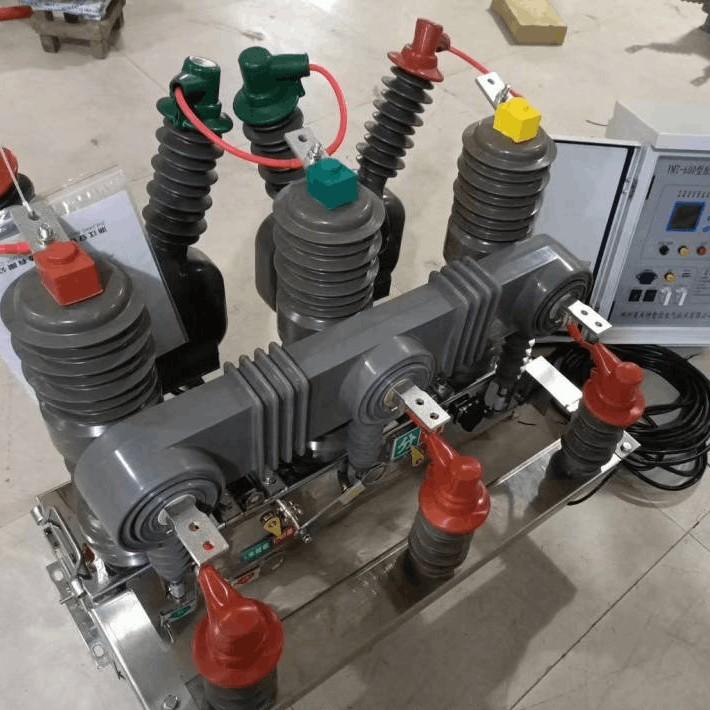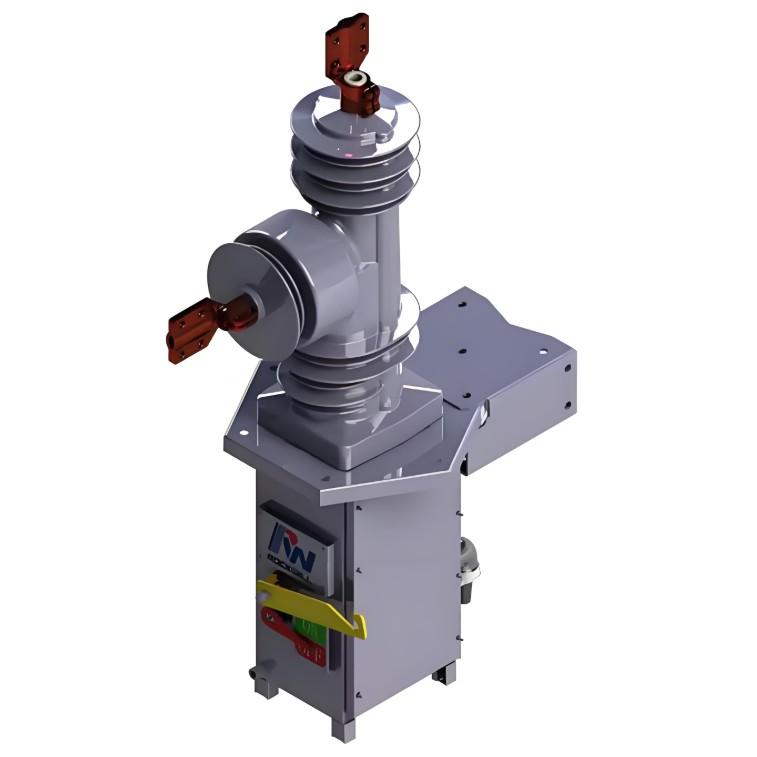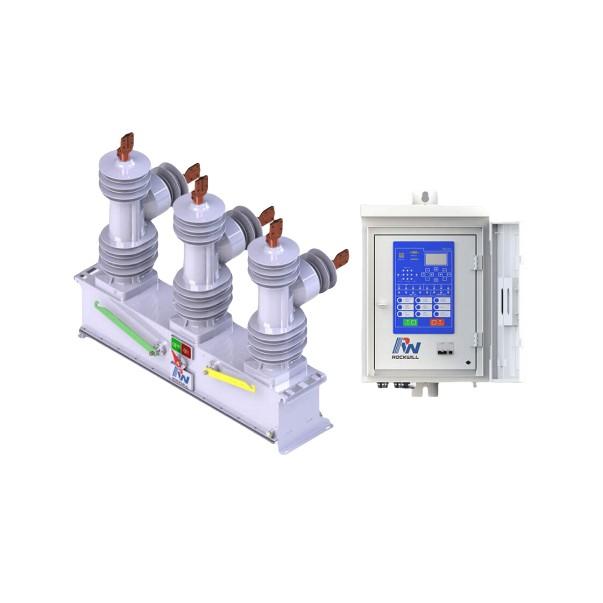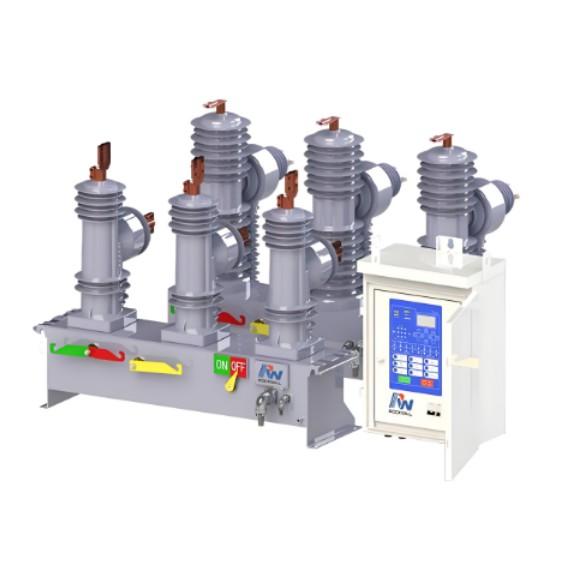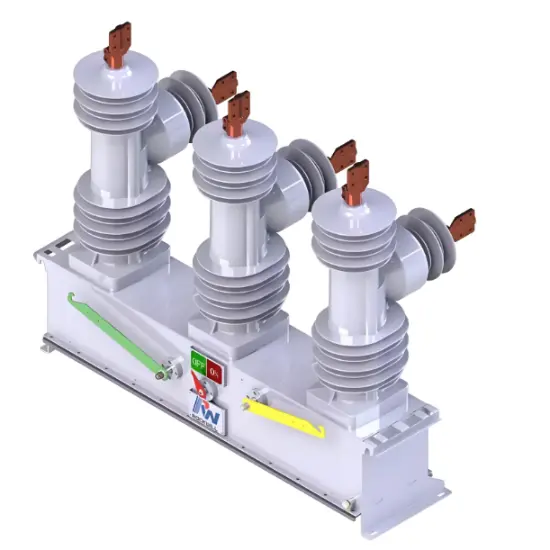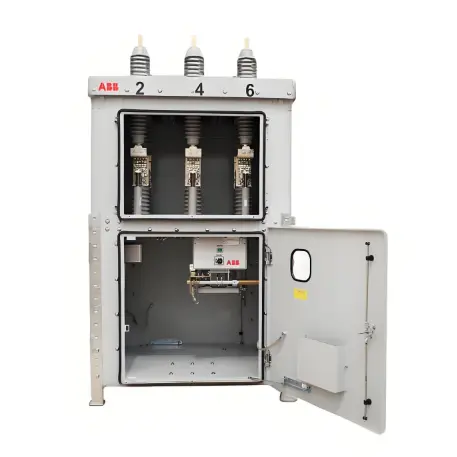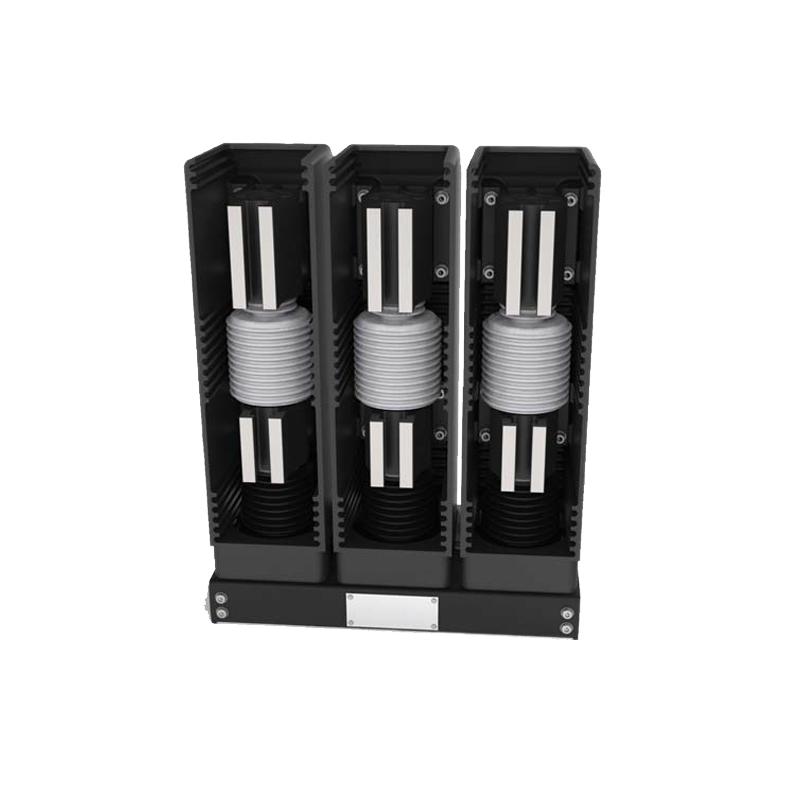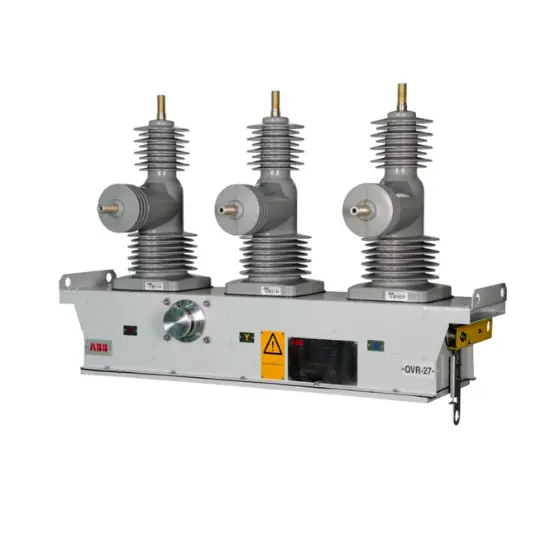
Lightning strikes, fallen tree branches, and even Mylar balloons are enough to interrupt current flow on power lines. That’s why utility companies prevent outages by equipping their overhead distribution systems with reliable recloser controllers.
In any smart grid environment, recloser controllers play a critical role in detecting and interrupting transient faults. Although many short circuits on overhead lines can resolve themselves, reclosers help improve service continuity by automatically restoring power after a momentary fault.
Recloser controllers sense the voltage and current of AC transmission on power lines. When a surge or fault occurs, power relays open to contain the fault and prevent it from spreading across the entire grid—a phenomenon known as cascading failure. When the fault is caused by a transient event—such as lightning, tree branches, or balloons (as mentioned earlier)—any of these can temporarily cause lines to cross. The recloser controller continues monitoring the power line and, if AC performance stabilizes, will attempt to close or “reclose” the relay. After closing, if high voltage, high current, or another fault condition is detected, the relay will open again. Reclosers typically attempt to reclose the relay three to five times. The idea is to enable the grid to self-heal.

Why are recloser controllers so important?
Recloser controllers have several key features:
Sensing the power line, including three voltages, three currents, one or two grounds, and usually redundancy. High accuracy is essential, especially for harmonic measurements.
Isolation is mandatory. Isolation is typically implemented both upstream and downstream in the signal chain to ensure reliable system operation and protect electronic components. Isolation is also required before communication links, and various isolation options are often needed.
Multiple power supplies with both AC and DC inputs. Unsurprisingly, the system includes a battery because it must remain operational and continue sensing the AC line even during a power outage.
Communication is also critical for recloser controllers, as these systems must communicate with the larger grid to report events. Most smart grids use wireless or power-line communication networks. Units such as recloser controllers often still retain traditional serial communication, such as RS-485, which is converted via a gateway or other hardware into their chosen wireless protocol.
Analog building blocks for recloser controllers
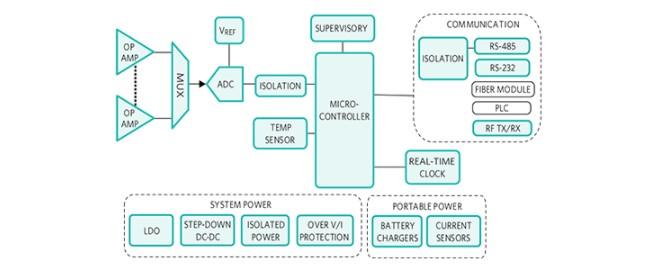
Designing a recloser controller requires various critical analog building blocks. The block diagram shown in Figure 1 provides only one example of a recloser controller design. As you can see, there are multiple system power supplies, communication interfaces, voltage monitoring, and supervisory circuits. How do you select the right components? High accuracy, wide input voltage protection range, low power consumption, and small size are some important characteristics to evaluate to meet your design requirements. The MAX16126/MAX16127 load-dump/reverse-voltage protection circuits are an example of devices that provide these features.
With an integrated charge pump, these ICs control two external back-to-back N-channel MOSFETs, which turn off and isolate the downstream power supply under destructive input conditions. They include a flag output that signals during fault conditions. For reverse-voltage protection, the external back-to-back MOSFETs minimize voltage drop and power loss during normal operation, outperforming traditional reverse-battery diodes. Another reliable, low-power microprocessor supervisor is our MAX6365 family, which features backup battery and chip-enable gating functionality.
The MAX6365 supervisory circuit, housed in a miniature 8-pin SOT23 package, simplifies power-supervision, battery-backup control, and memory write-protection functions in microprocessor systems. For always-on applications like recloser controllers, the low quiescent-current MAX6766 linear regulator meets the requirement. The MAX6766 operates from 4V to 72V, delivers up to 100mA of load current, and consumes only 31µA of quiescent current.
Smart grids bring greater efficiency and reliability to power delivery, while also enhancing the resilience of power infrastructure. Therefore, when you design your next recloser controller, keep in mind the underlying technologies inside—they all play a role in keeping the lights on.