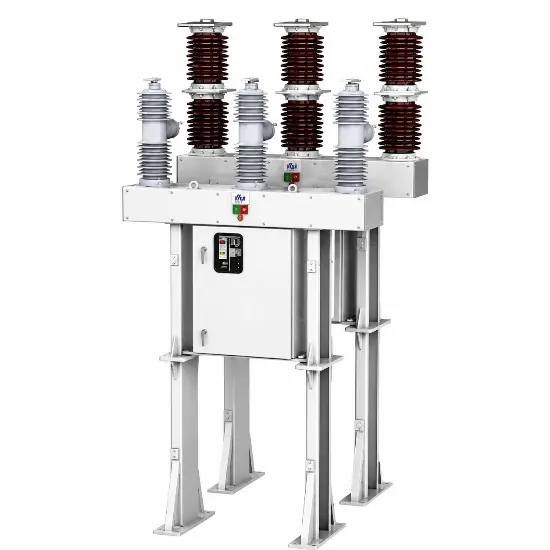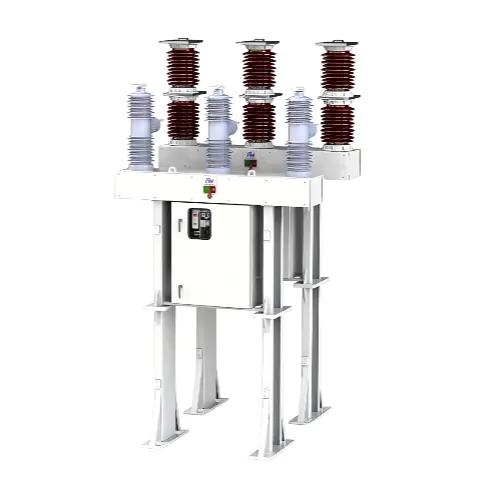
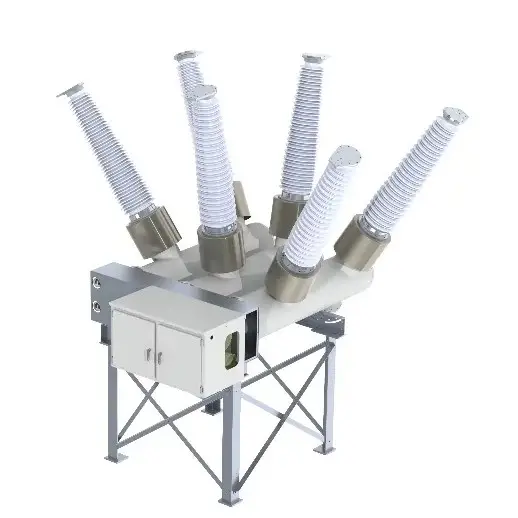
A deep dive into the working principles, structural differences, and engineering trade-offs between permanent magnetic and spring-driven mechanisms in modern medium-voltage reclosers.
Principle: Energy Conversion and Mechanical Self-locking
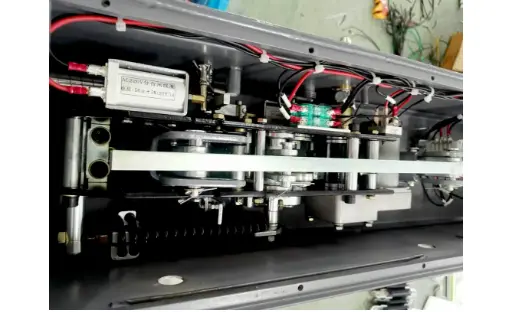
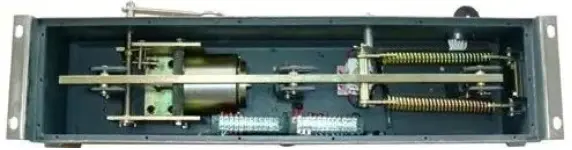
The spring mechanism is essentially a mechanical energy storage device. Its working process consists of three stages:

Key Point: Relies on complex mechanical latches and bearings, with a long mechanical transmission chain.
Principle: Magnetic Balance and Electronic Switching
The PMA adopts a scheme of electromagnetic drive and permanent magnetic holding. Its structure is typically bi-stable:

Key Point: The moving armature is directly connected to the insulating rod, with almost no intermediate transmission links.
| Comparison Item | Spring Mechanism SOM | Permanent Magnetic Actuator PMA |
|---|---|---|
| Number of Parts | Very high (hundreds of components, gears, bearings) | Very low (typically only one moving part) |
| Mechanical Life | 5,000 to 10,000 cycles (limited by wear) | 30,000 to 100,000 cycles (near zero wear) |
| Maintenance | Regular lubrication, linkage adjustment, wear checks | Basically maintenance free |
| Action Characteristics | Less affected by ambient temperature, stable mechanical traits | Requires precise electronic controllers, affected by capacitor life |
| Failure Modes | Seizing, refusal to act, latch failure | Electronic component aging, magnet demagnetization (rare) |
| Auxiliary Power | Requires AC DC power for motor storage | Requires high-reliability charging circuit and capacitors |
| Operating Energy | Low motor power but long storage time | Extremely high instantaneous power from capacitors, fast response |
In actual distribution projects, the choice of mechanism should depend on specific conditions:
Expert Insight: When maintaining a PMA, never disassemble the magnetic circuit system to avoid destroying the magnetic balance. Focus on monitoring the capacitor voltage, which is critical for successful emergency tripping.