I. Is the SF6 Outdoor Ring Main Unit a "Maintenance-Free" Device?
SF6 outdoor ring main units are often marketed in the industry as "maintenance-free" equipment, but this concept requires precise understanding.
What "Maintenance-Free" Actually Covers
The core components of an SF6 ring main unit — load switches, busbars, fuses, and other primary live parts — are fully sealed within a stainless steel gas tank filled with SF6 gas as the insulation and arc-quenching medium. This fully enclosed, hermetically sealed design delivers:
- Switching elements inside the gas tank require no servicing throughout their design life (typically 25–30 years)
- Protection class up to IP67, immune to moisture, contamination, salt fog, dust, and other environmental factors
- Mechanical transmission components receive lifetime lubrication at factory; no supplementary lubrication needed under normal operating conditions
- High-quality SF6 gas tanks achieve annual leakage rates below 0.1%; no gas replenishment needed during normal service life (specific figures per manufacturer technical documentation)
"Maintenance-Free" ≠ "No Inspection"
Major manufacturers such as ABB explicitly state in technical manuals: SF6 gas tank internals are maintenance-free for the product life, but external mechanical components, panels, instruments, and operating mechanisms still require periodic inspection and maintenance. In extreme environments with dust, sand, or heavy pollution, inspection and necessary maintenance become even more critical.
Accurate characterization: The SF6 outdoor ring main unit is a "low-maintenance" or "core-component maintenance-free" device — routine patrol inspection remains indispensable.
Per industry standards and O&M practice, daily patrol inspection of SF6 outdoor ring main units shall cover the following six aspects:
1. Appearance & Environment Check
- Cabinet body: deformation, corrosion, damage, paint peeling
- Cabinet doors: closed tightly, locks intact and engaged
- Nameplates, numbering, open/close position indicators: complete and legible
- Observation window glass: intact, clean, crack-free
- Cable entry/exit holes: sealed against small animals; rodent protection intact
- Cabinet top: free of foreign objects, no water ingress
- Surroundings: no debris, flammables, standing water; ventilation normal
- Foundation: no excavation or external damage risks nearby
2. SF6 Gas Pressure Check (Critical Item)
- Verify pressure gauge (density relay) reading in normal range (green zone)
- Confirm no sudden pressure drop or abnormal fluctuation
- Before any operation: verify normal pressure, no alarm signals, anti-misoperation interlock functional — only then proceed with open/close operations
- If pressure abnormally low: use SF6 leak detector to locate leak points
3. Instruments & Indication Devices
- Voltmeters/ammeters: readings normal and within allowable range
- Live-line indicators: flashing normally
- Fault indicators: work indicator lights free of abnormal flashing
- Switch open/close position indicators: consistent with actual operating state
- Remote/local selector switch: in correct position
- Protection device indicator lights: normal; no alarm/fault lights illuminated
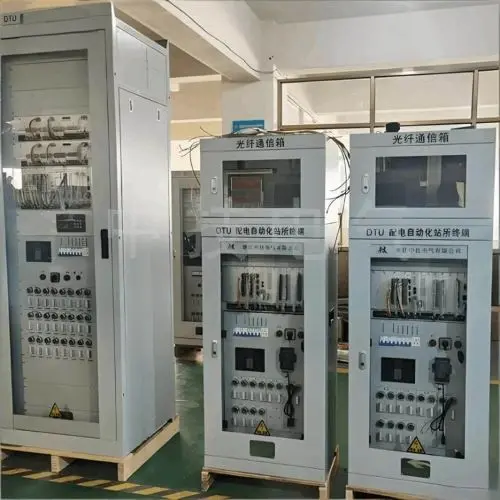
- DTU communication lights: flashing normally; LCD panel display normal
4. Electrical Connections & Insulation
- Cable terminations: no damage, cracks, overheating discoloration, bulging, compound leakage
- Busbars & connections: no overheating discoloration, loosening, oxidation
- Insulators, bushings: no cracks, heavy contamination, flashover/discharge traces
- Grounding devices: intact, no severe corrosion or loosening
- Recommend IR thermography on switches, cable heads, etc. — monitor relative temperature rise; same-equipment same-location temperature difference should not exceed 10 K (reference DL/T 664)
5. Mechanical & Operating Mechanism
- Operating mechanism: flexible, no damage, rust, or binding
- Spring charging mechanism: normal; charge indicator correct
- Anti-misoperation interlocks: appearance intact, functioning normally
- Mechanical interlocks: complete and reliable
- Dehumidification heater: in good working order; no condensation inside cabinet
6. Operational State Perception ("Listen, Smell, Look")
- Abnormal sounds inside cabinet (partial discharge, metallic impact)
- Abnormal odors (burnt, arc smell)
- Abnormal vibration
III. Inspection Cycles & Special Inspection Requirements
| Inspection Type |
Frequency |
| Daily Patrol |
At least once per day; scheduled around shift handover or stable load periods |
| Periodic Patrol |
Based on equipment criticality & environment; generally ≥ once per week |
| Special Patrol |
Increase frequency after: |
| • Severe weather (thunderstorms, high winds, dense fog, extreme heat/cold) |
| • Typhoon passage — focus on cabinet sealing, foundation stability, drainage |
| • Equipment abnormal operation or protection operation |
| • Major power supply guarantee periods |
| • Dispatch instructions received |
- Two-person rule: one inspects, one stands by
- Proper PPE: safety helmet, insulating boots, etc.
- Maintain minimum safe distance from 10 kV live parts: ≥0.7 m (per GB 26860; distances vary by voltage level — apply per actual voltage)
- Strictly prohibited: unauthorized cabinet door opening, accidental contact with operating equipment
- Lock cabinet doors after patrol completion
- Report defects/abnormalities immediately; do not handle independently
V. Inspection Records & Defect Management
- Each patrol: complete standardized record form with time, personnel, equipment ID, check items, abnormalities, handling opinions
- Electronic recording via mobile terminals encouraged for archiving and trend analysis
- Defect handling: closed-loop "Discover → Record → Report → Resolve → Accept"
- Post-resolution: acceptance by designated personnel; record results and acceptance time
VI. SF6 Gas Environmental Management
SF6 is a potent greenhouse gas with Global Warming Potential ~23,900× CO₂. O&M must strictly follow environmental requirements:
- During maintenance or decommissioning: recover SF6 per regulations; venting to atmosphere strictly prohibited
- Gas replenishment: qualified personnel using dedicated equipment only; ensure zero leakage during recovery and charging
- Decommissioned SF6: handover to qualified entities for harmless disposal
VII. Periodic Overhaul Requirements
Although daily work focuses on patrol, equipment requires scheduled de-energized overhaul after certain service years. Intervals determined comprehensively per manufacturer documentation, operating conditions, and condition assessment. Main overhaul scope:
- SF6 gas pressure & density relay operation verification
- SF6 gas purity test; decomposition products (e.g., SO₂) & moisture content measurement
- Leak detection (especially areas with prior alarm records)
- Operate breaker & switches; verify action reliability
- Check position indicators, control & alarm functions
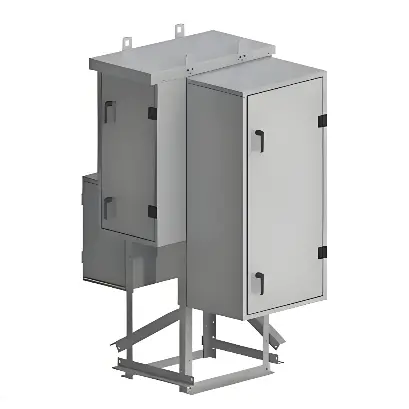
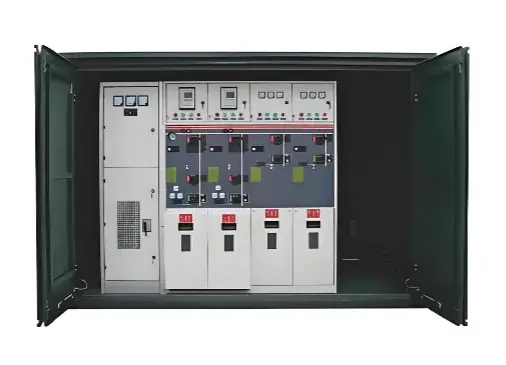
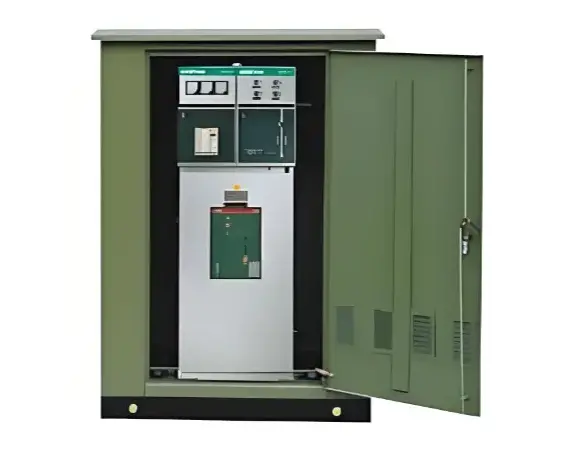
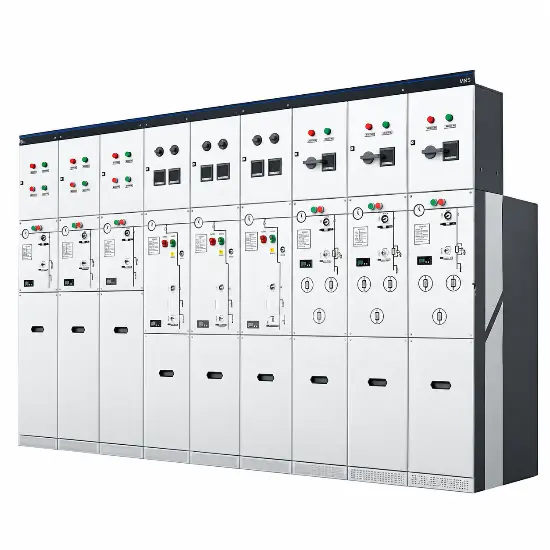
Outdoor SF6 Gas Insulated Ring Main Unit
VIII. Summary
The SF6 outdoor ring main unit, through its fully sealed, fully insulated gas tank structure, achieves maintenance-free operation of core primary components throughout their design life — making it a widely deployed "low-maintenance" device in distribution networks. However, "maintenance-free" absolutely does not mean "no management" — external instruments, operating mechanisms, cable terminations, mechanical interlocks, etc. remain subject to environmental and operational influences. Daily patrol inspection is the essential means to ensure long-term safe and reliable operation.
Patrol work shall cover six pillars: appearance/environment, SF6 pressure, instruments/indications, electrical connections/insulation, mechanical mechanisms, operational state perception — combining "look, listen, smell, measure." Flexibly increase special patrol frequency for weather changes, equipment anomalies, etc., and strictly observe two-person patrol, safe distance, and other fundamental safety rules.
In short: Core maintenance-free, externals frequently inspected, safety is the bottom line, records must be complete. Only by combining the "maintenance-free" design advantage with solid O&M management can the high reliability and low operating cost value of SF6 ring main units be truly realized.
Edited From:Noah

 Login