Search


SF6 leak rate experiment setup

SF6 density transducers of various types that monitor gas leaks in switchgear. See how performance comparisons under temperature fluctuations reveal reliable leak detection that ensures accurate, retrofit-ready monitoring.

Edwiin
Field: Power switch
10Year<
China
Add us on Google

SF6 leak rate experiment setup

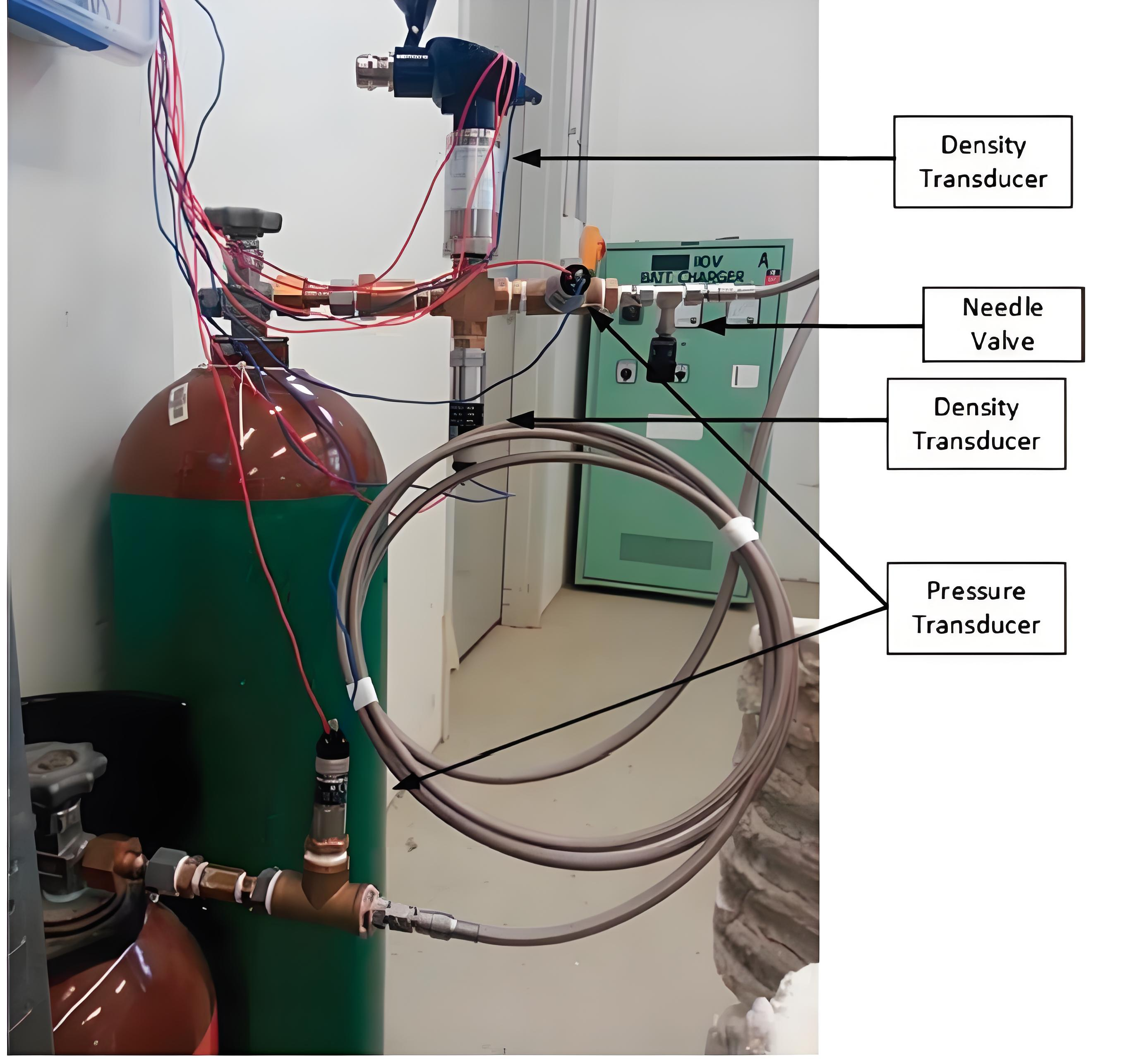
An experiment was carried out to simulate an SF6 gas leak by transferring SF6 gas from one gas bottle to another. The objective of this experiment was to ascertain whether there were any disparities in how each type of transducer tracked an SF6 gas leak. A quartz oscillating density transducer, a pressure and temperature - calculated density transducer, a pressure transducer, and two temperature sensors were used to monitor the controlled leak. The transfer of SF6 gas between the bottles was regulated by a needle valve to minimize the SF6 leak rate as much as was practically possible.

The experiment was conducted indoors within a non - climate - controlled environment, where there was no direct sunlight influencing the transducer measurements. However, during the experiment, the ambient temperature fluctuated between 17 and 29&deg;C. The results of this experiment indicate that there is no substantial difference among the types of transducers that can be retrofitted to a circuit breaker for SF6 density monitoring.

Give a tip and encourage the author!

Comments

Share your question or perspective
WhatsApp
Send inquiry
+86
Click to upload file
Download
Get the IEE Business Application
Use the IEE-Business app to find equipment, obtain solutions, connect with experts, and participate in industry collaboration anytime, anywhere—fully supporting the development of your power projects and business.
Login
or continue with
New here?
Register