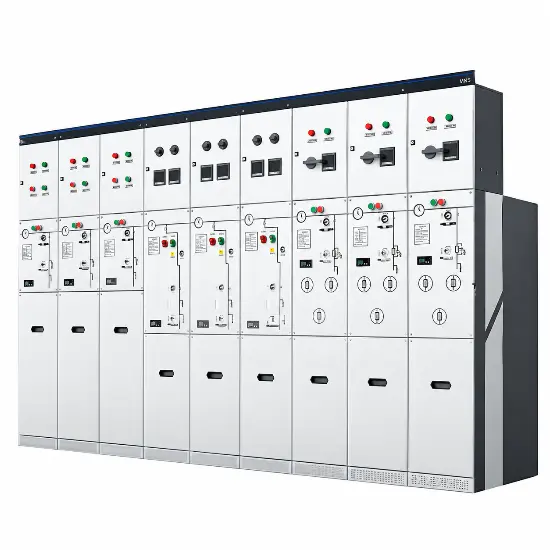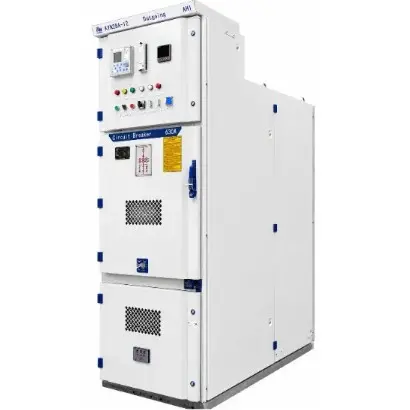
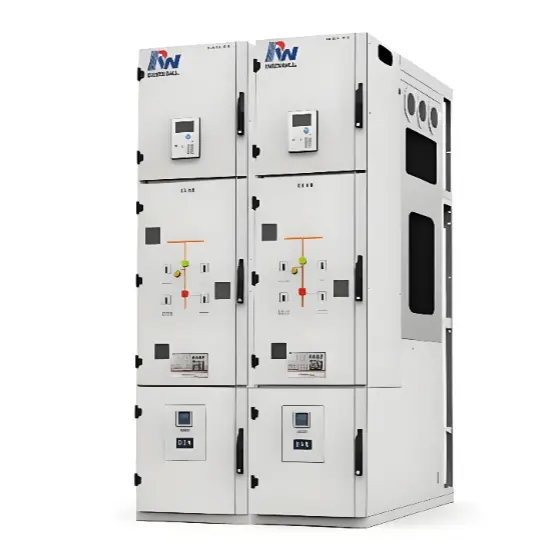
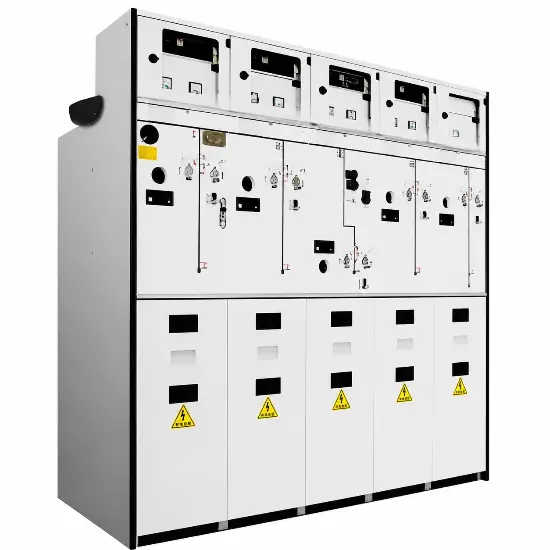
Rockwill RGIS switchgear gas selection for 12kV, 24kV, 40.5kV: comparing SF6, eco-efficient alternatives, and performance considerations.
Rockwill RGIS uses differentiated insulation gases across voltage classes (N2/dry air for 12/24 kV, SF6 for 40.5 kV, with g3being introduced as an eco-friendly alternative). This selection is fundamentally an engineering decision that balances insulation performance, equipment compactness, cost-effectiveness, and environmental regulations. Understanding this logic first requires a thorough comparison of the insulation and arc-quenching properties of N2, dry air, SF6, and g3.
| Gas | Composition |
|---|---|
| N2(Pure nitrogen) | ≥99.9% nitrogen |
| Dry air | ~79% N2 + ~21% O2 |
| SF6(Sulfur hexafluoride) | SF6 gas |
| g3(C4-FN/CO2 blend, eco-friendly alternative) | C4F7N (fluoronitrile) mixed with CO2 or O2 background gas |
| Gas | Relative Dielectric Strength |
|---|---|
| N2 | ~0.33–0.4 |
| Dry air | ~0.35–0.4 |
| SF6 | 1.0 (baseline) |
| g3 | ~0.9–1.0 (at design mixing ratio, close to SF₆) |
| Gas | Characteristics |
|---|---|
| N2 | Virtually no electronegativity; relies on collisional ionization |
| Dry air | Trace oxygen molecules provide weak electronegativity |
| SF6 | Strongly electronegative — efficiently captures free electrons to form negative ions, suppressing electron avalanche |
| g3 | Strongly electronegative (from C4F7N molecules); electron capture capability close to SF6 level |
| Gas | Relative Arc-Quenching Ability |
|---|---|
| N4 | ~1× (comparable to air; no special arc-quenching capability) |
| Dry air | 1× (baseline) |
| SF6 | ~100× air — short arc time constant, high thermal conductivity, extremely fast dielectric recovery after current zero; can independently interrupt high currents |
| g3 | Weak arc-quenching ability, far below SF6; must rely on a vacuum interrupter for current interruption |
| Gas | GWP |
|---|---|
| N2 | 0 |
| Dry air | 0 |
| SF6 | 23,500 |
| g3 | Extremely low (typically <500; some blends <1) |
| Gas | Characteristics |
|---|---|
| N2 | Non-toxic, no environmental impact |
| Dry air | Non-toxic, no environmental impact |
| SF6 | Non-toxic under normal conditions, but decomposes into toxic byproducts under high-temperature arcing; a potent greenhouse gas subject to strict regulation |
| g3 | Low toxicity (decomposition products require attention); overall environmental profile far superior to SF6 |
| Gas | Characteristics |
|---|---|
| N2 | Extremely low (~−196°C at atmospheric pressure); no liquefaction concern |
| Dry air | Extremely low, similar to N₂ |
| SF6 | Relatively low (~−63.8°C at atmospheric pressure); suitable for most ambient conditions |
| g3 | Relatively high — C4F7N component liquefies at ~−4.7°C; must be blended with low-boiling-point gases like CO2 to reduce overall dew point; in extremely cold regions, charging pressure must be limited or heating equipment installed |
| Gas | Characteristics |
|---|---|
| N2 | Not sensitive |
| Dry air | Not sensitive; trace oxygen helps decompose carbon deposits from partial discharge, providing a self-cleaning effect |
| SF6 | Highly sensitive to conductive particles and moisture; requires strict control |
| g3 | Similar to SF6; requires strict control of moisture and particle content |
With the above differences in mind, Rockwill's gas selection logic for RGIS across voltage classes becomes clear.

At these voltage levels, insulation requirements are moderate. By slightly increasing gas pressure (e.g., 0.1–0.15 MPa relative pressure), N2 or dry air can provide sufficient dielectric strength for a compact design without introducing any greenhouse gas. Using the cheapest, most environmentally friendly, and easiest-to-maintain N2 or dry air — paired with a mature vacuum interrupter — perfectly delivers on the product promise of "high cost-effectiveness and zero lifecycle greenhouse emissions." Additionally, the trace oxygen in dry air helps decompose carbon deposits from partial discharge, further improving operational reliability.
At 40.5 kV, insulation clearance becomes critically sensitive. If N2 or dry air were used, even at maximum allowable pressure, the equipment volume would multiply — losing the compactness that defines RGIS. A top-tier insulation gas must be introduced.
The conventional solution uses SF6, with its 2.5–3× higher dielectric strength than air, ensuring minimal electrical clearances at low pressure (e.g., 0.15 MPa) for high reliability and compactness. The "SF6 for insulation only, vacuum interrupter for interruption" strategy fundamentally eliminates large quantities of toxic arc decomposition byproducts and simplifies maintenance.
The future-ready upgrade introduces g3 Within the same compact footprint, g3 blends deliver nearly equivalent insulation to SF6 while reducing GWP to below 500 — fully aligned with increasingly stringent global F-gas regulations. The current barriers to large-scale g3 deployment at 40.5 kV are low-temperature adaptability and initial cost. As formulations improve and the supply chain matures, g3will become the definite direction for eco-friendly 40.5 kV RGIS evolution.
RGIS gas selection philosophy — grounded in a clear understanding of the fundamental physical boundaries of N2, dry air, SF6, and g3 in insulation and arc-quenching performance — uses the most appropriate tool to solve the primary challenge at each voltage tier:

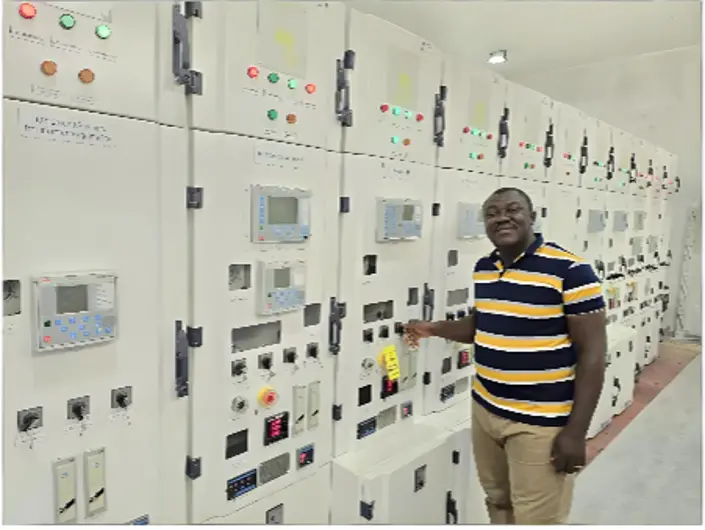
Rockwill RGIS Case Study and Gas Insulated Switchgear Project in Ghana
Edited From:Garca