• Product
  • Suppliers
  • Manufacturers
  • Solutions
  • Free tools
  • Knowledges
  • Experts
  • Communities
Search


How Grounding Resistor Cabinets Protect Transformers?

Edwiin
Edwiin
Field: Power switch
China

In power systems, transformers, as core equipment, are critical to the safe operation of the entire grid. However, due to various reasons, transformers are often exposed to multiple threats. In such cases, the importance of grounding resistor cabinets becomes evident, as they provide indispensable protection for transformers.

Firstly, grounding resistor cabinets can effectively protect transformers from lightning strikes. The instantaneous high voltage caused by lightning can severely damage transformers. By slowing down the rate at which lightning current is discharged into the ground, the grounding resistor cabinet reduces the electromagnetic effects induced by lightning, thereby shielding the transformer from lightning-related hazards.
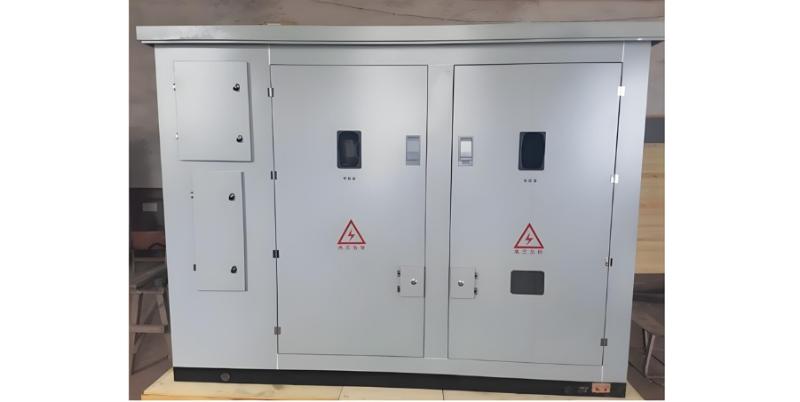
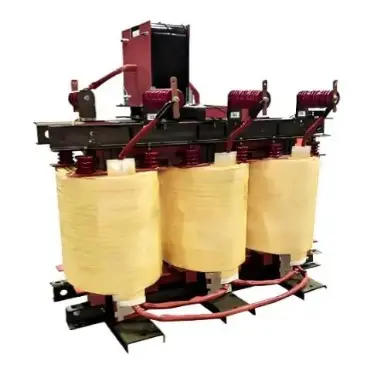
Grounding Resistor Cabinet.jpg

Secondly, grounding resistor cabinets mitigate the impact of switching overvoltages on transformers. In power systems, switching overvoltages frequently occur during operations such as disconnecting unloaded transmission lines or energizing/de-energizing unloaded transformers. The grounding resistor cabinet provides an additional layer of protection by limiting both the magnitude and duration of these switching overvoltages.

Furthermore, grounding resistor cabinets help prevent single-phase-to-ground faults in transformers. Single-phase-to-ground faults are a common type of fault in power systems. By limiting the fault current, the grounding resistor cabinet reduces the extent of damage to the transformer, thus ensuring its normal operation.
Give a tip and encourage the author!
Recommended
How to Implement Transformer Gap Protection & Standard Shutdown Steps
How to Implement Transformer Neutral Grounding Gap Protection Measures?In a certain power grid, when a single-phase ground fault occurs on a power supply line, both the transformer neutral grounding gap protection and the power supply line protection operate simultaneously, causing an outage of an otherwise healthy transformer. The main reason is that during a system single-phase ground fault, the zero-sequence overvoltage causes the transformer neutral grounding gap to break down. The resulting
Noah
12/05/2025
Innovative & Common Winding Structures for 10kV High-Voltage High-Frequency Transformers
1.Innovative Winding Structures for 10 kV-Class High-Voltage High-Frequency Transformers1.1 Zoned and Partially Potted Ventilated Structure Two U-shaped ferrite cores are mated to form a magnetic core unit, or further assembled into series/series-parallel core modules. Primary and secondary bobbins are mounted on the left and right straight legs of the core, respectively, with the core mating plane serving as the boundary layer. Windings of the same type are grouped on the same side. Litz wire i
Noah
12/05/2025
How to Increase Transformer Capacity? What Needs to Be Replaced for Transformer Capacity Upgrade?
How to Increase Transformer Capacity? What Needs to Be Replaced for Transformer Capacity Upgrade?Transformer capacity upgrade refers to improving the capacity of a transformer without replacing the entire unit, through certain methods. In applications requiring high current or high power output, transformer capacity upgrades are often necessary to meet demand. This article introduces methods for transformer capacity upgrade and the components that need to be replaced.A transformer is a critical
Echo
12/04/2025
Causes of Transformer Differential Current and Hazards of Transformer Bias Current
Causes of Transformer Differential Current and Hazards of Transformer Bias CurrentTransformer differential current is caused by factors such as incomplete symmetry of the magnetic circuit or insulation damage. Differential current occurs when the primary and secondary sides of the transformer are grounded or when the load is unbalanced.Firstly, transformer differential current leads to energy waste. Differential current causes additional power loss in the transformer, increasing the load on the
Edwiin
12/04/2025
Related Products
Send inquiry
Download
Get the IEE Business Application
Use the IEE-Business app to find equipment, obtain solutions, connect with experts, and participate in industry collaboration anytime, anywhere—fully supporting the development of your power projects and business.