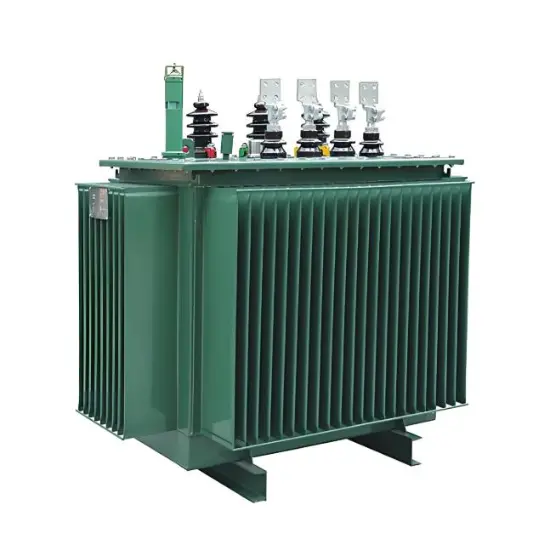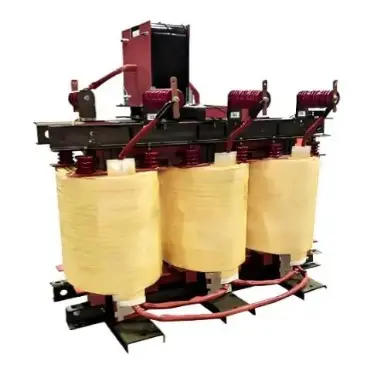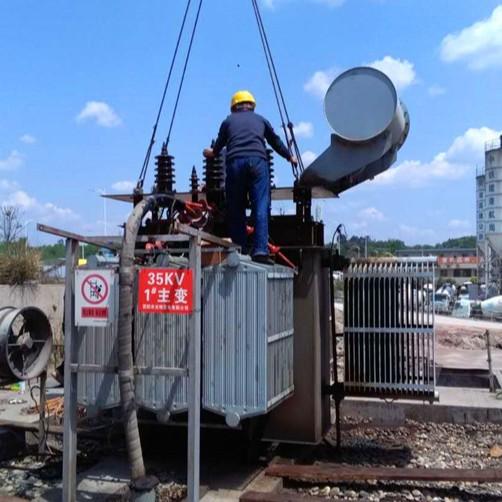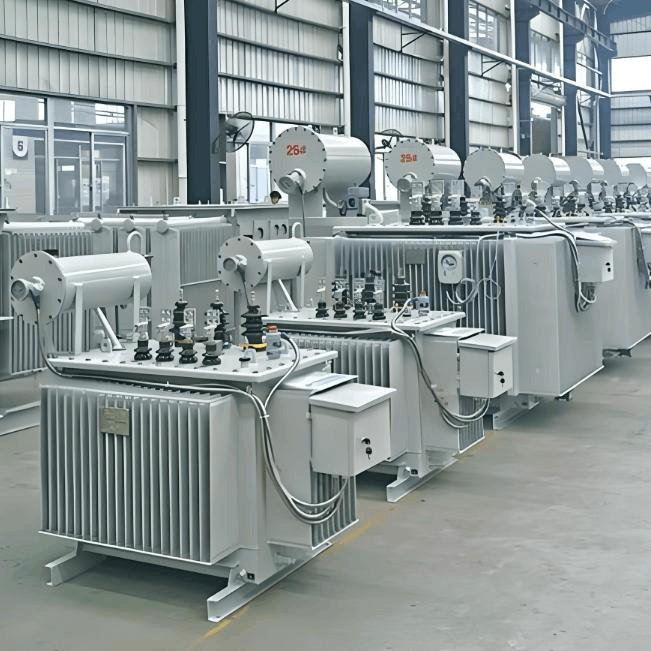
Ang mga panalipod sa grounding sa transformer nahimong duha ka klase: Unsa maoy grounding sa neutral point sa transformer. Kini nga panalipod nagpapahibalo sa pagkamalay sa drift sa voltage sa neutral point gikan sa imbalance sa three-phase load samtang operasyon ang transformer, nagsugyot og paagi sa proteksyon nga makapabilis ug mabawasan ang short-circuit currents. Kini gitawag og functional grounding alang sa transformer. Ang ikaduhang panalipod mao ang grounding sa core ug clamps sa transformer.
Kini nga panalipod nagpapahibalo sa pag-avoid sa induced voltages nga mogenerate sa surfaces sa core ug clamps gikan sa internal magnetic fields samtang operasyon, nga mahimong magresulta sa partial discharge faults. Kini gitawag og protective grounding alang sa transformer. Aron masiguro ang safe ug reliable nga operasyon sa transformer, kini nga artikulo nag-analyze ug optimize ang mga paraan sa grounding partikularmente alang sa core ug clamps sa transformer.
1.Kahalagahan sa Core ug Clamp Grounding
Ang primary nga komponente sa loob sa transformer kinahanglan mao ang: windings, core, ug clamps. Ang windings formahan ang electrical circuit sa transformer, ang core constitute ang magnetic circuit, ug ang clamps primarily gamiton aron masiguro ang windings ug silicon steel sheets sa core. Sa normal nga operasyon, ang primary ug secondary coils generate magnetic fields samtang ang current mopasabot sa kanila. Sa kini nga magnetic environment, ang induced voltages mogenerate sa surfaces sa core ug clamps.
Sama sa pagtaas sa magnetic field strength, ang magnetic flux gradual nga mogrow larger, resulta sa induced voltages nga magtaas gradual. Tungod sa uneven distribution sa magnetic field, ang non-uniform induced voltages create potential differences, resulta sa continuous discharge sa surfaces sa core ug clamps, leading sa internal transformer faults. Kini nga voltage causing internal discharge faults sa transformers gitawag og "floating voltage." Busa, samtang operasyon, ang core ug clamps sa transformer kinahanglan grounded sa usa ka punto aron mabawasan ug mawala ang induced voltages.
Sa grounding sa core ug clamps sa transformer, isip minimum ang usa ka grounding point allowed aron maprevent ang circulating currents tali sa core ug clamps. Kon duha o mas daghan pang grounding points present, ang potential differences will cause circulating currents tali sa core ug clamps, resulta sa abnormal temperature increases sa loob sa transformer. Kini direct nga nagdamage sa internal solid insulation ug accelerate ang aging sa insulation oil, affecting ang normal service life sa transformer.
2. Mga Paraan sa Grounding sa Core ug Clamps ug Optimization Approaches
Sa kasagaran nga designs sa transformer sa China, ang grounding sa core ug clamps primarily achieved pinaagi sa routing sa connections pinaagi sa small bushings o insulated bolts to the exterior sa transformer tank bago grounded. Kini nga grounding approach subdivided sa duha ka methods:
Ang unang grounding method (Figure 1) connect ang core ug clamps pinaagi sa bushings o insulated bolts, then directly short-circuits sila together bago grounded. Sa normal nga operasyon sa transformer, kini nga grounding method exhibit three current flow paths, labeled I1, I2, ug I3:
I1: Core → Grounding terminal → Ground
I2: Clamps → Grounding terminal → Ground
I3: Core → Grounding terminal → Ground → Clamps
Ang ikaduha nga grounding method (Figure 2) route ang core ug clamps pinaagi sa bushings o insulated bolts to separate grounding points. Kini nga grounding method also exhibit three current flow paths samtang normal nga operasyon:
I1: Core → Core grounding point → Ground
I2: Clamps → Clamp grounding point → Ground
I3: Core → Core grounding point → Earth → Clamp grounding point → Clamps
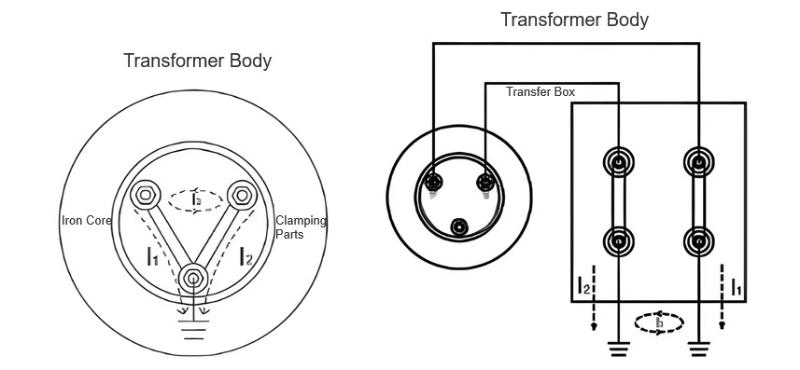
Sa duha ka grounding methods gihatag, ang induced grounding currents I1 ug I2 represent normal conditions. Pero, ang induced grounding current I3 significantly different:
Sa grounding method sa Figure 1, ang induced current flows through ang path: core → grounding terminal → clamps, creating a "circulating current" tali sa core ug clamps sa transformer. Under the thermal effect sa kini nga current, ang internal temperature sa transformer abnormally increase. High temperature directly cause solid insulation degradation ug insulation oil aging. Additional, tungod sa influence sa circulating current, ang online monitoring systems dili makaprecise measurement sa grounding currents sa core ug clamps, resulta sa misdiagnosis samtang equipment faults occur. Busa, ang first grounding method has significant drawbacks.
In contrast, sa grounding method sa Figure 2, ang induced current routes through: core → core ground → earth → clamp ground → clamps. Since ang current passes through high-resistance earth, walay "circulating current" mahimo tali sa core ug clamps. Kini prevent abnormal temperature rise sa transformer ug allow online monitoring systems to precisely measure ang grounding currents sa both core ug clamps (according to DL/T 596-2021 Power Preventive Test Code, ang core grounding current must not exceed 0.1 A ug clamp grounding current must not exceed 0.3 A samtang operasyon sa transformer). Kini provide reliable evidence aron masayran kung adunay internal faults sa loob sa transformer.
Para sa xx-223000/500 no-excitation voltage regulating power transformer, ang core ug clamps grounded using ang method sa Figure 1, kini presents several operational issues:
(1) Samtang operasyon, easy nga moform ang "circulating current" tali sa internal core ug clamps. The thermal effect cause abnormal temperature increases, accelerating solid insulation degradation ug insulation oil aging, thereby reducing ang service life sa transformer.
(2) Tungod sa impluwensya sa "circulating current," dili makaya sa online monitoring system ang pag-ukon sa eksakto sa grounding currents sa core ug clamps, kung sa molingaw dili makapahibalo og conclusive evidence alang sa pagsayran sa internal faults.
(3) Ang induced grounding currents sa core ug clamps mahimong mapag-ukon sa dugay ug mahimong ikumpara sa leakage currents nga gimonitor sa online system aron masiguro ang accuracy sa monitoring system.
(4) Sa panahon sa maintenance ug repair sa transformer, kinahanglan idisconnect ang external grounding leads samtang nag-ukon sa insulation resistance tali sa core/clamps ug ground. Bisan ingani, ang model sa transformer nga gi gamit usa ka M10 copper bolts (insulated from ground) alang sa koneksyon sa core ug clamps, nga may excellent conductivity apan low mechanical strength ug prone sa breakage. Sa field operations, ang confined spaces ug unbalanced forces madaling magresulta sa fracture sa copper bolt. Tungod sa compact internal structure sa transformer, ang pag-address niining fault nangangailangan og lifting sa tank cover aron matipdan ang replacement, nga makaapekto sa normal maintenance cycles ug operational efficiency.
Tungod sa kini nga apat ka isyu, aron masiguro ang eksaktong pag-ukon sa induced grounding currents sa core ug clamps sa panahon sa operasyon, palapason ang service life sa transformer, i-eliminate ang "circulating currents," ug i-prevent ang maintenance operations nga magdulot og damage nga moadto sa expansion sa scope sa repair, gitumong ang pag-optimize sa grounding method sa core ug clamps sa transformer gikan sa Figure 1 configuration hangtod sa Figure 2 configuration.
3.Konklusyon
Tungod sa detailed introduction sa internal components ug functions sa transformer, sama sa scientific analysis sa discharge faults nga nangyari sa panahon sa operasyon, nahimo ang modification sa defective parts. Ang approach niini nakamit ang extension sa service life sa equipment, improvement sa safety sa power grid, ug reduction sa cost sa maintenance sa equipment.