1. Structure and Magnetic Circuit Symmetry
-
3D Wound Core: The core adopts a three-dimensional equilateral triangular symmetrical arrangement, with all three phase magnetic paths being exactly equal in length (LA = LB = LC). This eliminates three-phase reactive current imbalance caused by magnetic circuit asymmetry and significantly suppresses third harmonics.
-
Traditional Plane Laminated Core: The core is arranged in a planar frame with a single-row layout. The outer legs (Phases A and C) have significantly longer magnetic paths than the center leg (Phase B), resulting in inherent three-phase magnetic circuit imbalance.
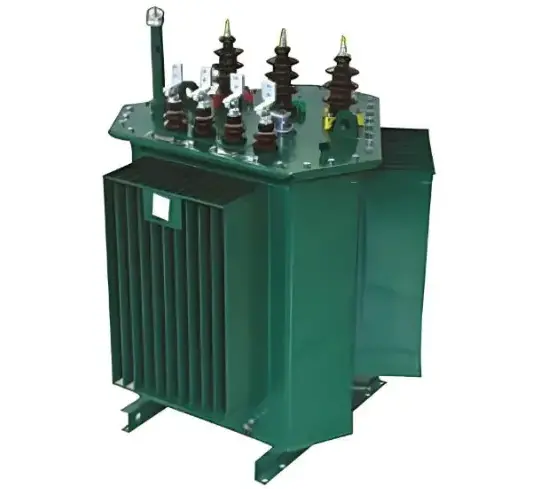
Rockwill S13-MRL Series Three-Dimensional Wound Core Transformer
2. Losses and No-Load Performance (Core Energy-Saving Advantages)
-
No-Load Loss: The 3D wound core has no mechanical joints, and the magnetic flux direction is 100% aligned with the rolling direction of the silicon steel. As a result, its no-load loss is typically 15% ~ 25% lower than that of laminated cores.
-
No-Load Current: With extremely low magnetic reluctance, the 3D wound core reduces no-load current by 60% ~ 80%, delivering significant reactive power compensation benefits.
3. Noise Performance (Environmental Advantage)
Transformer noise primarily originates from magnetostrictive vibration of the silicon steel sheets. The 3D wound core, formed by continuous winding and vacuum annealing, eliminates the resonance between lamination gaps.
Its operating noise is generally reduced by 5 dB ~ 10 dB (or even 15 dB), making it an ideal choice for noise-sensitive environments such as urban residential areas and underground substations.
Rockwill Advantage: The Rockwill 3D wound core transformer S13-M.RL features a perfectly symmetrical three-phase magnetic circuit that drastically reduces core vibration. Its compact mechanical structure ensures operating noise is 10-20 dB lower than conventional transformers, making it an excellent solution for noise-sensitive installations.
4. Short-Circuit Withstand Capability and Safety
The 3D wound core has a near-perfect circular cross-section, and its coils are also perfectly cylindrical. In the event of an external short circuit, the electromagnetic forces are distributed most uniformly, providing high mechanical bending strength. Its short-circuit withstand capability is substantially superior to that of traditional laminated structures.
5. Manufacturing Process and Repairability (Double-Edged Sword)
-
Traditional Laminated Core: The manufacturing process is highly mature with versatile, readily available equipment. In the event of a partial burnout, the upper yoke laminations can be removed for single-phase repair on-site, offering excellent repairability.
-
3D Wound Core: After winding, the core must undergo vacuum annealing at approximately 800°C and requires specialized winding machines. Once the coil is burnt out, the closed, consolidated core structure makes on-site disassembly and repair impossible. The transformer typically must be returned to the factory or entirely scrapped, resulting in poor repairability.
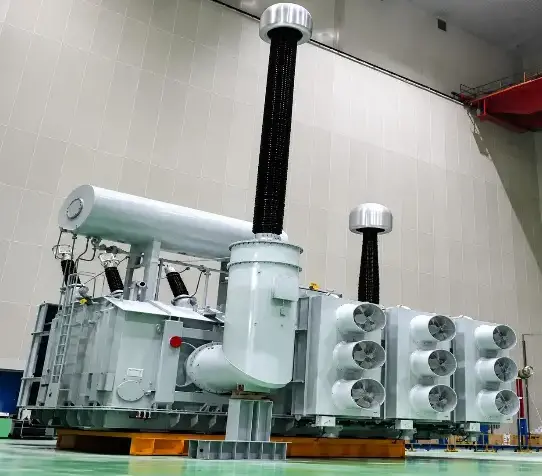
Rockwill Single-phase Oil-Immersed Autotransformer
6. Selection Recommendations
6.1 Priority for 【3D Wound Core】
-
Noise-Sensitive Locations: Such as residential areas, high-end office buildings, and underground substations, where strict noise limits are enforced. The Rockwill 3D wound core transformer S13-M.RL, with its equilateral triangular symmetrical structure, eliminates the source of lamination vibration, reducing operating noise by 10-20 dB compared to traditional planar transformers, perfectly meeting environmental and noise-reduction requirements.
-
Long-Duration Light-Load or No-Load Conditions: Such as rural power grids, street lighting transformers, seasonal loads, and grid terminal areas with low load factors. The Rockwill S13-M.RL, with its seamless continuous wound magnetic circuit and extremely low reluctance, reduces no-load current by 60% ~ 80% and significantly lowers reactive losses, maximizing distribution network loss reduction and delivering substantial reactive power benefits.
-
High-Efficiency Energy-Saving and Emission-Reduction Projects: Suitable for green power projects pursuing GB (National Standard) Level 1 or Level 2 high energy efficiency. The magnetic flux direction is 100% aligned with the cold-rolling direction of the silicon steel, exceeding national energy efficiency benchmarks and effectively reducing carbon emissions in power transmission and distribution.
6.2 Priority for 【Traditional Plane Laminated Core】
-
Large or Extra-Large Capacity Substations: Currently, ultra-large capacity transformers and EHV (Extra-High Voltage) main transformers are still predominantly manufactured with traditional laminated cores, constrained by the physical limits of heavy-tonnage core winding equipment, manufacturing capabilities, and transportation logistics.
-
Extremely Harsh Environments with High Demand for On-Site Emergency Repair: Such as remote mining sites and field construction zones. In the event of winding burnout, the plane laminated core allows for single-phase disassembly and re-stacking, making it easier to perform emergency on-site repairs locally or at nearby repair facilities, ensuring the fastest possible power restoration.
Edited From:Echo

 Login