Comparative Analysis of High-Voltage Load Switch Technologies
A load switch is a type of switching device positioned between circuit breakers and disconnectors. It features a simple arc extinguishing device capable of interrupting rated load current and certain overload currents, but cannot interrupt short-circuit currents. Load switches can be classified into high-voltage and low-voltage types according to their operating voltage.
Solid gas-producing high-voltage load switch: This type utilizes the energy from the breaking arc itself to cause gas-producing materials in the arc chamber to generate gas that extinguishes the arc. Its structure is simple with low cost, meeting general application requirements.
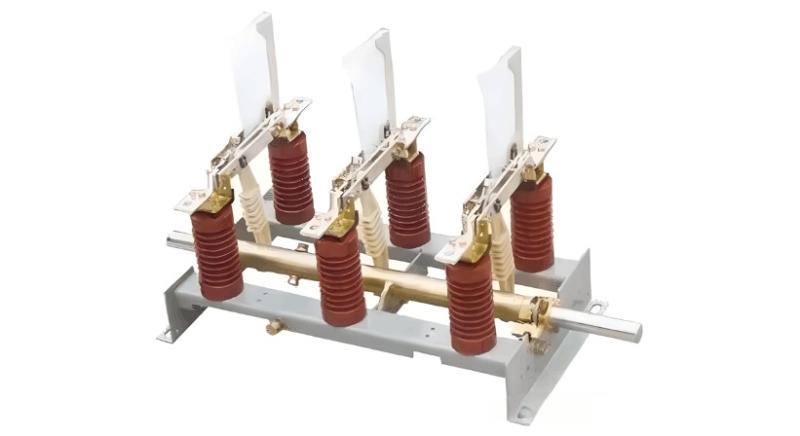
Compressed air high-voltage load switch: This type uses compressed air from a piston during the opening process to blow out the arc. During interruption, the piston compresses gas that is ejected to extinguish the arc. The excellent insulation properties of SF6 gas enable rapid arc extinction, though the structure is slightly more complex and the gas nozzle must use high-temperature resistant materials such as polytetrafluoroethylene (PTFE).
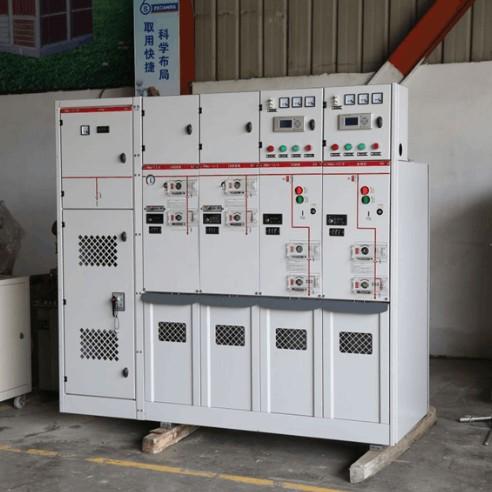
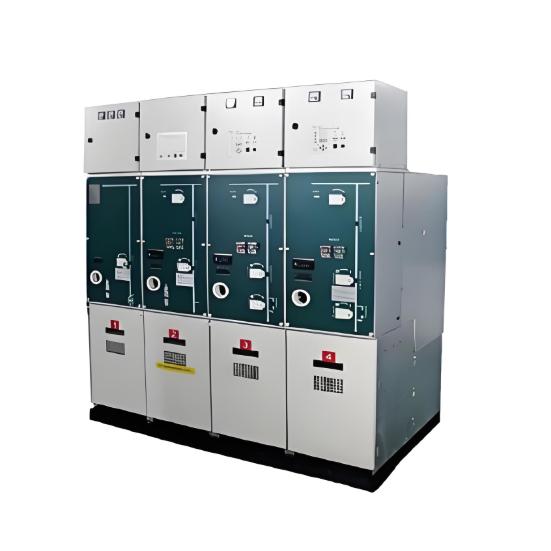
Environmental gas ring main units also employ compressed air load switch designs that can operate without vacuum interrupters. These can completely replace load switch-fuse combinations for transformer protection, satisfying customer preferences for fuses rather than circuit breakers for rapid fault clearing in transformers.
Vacuum high-voltage load switch: This type uses vacuum medium for arc extinction, offering long electrical life but at a relatively higher price. Modern environmental gas ring main units primarily adopt three-position switches combined with vacuum load switches.
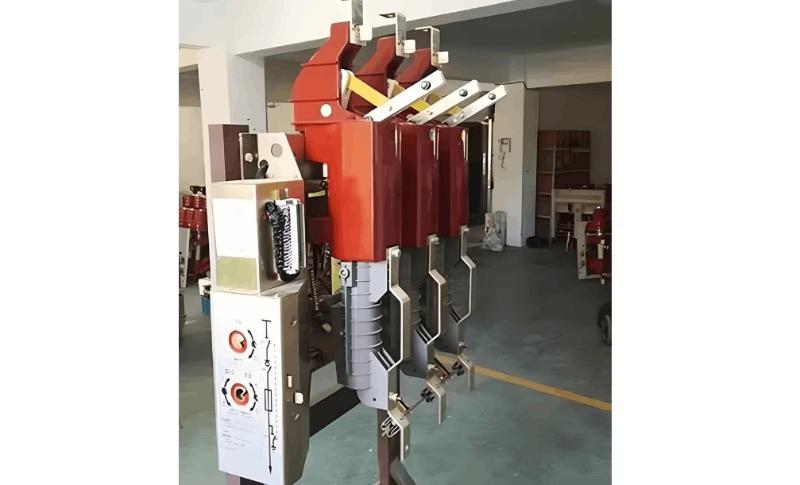
Oil-immersed high-voltage load switch: This type utilizes the energy from the arc itself to decompose and vaporize surrounding oil, which cools and extinguishes the arc. Its structure is relatively simple but heavy, commonly used in American-style package substations.
SF6 high-voltage load switch: This type employs SF6 gas for arc extinction, applied in fully insulated or gas-bagged insulated ring main units. It has excellent performance in interrupting capacitive currents. SF6 arc extinction methods include arc-extinguishing grids, arc-suppression coils, and compressed air arc extinction. The arc-extinguishing grid method is widely used, adopting a structure similar to low-voltage air circuit breakers. During interruption, the arc is cut and adsorbed into the arc-extinguishing grid for cooling and extinction. Arc-extinguishing grids can be made of either insulating or metallic materials.
The arc-extinguishing grid structure is simple and can meet general ring main unit applications, such as E2 electrical life requirements. For enhanced performance, optimization of materials and structure is necessary.
The arc-suppression coil uses an electromagnetic coil where, when moving and fixed contacts separate to produce an arc, the arc root transfers to a metal core inside the consumption coil. The arc current passing through the consumption coil generates a magnetic field that acts on the arc to produce Lorentz force, driving the arc root to rotate at high speed around the coil core. This cools the arc while continuously exposing it to fresh SF6 gas, extinguishing it when current crosses zero. Consumption coils offer excellent breaking performance and long electrical life, capable of withstanding 200 operations of active load interruption.
To achieve SF6 replacement, parallel vacuum arc extinguishing load switches have been developed. During interruption, a parallel vacuum interrupter diverts the arc current into the vacuum interrupter for extinction. Unlike series vacuum interruption, this approach simplifies the operating mechanism, maintaining the same operating mechanism as SF6 load switches. It offers compact size, convenient installation, easy operation, and low cost.
By increasing contact gap and other methods, environmental gas arc extinction can be achieved, truly realizing SF6 replacement with environmental gases in ring main units without increasing costs (without using vacuum switches).