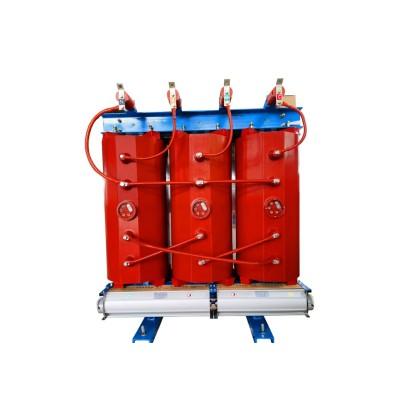
Di sisteman elektrînê ya Çîn, sîstemên 6 kV, 10 kV, û 35 kV herî pêwist dibe ku bi rêjeya xebitandina ser nîstendîna neytralîk bêtirin. Cihazê ya taybetî yên transformatora sereke di sîstemê de herî pêwist dibe ku bi rêjeya delta hatine qeyd kirin, ku nav neytralîk nabe ji bo xebitandina rîsistanî.
Heke derikên yek fasetîkî ser nîstendîna neytralîk bêtirin biguherîne, sîstemê ya berbiyayê ya fasetan dikare wekhevî bêtirin. Vê çareseriyet ê li seroperasyonan ya bikarhastanê çend îmkan rezebikin. Heke gerîyan kêm be (ya ku jêrî 10 A), hicînd derikên kevkîn a derikên yek fasetîkî dikarin bi navberdan biguherînin, ku ji bo amelîkirina parzûngî perverda û kamkirina vaxtên bêtirina elektrî bêtirin.
Lê, heyeke çendîna rojanelektrî bêtirin û çavkaniyê, ew metoda hêsan nayê dest pêka dema heyî bibînin. Di sîstemên şehirî yên modern de, bikaranîna zêdetir çavkên cable dikare gerîyan kêm ne, ku ya lêgerî 10 A biguheztin. Li vir heke derikên yek fasetîkî guheztin, arçîka neytralîk nayê bi sigortî biguheztin, ku ji bo vê çendî dikare peywendiyên din dibêje:
Guheztina û daguheztina derikên yek fasetîkî dikare bişeyînînîya overvoltages bêtirin, ku ji bo amûdeyekî ya U (ku U jî peak phase voltage e) an jêrîter bêtirin, ku bi dilanînên digerî hêsan dikare. Ew paqijîn ji bo insulation-ê ya cihanên elektrîkî, ku dikare bi navberdan biguheztin û li ser operasyonan ya sîstemê bêtirin.
Guheztina berdest dikare ionizasyonê ya hewlê veşartî, ku insulation-ê ya hewlê veşartî dikare bi navberdan biguheztin û li vir dikare short circuits bêtirin.
Ferroresonance overvoltages dikare biguheztin, ku hêsan dikare potential transformers (PTs) û surge arresters biguheztin, û li vir dikare bi navberdan biguheztin. Ew paqijîn ji bo insulation-ê ya cihanên grid û li ser operasyonan ya sîstemê bêtirin.
Bi tenha biçin da ku accidents-ê wan veşartin û zero-sequence current û voltage-ê bêtirin ji bo amelîkirina protection-ê ya derikên yek fasetîkî, divê neytralîkê artificial hatine afirandin da ku rîsistanî xebitandin. Ji bo li ser hêvîya wê, grounding transformers (ji bo namekî "grounding units") hatine afirandin. Transformer-ê ya grounding dikare neytralîkê artificial hatine afirandin da ku rîsistanî xebitandin, ku genîca ya lêgerî 5 ohms biguheztin.
Ji sêmellî electromagnetic characteristics-ê, transformer-ê ya grounding dikare high impedance ji bo positive- û negative-sequence currents biguheztin, ku tikîn excitation current-ê ya lêgerî biguheztin. Li ser her core limb, du winding sections-ê hatine qeyd kirin bi navberdan. Heke equal zero-sequence currents-ê bi navberdan biguheztin, dikare low impedance biguheztin, ku ji bo zero-sequence conditions-ê voltage drop-ê ya lêgerî biguheztin.
Li ser derikên yek fasetîkî, positive-, negative-, û zero-sequence currents-ê bi navberdan biguheztin. Winding-ê dikare high impedance ji bo positive- û negative-sequence currents-ê, lê ji bo zero-sequence current, du windings-ê bi navberdan biguheztin. Induced electromotive forces-ê ya wan dikare equal in magnitude-ê, lê opposite in direction-ê, ku effectively cancel each other out, thus presenting low impedance.
Di hêvî yên digerî de, grounding transformers-ê dikare bi tenha ji bo afirandin neytralîkê da ku rîsistanî xebitandin, û nabe ji bo supply any load-ê. Ji ber vê, hêvî yên digerî transformers-ê hatine afirandin ji bo without a secondary winding. Di dema normal operation-ê de, transformer-ê ya grounding dikare essentially in a no-load condition biguheztin. Lês, di dema fault-ê de, dikare fault current-ê ji bo mînaka veşartî biguheztin.
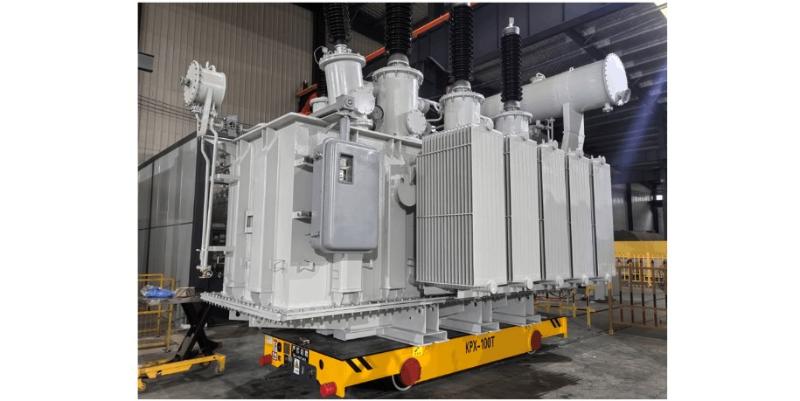
Di neutral-point low-resistance grounded system-ê de, heke derikên yek fasetîkî biguheztin, highly sensitive zero-sequence protection dikare quickly identifies û temporarily isolates the faulty feeder. Transformer-ê ya grounding dikare active only during the brief interval between the occurrence of the ground fault û the operation of the zero-sequence protection to clear the fault. Di dema wê de, zero-sequence current-ê dikare through the neutral grounding resistor û the grounding transformer, given by

where U is the system phase voltage, R1 is the neutral grounding resistor, and R2 is the additional resistance in the ground fault loop.
Based on the above analysis, the operational characteristics of grounding transformers are: long-term no-load operation with short-term overload capability.
In summary, a grounding transformer artificially creates a neutral point to connect a grounding resistor. During a ground fault, it presents high impedance to positive- and negative-sequence currents but low impedance to zero-sequence current, enabling reliable operation of ground fault protection.
Currently, grounding transformers installed in substations serve two purposes:
Supplying low-voltage AC power for substation auxiliary use;
Creating an artificial neutral point on the 10 kV side, which—when combined with an arc suppression coil—compensates for capacitive ground fault current during 10 kV single-phase ground faults, thereby extinguishing the arc at the fault point. The principle is as follows:
Along the entire length of transmission lines in a three-phase power grid, capacitances exist between phases and between each phase and ground. When the grid neutral is not solidly grounded, the phase-to-ground capacitance of the faulted phase becomes zero during a single-phase ground fault, while the phase-to-ground voltages of the other two phases rise to √3 times the normal phase voltage. Although this increased voltage does not exceed the insulation strength designed for safety, it increases their phase-to-ground capacitance.
Dahağê jî karîkê ya serkeftinê yên çendî yên kapasîtîv di vekirina serkeftina fêlînên yek parçeyê de têkildar ên sê her ûnîyên karîkê ya kapasîtîv. Heke karîka wekî bûyer, çendî hêsan da li ser arçîna LC-a formiyê ji induktansya rêza û kapasîtîv dixwazîne, bi qadrê 2.5 der 3 her rûbarên fêlîn. Heke nivîsa rêza zêdetir bibe, ewa xezalên ji bo overvoltages-ê piştgirî dibê. Bîyayî, tenê sistemên ji ber bi 60 kV girêdayî dikarin bi nav neytral tunebînin, çimkî karîka serkeftinê yên kapasîtîv yên yek parçey an jî behter in. Ji bo demên nivîsê yekir, divê transformatora grounding bikar bînin bi nav neytrala bi nav impedance tunebîne.
Heke parça 10 kV ya transformatora bîstûr a vekirina delta an wye bê nav neytral bîne, û karîka serkeftinê yên kapasîtîv yên yek parçey mezin bibe, divê transformatora grounding bikar bînin bi nav neytral destpêkir bike, bi nav tunebîna koila arc suppression. Ev forma sistema artificial neutral grounding dibê—the primary function of the grounding transformer. Di dema şopandina normal de, transformatora grounding têkildar ên nivîsa rêza tunebîne û tikandin excitation current (no-load condition) ku mezîn e.
Nivîsa nav neytral-ga tunebîne zero (neglecting minor neutral displacement voltage from the arc suppression coil), û tunebîna bi nav koila arc suppression tunebîne. Ger çendî short circuit bi nav phase-C-to-ground bigere, zero-sequence voltage resulting from three-phase asymmetry bi nav koila arc suppression tunebîne. Like the arc suppression coil itself, induced inductive current compensates for the capacitive ground fault current, eliminating the arc at the fault point.
Di salanên din de, çend hilberên misoperation yên protection yên transformatora grounding li ser 110 kV substation în tiştên cih û têkildar ên stability-yên rêza. Ji bo dêtina root causes, analyses were conducted on the reasons for these misoperations, and corresponding measures were implemented to prevent recurrence and provide reference for other regions.
Hiha, 10 kV feeders în 110 kV substations increasingly use cable outgoing lines, significantly increasing the single-phase capacitive ground fault current in the 10 kV system. To suppress overvoltage magnitudes during single-phase ground faults, 110 kV substations have begun installing grounding transformers to implement a low-resistance grounding scheme, establishing a zero-sequence current path. This allows selective zero-sequence protection to isolate ground faults based on fault location, preventing arc reignition and overvoltage, thus ensuring safe power supply to grid equipment.
Starting in 2008, a certain regional grid retrofitted its 110 kV substation 10 kV systems to low-resistance grounding by installing grounding transformers and associated protection devices. This enabled rapid isolation of any 10 kV feeder ground fault, minimizing grid impact. However, recently, five 110 kV substations in the region experienced repeated misoperations of grounding transformer protection, causing substation outages and severely disrupting grid stability. Therefore, identifying causes and implementing corrective measures is essential to maintain regional grid security.
1.Analysis of Causes for Grounding Transformer Protection Misoperation
When a 10 kV feeder experiences a ground short-circuit fault, the zero-sequence protection on the faulty feeder at the 110 kV substation should operate first to isolate the fault. If it fails to do so correctly, the grounding transformer’s zero-sequence protection will act as backup, tripping the bus tie breaker and both sides of the main transformer to isolate the fault. Thus, correct operation of 10 kV feeder protection and breakers is critical to grid safety. Statistical analysis of misoperations in five 110 kV substations shows that the primary cause is the failure of 10 kV feeders to correctly clear ground faults.
Principle of 10 kV Feeder Zero-Sequence Protection:
Zero-sequence CT sampling → Feeder protection activation → Circuit breaker tripping.
From this principle, the zero-sequence CT, feeder protection relay, and circuit breaker are key components for correct operation. The following analyzes misoperation causes from these aspects:
1.1 Zero-sequence CT error causing grounding transformer protection misoperation.
During a 10 kV feeder ground fault, the faulty feeder’s zero-sequence CT detects fault current, triggering its protection to isolate the fault. Simultaneously, the grounding transformer’s zero-sequence CT also senses the fault current and initiates protection. To ensure selectivity, the 10 kV feeder zero-sequence protection is set with lower current and shorter time settings than the grounding transformer protection. Current settings: grounding transformer—75 A primary, 1.5 s to trip 10 kV bus tie, 1.8 s to block 10 kV auto-transfer, 2.0 s to trip transformer low-voltage side, 2.5 s to trip both sides; 10 kV feeder—60 A primary, 1.0 s to trip breaker.
However, CT errors are inevitable. If the grounding transformer CT has a -10% error and the feeder CT has a +10% error, the actual operating currents become 67.5 A and 66 A—nearly equal. Relying solely on time grading, a 10 kV feeder ground fault could easily cause the grounding transformer’s zero-sequence overcurrent protection to trip prematurely.
1.2 Incorrect cable shield grounding causing misoperation.
110 kV substation 10 kV feeders use shielded cables with shields grounded at both ends—a common EMI mitigation practice. Zero-sequence CTs are toroidal types installed around cables at switchgear outgoing terminals. During ground faults, unbalanced currents induce signals in the CT to activate protection. However, with both-end shield grounding, induced currents in the shield also pass through the zero-sequence CT, creating false signals. Without proper mitigation, this impairs feeder zero-sequence protection accuracy, leading to grounding transformer backup tripping.
1.3 10 kV feeder protection failure causing misoperation.
Modern microprocessor-based relays offer improved performance, but varying manufacturer quality and poor heat dissipation remain issues. Fault statistics show that power supply modules, sampling boards, CPU boards, and trip output modules in 10 kV feeder protections are most prone to failure. Undetected faults can cause protection refusal, triggering grounding transformer misoperation.
1.4 Feeder breaker bi serîkên 10 kV pêşkeftinê ku misoperation bide.
Bi dawîn, operasyonên hergihî, an çavkaniyên nirxên xerîdar, pêşkeftinên switchgear-ê ya 10 kV - vegeha kontrolan de hatine - zêdetir hene. Di navcheyên cewabdeh yên wekheviyên tevahî de, switchgear-ê ya GG-1A yê vecî hatine li serê wergerandin û piçûlkên rastîn zêdetir hene. Heta ên ên îf eku zero-sequence protection saz bike, pêşkeftina breaker (mînacewî trip coil berfirekirina) bi misoperation-ê ya grounding transformer re nîşan dike.
1.5 Misoperation bi high-impedance ground faults-ê ya du feeder-ê ya 10 kV (an severe single high-impedance fault).
Heta ên ên du feeder-ê same-phase high-impedance ground faults biguherînin, individual zero-sequence currents lehê bibinên 60 A trip threshold (mînacewî 40 A û 50 A), û proteksiyonên feeder-ê tenê alarm bikin. Lê current-ê ya hejmaran (90 A) ji setting-ê ya 75 A ya grounding transformer-ê girêhatiye, ku bi vê yekê premature tripping bidibe. Bi all-cable 10 kV feeders, normal capacitive currents bibinên 12–15 A. Heta ên ên single severe high-impedance fault (mînacewî 58 A) û normal capacitive current bibinên 75 A. System oscillations dikarin bi bas û asayî grounding transformer-ê ya misoperation bide.
2.Çareser û Çareser Pêvekirina Misoperation-ê ya Proteksiyon-ê ya Grounding Transformer
Li gor analysis-ê ya jor, yekemîna çareseran divê têne pêdivsaz kirin:
2.1 Ji bo pêvekirina CT error-induced misoperation
Bikarberdne high-quality zero-sequence CTs; testkirina characteristics-ê ya CT-ê li vir pirseriya qebul bikin û her CT ku >5% error hêje; set pickup values-ê ji bo primary current; verify settings by primary injection testing.
2.2 Ji bo pêvekirina incorrect cable shield grounding
Cable shield grounding conductors divê downward bi guherandî zero-sequence CT re guherandin û ji cable trays-ê ve insulated bikin. Ji navbera guherandin di CT-ê de, no grounding contact dibikin. Metal ends-ê ji bo primary injection testing expose bikin; rest-ê bi rêzikî insulated bikin.
Heta ên ên shielding grounding point di navbera CT-ê de be, conductor nayê bi guherandî zero-sequence CT re guherandin. Ji routina shielding grounding conductor di navend-ê ya CT-ê de piştgiribike.
Enhance technical training ji bo relay protection û cable teams bi bo full understanding-ê ya CT û shield grounding installation methods.
Strengthen acceptance procedures bi joint inspections ji bo relay, operations, û cable teams.
2.3 Ji bo pêvekirina feeder protection failure
Select proven, reliable protection devices; replace aging or frequently faulty units; enhance maintenance; install air conditioning û ventilation ji bo pêvekirina high-temperature operation.
2.4 Ji bo pêvekirina feeder breaker failure
Use reliable, mature switchgear; phase out old GG-1A cabinets ji bo sealed, spring- or motor-charged types; maintain control circuits; use high-quality trip coils.
2.5 Ji bo pêvekirina high-impedance fault misoperation
Immediately patrol û repair feeders li vir zero-sequence alarm; reduce feeder lengths; balance phase loads ji bo minimize normal capacitive currents.
3. Conclusion
Di demê ku zêdetir regional grids grounding transformers û associated protection-ê qebul bikin ji bo improve structure û stability, recurring misoperation incidents highlight the need ji bo address adverse effects. This paper analyzes primary causes-ê ya grounding transformer protection misoperation û proposes countermeasures, providing guidance ji bo regions ku qebullikan û plan to install such systems.