1 Pagpakilala sa Teknolohiya sa Fault Current Limiter (FCL)
Ang mga tradisyonal nga pasibong paagi sa paglimitar sa fault current — sama sa paggamit og high-impedance transformers, fixed reactors, o split-busbar operation — adunay mga inherent nga drawback, kasagaran ang pagkabag-o sa grid structure, pagtaas sa steady-state system impedance, ug pagbawas sa seguridad ug stability sa sistema. Ang mga paagi kini mao nang dili na mahimong sayon para sa kompleksidad ug large-scale power grids sa karon.
Sa kabalaka, ang aktibo nga teknolohiya sa paglimitar sa fault current, representado pinaagi sa Fault Current Limiters (FCLs), adunay low impedance sa normal nga operasyon sa grid. Kung may fault, ang FCL rapid transition ngadto sa high-impedance state, efektibong nag-limit sa fault current ngadto sa mas lawas nga level, gitugotan ang dynamic control sa fault currents. Ang FCLs gikan sa tradisyonal nga konsepto sa series reactor-based current limitation pinaagi sa pag-integrate sa advanced technologies sama sa power electronics, superconductivity, ug magnetic circuit control.
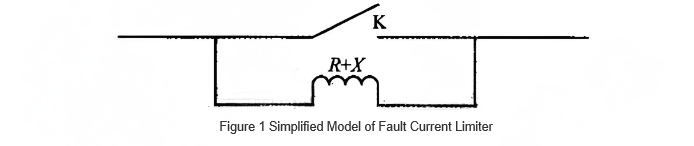
Ang fundamental principle sa usa ka FCL mahimo mogamiton sa model nga ipakita sa Figure 1: sa normal nga operasyon sa sistema, ang switch K mahimong closed, ug walay current-limiting impedance nga gibutangan pinaagi sa FCL. Lamang kung may fault mahimong rapid open ang K, gibutangan ang reactor aron limitar ang fault current.
Ang daghang FCLs gipundar sa fundamental nga model o sa iyang extended variants. Ang primary nga difference tali sa iba't ibang FCLs nahimutang sa nature sa current-limiting impedance, implementation sa switch K, ug ang associated control strategies.
2 Paghulagway ug Status sa Aplikasyon sa FCL
2.1 Superconducting Fault Current Limiters (SFCLs)
Ang SFCLs mahimong klassipikar isip quench-type o non-quench-type depende kung gigamit nila ang S/N transition sa superconductor aron limitar ang current. Sa structurally, sila gihulagway usab isip resistive, bridge-type, magnetically shielded, transformer-type, o saturated-core types. Ang quench-type SFCLs dependent sa S/N transition (triggered kung ang temperatura, magnetic field, o current adunay critical values), diin ang superconductor shift gikan sa zero resistance ngadto sa high resistance, thereby limiting fault current.
Ang non-quench-type SFCLs combine superconducting coils sama sa uban pang components (e.g., power electronics o magnetic elements) ug control operational modes aron limitar ang short-circuit currents. Ang practical application sa SFCLs adunay common superconducting challenges sama sa cost ug cooling efficiency. Bisan pa, ang quench-type SFCLs adunay long recovery times, potentially conflicting sa system reclosing, samtang ang non-quench-type SFCLs' impedance changes mahimong makaapekto sa relay protection coordination, requiring re-setting.
2.2 Magnetic Element Current Limiters
Kini gihulagway isip flux-cancellation ug magnetic saturation switch types. Sa flux-cancellation type, duha ka windings nga mag-opposite polarity gipaslang sa samang core. Sa normal nga kondisyon, equal ug opposite fluxes cancel each other, resultando sa low leakage impedance.
Sa panahon sa fault, usa ka winding gipasubay, disrupting ang flux balance ug presenting high impedance. Ang magnetic saturation switch type operate pinaagi sa biasing sa current-limiting winding into saturation (via DC bias, etc.) sa normal nga kondisyon, yielding low impedance. Sa panahon sa fault, ang fault current drives the core out of saturation, creating high impedance for current limiting. Sa complex nga control requirements, magnetic element limiters limited sa aplikasyon.
2.3 PTC Resistor Current Limiters
Ang Positive Temperature Coefficient (PTC) resistors nonlinear; sila adunay low resistance ug minimal heating sa normal nga kondisyon. Sa panahon sa short circuit, ang ilang temperatura rapid increase, raising resistance by 8–10 orders of magnitude within milliseconds. Ang FCLs based on PTC resistors nakakita og commercial use sa low-voltage applications.
Bisan pa, ang drawbacks include: high overvoltages generated during inductive current limiting (requiring parallel overvoltage protection); mechanical stress due to resistor expansion during operation; limited voltage/current ratings (hundreds of volts, a few amps), necessitating series-parallel connections and restricting high-voltage use; and long recovery times (several minutes) with short service life, hindering large-scale deployment.
2.4 Solid-State Current Limiters (SSCLs)
Ang SSCLs usa ka bag-ong tipo sa short-circuit limiter based on power electronics, typically comprising conventional reactors, power electronic devices, ug controllers. Sila offer various topologies, fast response, high operational endurance, ug simple control. Pinaagi sa pag-control sa state sa power electronic devices, ang equivalent impedance sa SSCL altered aron limitar ang fault current. Considered a novel FACTS device, SSCLs gaining increasing attention. Bisan pa, sa panahon sa faults, ang power electronic devices kinahanglan carry the full fault current, demanding high device performance ug capacity. Coordination between multiple SSCLs or with other FACTS control systems remains a critical challenge.
2.5 Economical Current Limiters
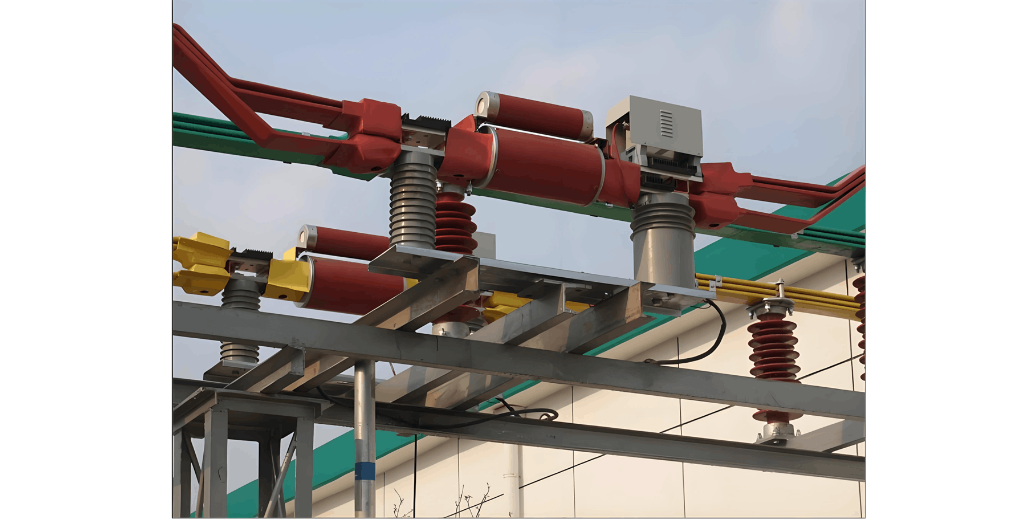
Kini offer mature technology, high reliability, low cost, ug automatic switching without external control. Sila mainly classified into arc-current transfer ug series-resonant types. Ang arc-current transfer type consists of a vacuum switch in parallel with a current-limiting resistor. Sa normal nga operasyon, ang load current flows through the switch. Sa panahon sa short circuit, ang switch opens, forcing current to transfer to the resistor for current limiting.
Issues include: transfer current affected by vacuum arc voltage ug stray inductance; transfer time dependent on switch speed; ug difficulty in current transfer at low arc voltages, requiring auxiliary devices to boost arc voltage ug force current zero-crossing. Series-resonant FCLs use saturated reactors o surge arresters as switches. Sa normal nga kondisyon, ang capacitor ug inductor are in series resonance with low impedance. Sa panahon sa fault, high current saturates the reactor o activates the arrester, detuning the resonance ug inserting the reactor into the line for current limiting. Electromagnetic repulsion fast switches can also rapidly bypass the capacitor.
2.6 Kasamtangan nga Status sa Aplikasyon sa FCL Engineering
Para maayo ang FCLs, kinahanglan gyud sila rapid insert impedance sa panahon sa faults but also feature automatic reset, multiple consecutive operations, low harmonic generation, ug acceptable investment ug operating costs. Karon, limited sa technical challenges ug cost-effectiveness, despite various experimental prototypes developed worldwide, actual grid applications remain scarce, mostly limited sa low-voltage, small-capacity pilot projects.
Ang field started earlier abroad, notable progress in solid-state ug superconducting FCL commercialization. Sa 1993, usa ka 6.6 MW solid-state breaker using anti-parallel GTOs installed sa 4.6 kV feeder sa Army Power Center sa New Jersey, USA, capable of clearing faults within 300 μs. Sa 1995, usa ka 13.8 kV/675 A solid-state FCL by EPRI ug Westinghouse commissioned sa PSE&G substation. Para sa superconducting FCLs, usa ka hybrid AC/DC FCL developed by ACEC-Transport ug GEC-Alsthom sa 1998, achieving commercialization. Sa 1999, usa ka 15 kV/1200 A SFCL jointly developed by General Atomics ug others deployed sa Southern California Edison (SCE) substation.
Domestic FCL research started later pero progressed rapidly. Sa 2007, China's 35 kV superconducting saturated-core FCL, developed by Tianjin Electromechanical Holdings ug Beijing YunDian YingNa Superconductor Cable Co., Ltd., underwent grid-connected trial operation sa Puji Substation, Yunnan—then the world's highest-voltage, highest-capacity superconducting limiter sa trial operation. Para sa series-resonant FCLs, China's first 500 kV device, jointly developed by China Electric Power Research Institute, Zhongdian Puri, ug East China Grid, commissioned sa 500 kV Bingyao Station sa late 2009, reducing short-circuit current to below 47 kA.
Globally, FCL applications still limited sa individual projects pero gaining increasing attention. Significant potential remains sa research sa increasing capacity, voltage withstand, material improvements, heat dissipation, cost control, ug topology optimization.
3 Impact sa FCL Integration sa Power System Security ug Stability
Ang rapid impedance insertion sa FCLs sa panahon sa faults, while effectively limiting current, alters network parameters, affecting transient stability, voltage stability, relay protection settings, ug reclosing. Poor control may lead to negative effects. Coordinated control ug optimal configuration essential for multiple FCLs to achieve optimal performance.
3.1 Impact sa Relay Protection ug Reclosing Settings
Para sa saturated-core SFCLs, ang long recovery time means significant impedance persists post-fault, potentially requiring re-setting sa automatic reclosing ug relay protection. Literature suggests installing quench-type SFCLs sa generator ug main transformer branches; although protection re-setting needed, ang persistent high impedance during recovery can act as a braking resistor, benefiting transient stability. Various distance protection setting methods accounting for SFCLs proposed. Solid-state FCLs can use thyristor trigger signals, bypass breaker contacts, FCL switch positions, ug GAP circuits to switch zero-sequence current protection settings, addressing sensitivity issues after FCL insertion.
3.2 Impact sa Transient Power-Angle Stability
While FCLs generally operate with low impedance normally ug high impedance during faults, their specific operation ug structure lead to varying impacts sa transient power-angle stability. Solid-state ug superconducting FCLs, by inserting high impedance during faults, can enhance generator electromagnetic power output ug improve transient stability.
Resistive-type FCLs improve stability more than inductive types by providing damping resistance that consumes more generator power. Bisan pa, improper resistance values may cause reverse power flow to the generator, worsening power deficits. Analysis shows that for faults away from the generator, inductive SFCLs become more beneficial as total transfer reactance decreases. Resistive SFCLs also show similar characteristics beyond a threshold resistance.
The impact depends on fault location ug type; FCLs affect power-angle stability only when faults occur sa their installed lines. For asymmetrical faults sa the line start, FCL inductance benefits stability, increasing with inductance value. Sa the line end, if the fault is cleared quickly, FCL inductance may hinder stability, but the negative impact decreases with higher inductance for phase-to-phase ug two-phase-to-ground faults. For single-phase or phase-to-phase faults near the line end, slightly extending fault clearing time makes small FCL inductance beneficial, significantly reducing swing curve amplitude compared to fast clearing.
3.3 Impact sa Transient Voltage Stability
Short-circuit faults cause voltage dips, affecting equipment operation ug causing economic losses. PSCAD-based analysis shows that larger FCL inductance improves voltage dip suppression within a certain range. The inherent ability of FCLs to improve fault voltage varies with network structure. On radial feeders, FCL reactance >0.5 pu can maintain voltage above 0.8 pu during faults. Local generation or reactive support near the fault bus reduces dependency on FCLs.
3.4 Coordination with Traditional Limiting Measures
Coordinating FCLs with traditional measures (e.g., reactors, high-impedance transformers) is key to practical application. An automatic optimization method using 0–1 variables for measure deployment ug integer variables for capacity forms a mixed-integer programming problem, solvable by branch-and-bound methods, to guide coordinated configuration.
3.5 Optimization sa Configuration
With multiple FCLs, optimizing location, number, ug parameters for cost-effective performance is a research hotspot. For small grids, enumeration or methods based on power change/loss rate suffice. For large grids with multiple nodes exceeding short-circuit limits, enumeration becomes computationally intensive ug inadequate for multi-objective problems (impedance, number, location).
Weighted multi-objective optimization using genetic or particle swarm algorithms is common, but results heavily depend on weight selection. Sensitivity-based methods, calculating short-circuit current changes relative to branch impedance, avoid weight dependence ug help determine optimal FCL placement, number, ug impedance. Since the primary goal is current limiting, optimization can focus on limiting effectiveness, ensuring selected FCL locations affect all nodes with insufficient short-circuit margin. Cost ug operational losses are also critical factors in real-world optimization.
4 Development ug Application Trends sa FCLs
4.1 FCL Technology Research Trends
To leverage advantages ug mitigate weaknesses, new research directions are emerging. Combining superconducting FCLs with energy storage is a hot topic—absorbing energy during faults ug supplying it to improve power quality during normal operation, achieving dual benefits. The key lies in power conditioning system design.
To address high capacity demands, cost, ug harmonics in solid-state limiters, improved topologies like transformer-coupled three-phase bridge SSCLs with bypass inductors have been proposed. Conventional FCLs lack dynamic adjustability ug steady-state compensation.
A multi-functional FCL with dynamic series compensation has been proposed: normal operation uses capacitor bank switching for stepwise line compensation; during faults, GTOs or IGCTs control the limiting degree via a series inductor, enabling multi-purpose use. Series compensation must be chosen carefully to avoid sub-synchronous oscillations.
4.2 FCL Application Trends
FCLs not only limit short-circuit currents but, under suitable conditions, can enhance power-angle ug voltage stability, expanding their application scope. Emerging trends include improving DC receiving-end transmission capacity, reducing commutation failure risk, enhancing power quality, ug supporting large-scale renewable integration.
In multi-terminal DC systems, FCLs can limit current without affecting normal operation. For DC receiving-end grids, FCLs installed sa fault propagation paths can isolate regions, block fault propagation, shorten commutation failure duration, accelerate DC power recovery, ug mitigate power imbalances ug power flow transfers from simultaneous multi-infeed DC failures, enhancing overall transient stability. For large asynchronous motors, integrating SFCLs sa stator circuit enables soft starting ug suppresses fault current contribution, reducing voltage dips ug improving transient voltage stability.
For large-scale wind integration, FCLs sa wind farm connection points can improve fault ride-through capability ug reduce disconnection risks. Resistive FCLs require less impedance than inductive types for stability under the same fault duration, but inductive types offer better improvement near critical stability.
As FCL technology matures, these fast-responding, multi-functional devices—limiting faults, enhancing stability, ug isolating faults—will find broader applications.
5 Conclusion
FCLs effectively limit short-circuit currents but may impact power-angle/voltage stability, relay protection, ug reclosing settings. Optimized configuration ug coordinated control of multiple FCLs or with FACTS devices promise significant benefits. Future FCLs will extend beyond current limiting to enhancing DC transmission, reducing commutation failures, improving power quality, ug supporting renewable integration.
However, technical ug economic barriers delay large-scale application sa high-voltage, high-capacity FCLs. Solid-state limiters, limited by device capacity ug voltage ratings, are currently restricted to distribution networks. Advances sa high-power self-commutating devices may overcome these bottlenecks ug reduce costs.
Superconducting FCLs offer fast response ug self-triggering but face high cooling costs, heat dissipation challenges, ug long quench recovery times. Considering near-term feasibility ug economics, economical FCLs based on conventional equipment are the preferred solution. Solid-state limiters, with lower technical barriers ug maturity, represent the mainstream future direction.