
• Product
  • Suppliers
  • Manufacturers
  • Solutions
  • Free tools
  • Knowledges
  • Experts
  • Communities
Search


Earthing Switch vs Disconnector vs Circuit Breaker: Core Differences

Rockwill
Field: Manufacturing
10Year<
China
 
In a power system, circuit breakers, disconnectors (also called isolators or disconnect switches) and earthing switches are the core equipment safeguarding reliable grid operation. Although they are frequently used together, each has a strictly defined functional role and operating logic. The following is a detailed breakdown of the three devices.
iee-business

1. What Is an Earthing Switch?

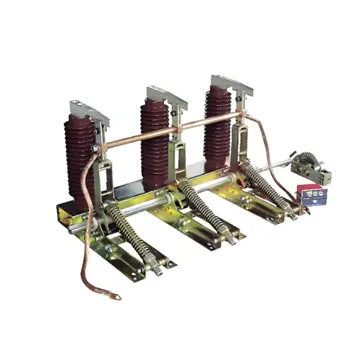
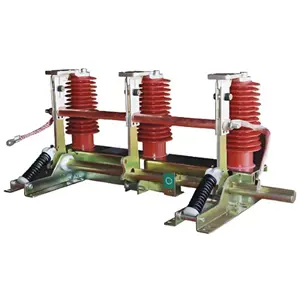
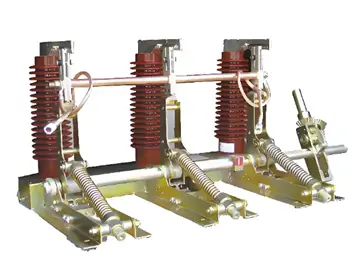
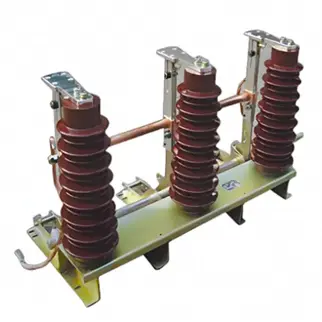
An earthing switch is a safety protection device in the power system. Its core purpose is to provide a reliable electrical connection between the conductive parts of an electrical device (circuit breaker, disconnector, transformer, etc.) and earth while the equipment is de-energized for maintenance.

Its main functions include:

  • Discharging residual charge: discharges any static charge or induced voltage that may remain on the equipment after de-energization to earth.
  • Preventing energization-related injury: in the event of a misoperation or sudden re-energization, the earthing switch deliberately creates a short circuit, forcing the upstream protection devices to trip quickly and cut off the supply, thereby protecting maintenance personnel.
  • Switching induced currents: on multi-circuit towers or closely spaced parallel overhead lines, when one circuit is de-energized for maintenance, adjacent energized circuits induce voltage and current on the de-energized circuit. The earthing switch is used to safely close and open such induced currents.

Depending on the application, earthing switches fall into two categories:

  • Maintenance earthing switch (ES): used mainly for routine earthing of equipment under maintenance.
  • Fast-acting (fault-closing) earthing switch (FES): in addition to maintenance earthing, it can close onto short-circuit current. It is normally fitted with a fast operating mechanism: when an insulation fault or internal arcing occurs inside a GIS (gas-insulated switchgear), the FES closes rapidly to create a deliberate earth fault, triggering relay protection so that the circuit breaker at the remote line end trips and clears the fault.

2. Core Differences

The three devices have clearly divided roles, most concisely expressed in terms of arc-extinguishing capability, operating timing and primary function:

Device Primary function Arc-extinguishing capability Operating timing
Circuit breaker Interrupts and establishes load current as well as fault (short-circuit) current Strong — the only device able to safely interrupt current under load or during a short-circuit fault May be operated at any time (closing to energize, opening to de-energize, tripping on fault)
Disconnector / isolator Provides a visible disconnection point, physically isolating the equipment from the live network None — never to be operated under load; it may only be opened or closed when the circuit breaker is open and the line is de-energized (no current flowing) Must be opened only after the circuit breaker is opened; must be closed only before the circuit breaker is closed
Earthing switch Creates a deliberate earth connection, discharges residual charge and prevents inadvertent energization None — cannot interrupt load or fault current (except the FES, which can close onto short-circuit current) Must be closed only after the disconnector has been opened (de-energization confirmed); must be opened before the disconnector is closed

3. Side-by-Side Comparison

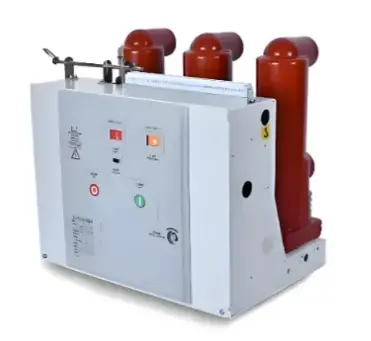
  • Circuit breaker: can interrupt both load current and short-circuit current; equipped with arc-extinguishing devices; its role is control and protection (fault clearing). During de-energization it is opened first; during energization it is closed last.

iee-business

Fixed Type Solid-Sealed Vacuum Circuit Breaker

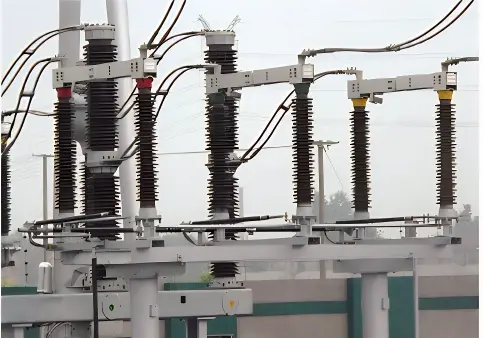
  • Disconnector: must never interrupt load current or short-circuit current; has no arc-extinguishing device; its role is physical isolation (visible break point). During de-energization it is opened after the circuit breaker; during energization it is closed before the circuit breaker.
  • Earthing switch: must never interrupt load current or short-circuit current (the FES can close onto short-circuit current); has no arc-extinguishing device; its role is safe earthing (protection against electric shock and inadvertent energization). During de-energization it is closed last; during energization it must be opened first.

4. Classic Operating Sequence (Five-Precautions Logic)

In power switching operations, the three devices must be operated in a strict order:

Operation Sequence
De-energization 1. Open the circuit breaker → 2. Open the disconnector → 3. Close the earthing switch
Energization 1. Open the earthing switch → 2. Close the disconnector → 3. Close the circuit breaker
 

Modern high-voltage switchgear typically provides mechanical interlocking between the disconnector and the earthing switch: the earthing switch can only be operated after the disconnector is opened, and the disconnector cannot be operated while the earthing switch is closed — making such misoperation physically impossible.

5. Summary

Circuit breakers, disconnectors and earthing switches each serve a distinct role in the power system. The circuit breaker handles current interruption and fault protection, the disconnector provides a visible physical break, and the earthing switch ensures safe earthing during maintenance.

Through strict mechanical interlocking and a disciplined operating sequence, the three devices work together to keep the power system operating safely.

Edited From: Garca

Give a tip and encourage the author!
Topics:

Comments

Share your question or perspective
WhatsApp
Send inquiry
+86
Click to upload file
Download
Get the IEE Business Application
Use the IEE-Business app to find equipment, obtain solutions, connect with experts, and participate in industry collaboration anytime, anywhere—fully supporting the development of your power projects and business.
Login
or continue with
New here?
Register