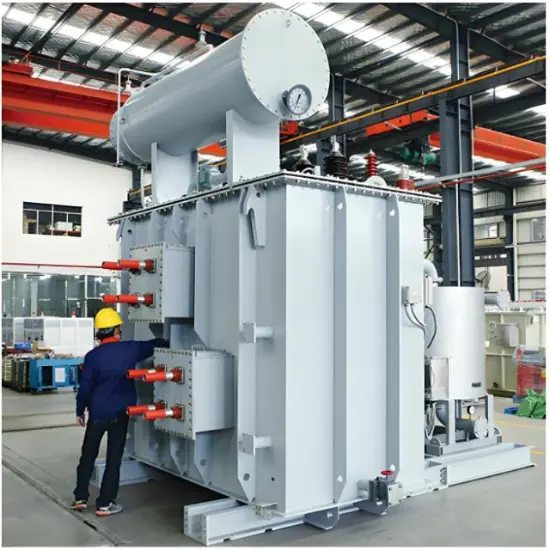
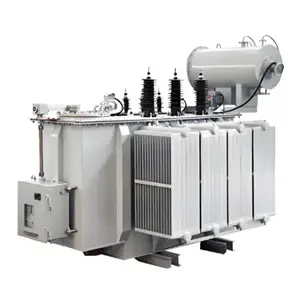
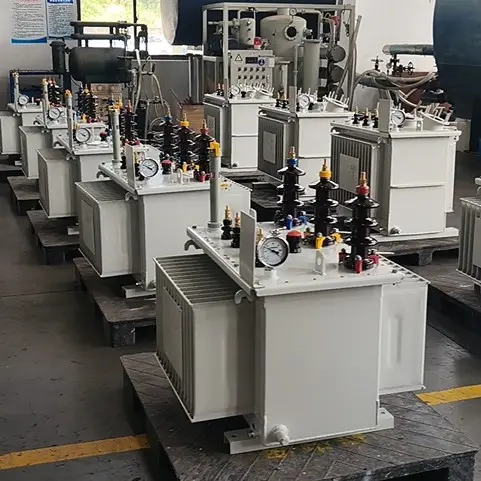
The higher average temperature rise in dry-type epoxy resin transformers stems from fundamental differences in the cooling media and heat dissipation methods they rely on compared to oil-immersed transformers. Simply put, air is far less efficient at carrying away heat than transformer oil.
Specifically, the following key factors contribute to this difference:
1. Significant Disparity in Cooling Medium Efficiency
1.1 Inherent Difference in Thermal Conductivity
This is the most fundamental reason. The thermal conductivity of air is approximately one-fifth that of mineral oil, and its specific heat capacity is less than half that of oil. This means that under identical conditions, air has a much weaker ability to conduct and absorb heat. Consequently, dry-type transformers can only rely on air convection for cooling, whereas oil-immersed transformers utilize hot oil circulation to efficiently transfer heat to the tank wall via convection, where it is then dissipated outward.
1.2 Direct Reflection in Standard Temperature Rise Limits
This difference in cooling efficiency is directly reflected in the distinct temperature rise limits specified in IEC standards for the two transformer types. Taking the most commonly used Class F insulated dry-type transformer as an example, its average winding temperature rise limit is 100K. In contrast, the Class A insulated oil-immersed transformer has an average winding temperature rise limit of 65K.
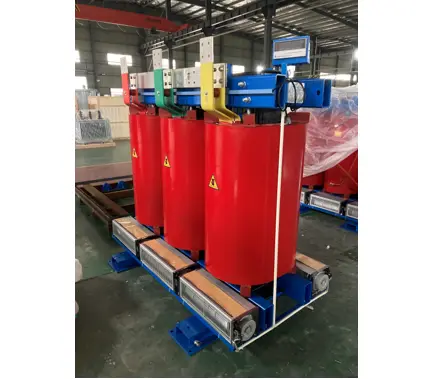
Vziman SCB Series Dry-Type Distribution Transformer
It is evident that the allowable temperature rise limit for dry-type transformers is actually lower. This precisely reflects their weaker heat dissipation capability when using air as the cooling medium—to ensure that the thermal aging rate of the insulation material remains controllable over long-term operation, the standard must impose stricter controls on its temperature rise, thereby safeguarding the transformer's service life.
2. The "Thermal Insulation" Effect of the Insulation Structure
Another characteristic of epoxy resin cast dry-type transformers is that their high-voltage and low-voltage windings are integrally encapsulated in a solid mass of epoxy resin. While this structure offers advantages such as moisture resistance and flame retardancy, it introduces a new challenge for heat dissipation: the heat generated by the windings must first pass through the epoxy resin layer—which does not conduct heat very well—before it can reach the surface and be carried away by air. This process essentially wraps the windings in a "thermal insulation jacket," leading to several consequences:
-
Slow Thermal Response: Due to the relatively low thermal conductivity and relatively high specific heat capacity of the resin, temperature rise in dry-type transformers changes more slowly than in oil-immersed transformers when loads fluctuate, and they take longer to reach thermal equilibrium.
-
Uneven Temperature Distribution: Because heat tends to accumulate internally and is not easily dissipated, the temperature distribution inside dry-type transformers is typically more uneven than in oil-immersed transformers, with relatively higher hot-spot temperatures.
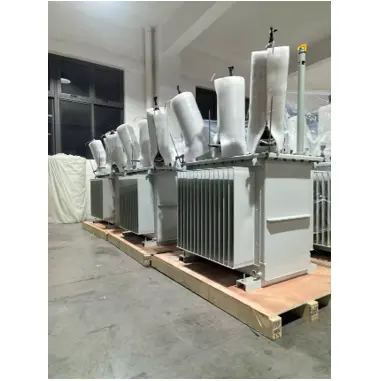
Vziman Series Sealed Oil-Immersed power Transformer
3. Different Underlying Philosophies in Standard Formulation
The approaches to setting temperature rise limits for the two transformer types are essentially opposite. The lower limit for dry-type transformers is inherently a conservative strategy adopted to protect the service life of their insulation system (epoxy resin). Oil-immersed transformers, on the other hand, benefit from oil as a highly efficient cooling and insulating medium, so the standards allow them to operate at higher temperatures while maintaining stability.
4. Transformer Selection Considerations
When selecting a transformer type, the installation environment and cooling conditions should be taken into account:
-
Prioritize Dry-Type Transformers: For installation indoors, in basements, high-rise buildings, or other areas with limited ventilation or high occupancy density where fire safety requirements are stringent. Since they rely on air cooling with limited dissipation capacity (Class F insulation average winding temperature rise limit of 100K), ventilation capacity must be verified during selection, and forced air cooling should be added if necessary.
Vziman Dry-Type Transformers (SCB Series) use epoxy resin vacuum casting, offering flame retardancy, moisture resistance, and maintenance-free operation. They are equipped with an intelligent temperature control system that monitors temperature in real time and automatically starts/stops fans and triggers overtemperature alarms. Under forced air cooling, they can sustain 120%–150% load continuously, making them ideal for high-reliability indoor applications.
-
Prioritize Oil-Immersed Transformers: For installation at outdoor standalone sites or open, well-ventilated areas where an oil containment pit can be provided. With oil as the cooling medium, they offer high heat dissipation efficiency (Class A insulation average winding temperature rise limit of 65K) and strong overload capacity, making them suitable for continuous high-load operation.
Vziman Oil-Immersed Transformers (S-M Series) feature a fully sealed corrugated tank structure that keeps out moisture and oxygen, slowing insulation aging and enabling maintenance-free operation. The core uses low-loss silicon steel sheets, achieving low no-load losses, making them ideal for compact outdoor substations and applications that demand long-term operational economy.
Brief Selection Guideline: For outdoor installations, high-load conditions, and strict temperature rise control requirements—choose oil-immersed (Vziman S-M Series). For indoor installations with high fire safety demands and space constraints—choose dry-type (Vziman SCB Series), and ensure that reinforced cooling measures are implemented.
5. Summary
In summary, the higher temperature rise limit of dry-type transformers does not necessarily mean they generate more heat. Rather, it is the combined result of inherent cooling limitations (using air as the medium) and structural barriers to heat dissipation (encapsulation in epoxy resin). To ensure an acceptable service life for the transformer in this "thermally insulated" environment, the standard must impose stricter temperature rise limits and leave a design margin.
Edited From:Echo

 Login
Login