1. Industry Challenge: The "Physical Blind Spots" of Traditional Distribution Networks
1.1 The "Manual Search" Era of Fault Location
In traditional distribution networks, when a 10kV feeder trips, maintenance crews must patrol kilometers of line pole-by-pole to visually locate the fault point. This outdated operational model directly results in three critical consequences:
- Degraded SAIDI Metrics: Average outage durations typically exceed 120 minutes.
- Wildfire Risk: High-impedance ground faults (e.g., a conductor falling onto dry grass) produce small currents typically below 5A. Traditional overcurrent protection (50/51) cannot identify these faults, and the sustained arc can ignite vegetation within 1.5 seconds.
- Electrocution Hazards: A fallen conductor, if not cleared promptly, poses a lethal threat to anyone in the vicinity.
1.2 Why Can't Traditional Protection "See" These Faults?
Traditional substation feeder protection acts like a "Heavyweight Boxer" — its job is to intercept massive short circuits of thousands of amperes. For micro-leakage currents as low as 100mA to 2A generated by high-impedance grounding, it typically treats them as "normal fluctuations" and refuses to trip. This physical blind spot is the root cause of many distribution network accidents.
2. Core Technology: The "Trinity" Logic Engine of Distribution Automation
Distribution Automation (DA) fundamentally means upgrading the grid from "passively enduring faults" to "actively sensing, instantly isolating, and automatically restoring" — a self-healing ecosystem. Its core rests on the following three physical pillars:
2.1 Intelligent Terminal Layer: Equipping the Grid with "Digital Senses"
The physical foundation of DA is the intelligent primary equipment installed on poles.
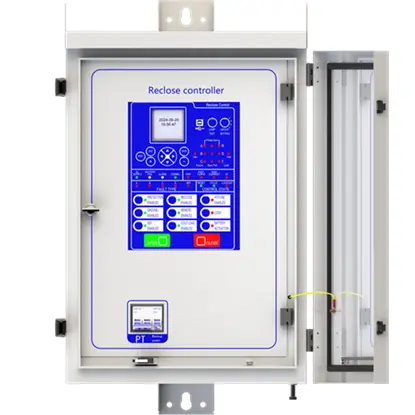
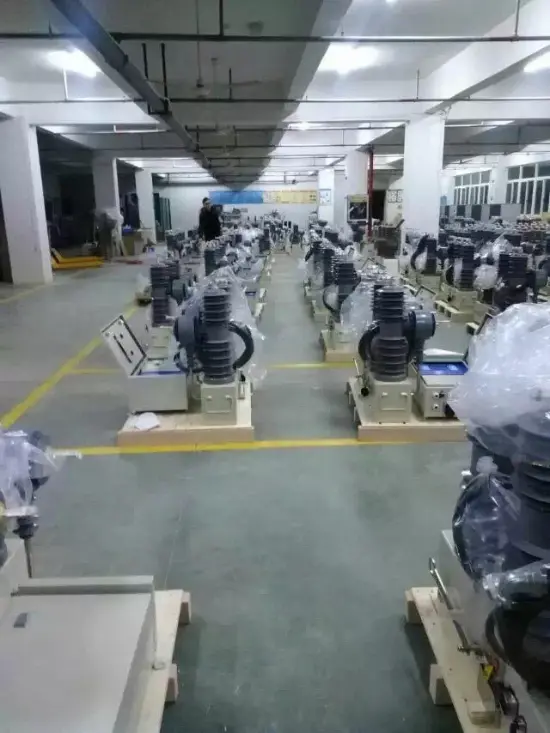
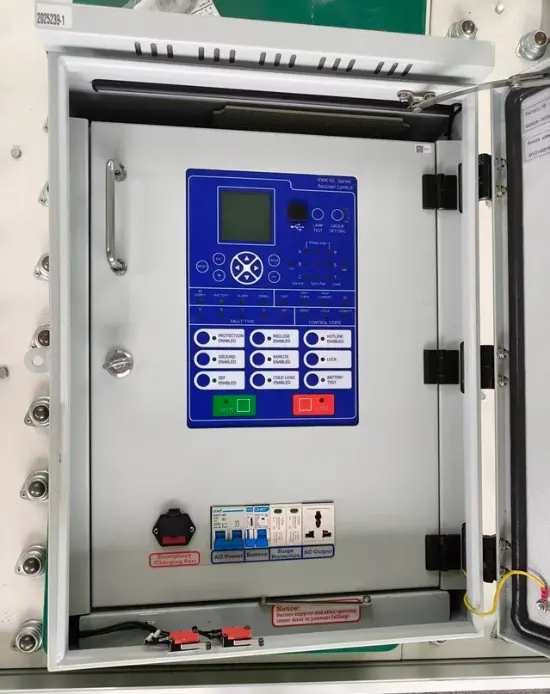
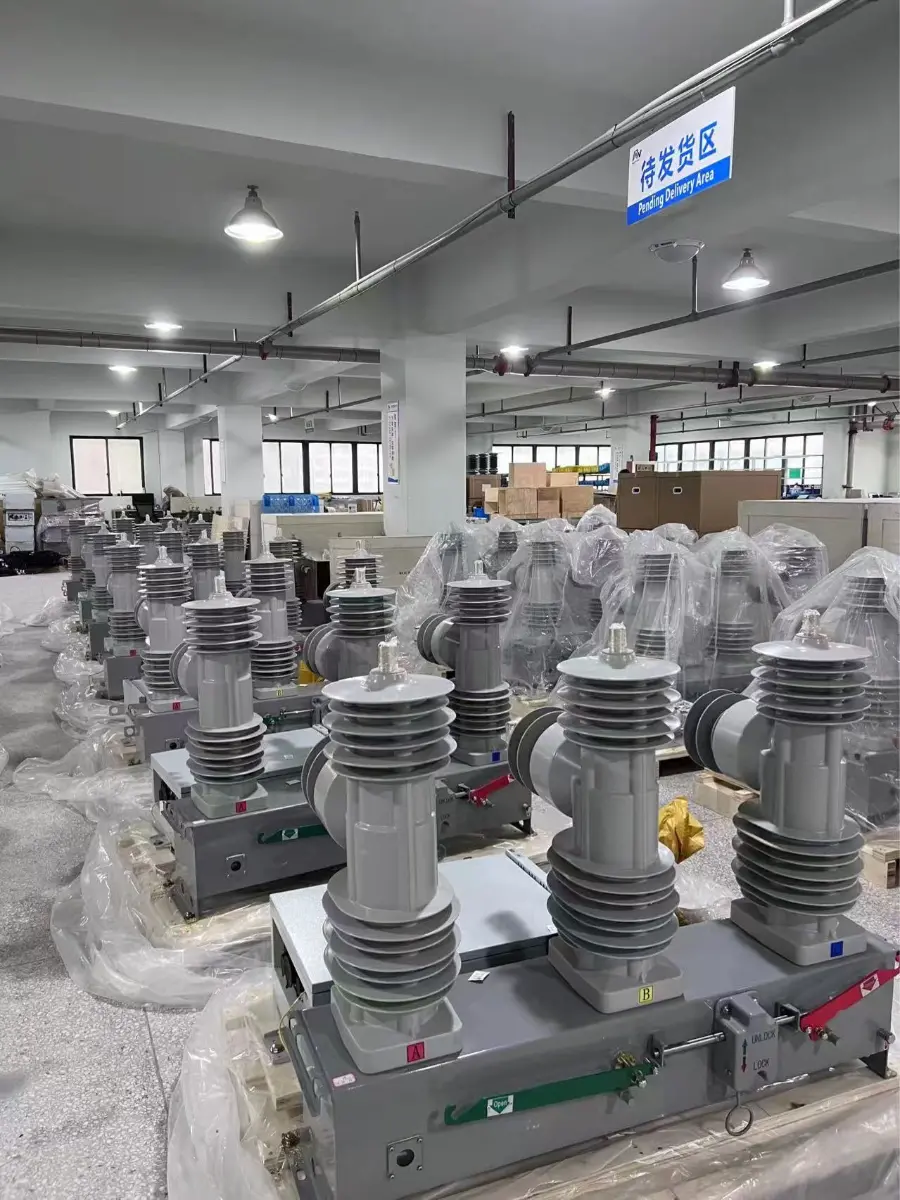
① Smart Recloser:
- Physical Logic: Features automatic reclosing sequences of O-0.3s-CO-15s-CO-15s-CO.
- Self-Healing Value: Physically distinguishes transient faults (e.g., tree branch contact, accounting for 90% of all faults) from permanent ones. Transient faults are restored instantly via auto-reclose; permanent faults trigger a Lockout, physically blocking a secondary shock to expensive transformers.
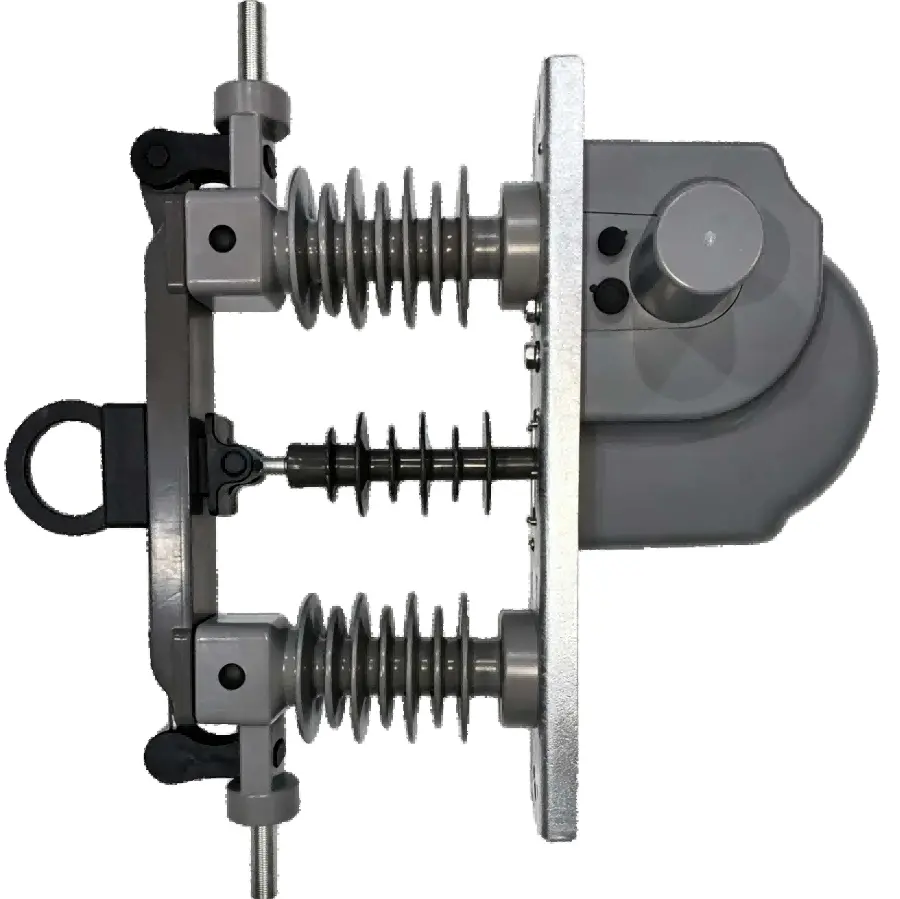
② Smart Disconnector:
- Physical Logic: Provides a visible break via a positively driven rigid-link kinematic chain, ensuring absolute maintenance safety.
- Digital Value: Supports ground-level remote control, completely eliminating pole-climbing operations. Status signals are transmitted in real-time to SCADA via IEC 60870-5-104.
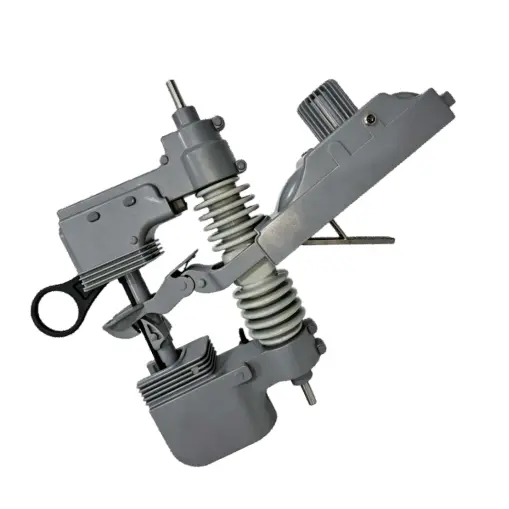
③ Smart Drop-out Fuse:
- Physical Logic: Integrates high-precision tilt sensors and NB-IoT/LoRa communication modules.
- Perception Value: Sends a precise GPS coordinate alarm within 1 second of a physical dropout, reducing fault location time from hours to seconds.
2.2 Communication Layer: Implementing the "Neural Pathways"
Data captured by intelligent terminals must be reliably transmitted to the master station, as specified by standard SCADA protocols.
2.3 Master Station Decision Layer: FDIR Logic — The "Self-Healing Brain"
FDIR (Fault Detection, Isolation, and Restoration) is the soul of the entire automation system.
- Fault Detection: Intelligent terminals (such as reclosers) instantly identify high-impedance faults (SEF) using zero-sequence transient signature analysis.
- Fault Isolation: The master station or peer-to-peer logic automatically commands the reclosers on both sides of the fault to open, physically confining the outage to the smallest possible section.
- Automatic Restoration: The system automatically closes the tie recloser, restoring power to non-faulted segments within 60 seconds via physical route reconfiguration.
3. Core Application Scenarios: The Three Defensive Battles of Smart Grids
3.1 Wildfire Defense: 100mA Sensitivity High-Impedance Fault Protection (SEF)
- [Physical Hazard]: A 2A micro-arc from a downed conductor is sufficient to ignite dry grass.
- [Technical Solution]: The recloser controller achieves 100mA primary current sampling precision via high-permeability zero-sequence CTs.
- [Physical Proof]: Per IEEE C37.230, the controller identifies the unique non-linear arc chaos signature of high-impedance faults and issues a trip within 0.5 seconds, reducing grid-triggered wildfire probability by 95%.
3.2 Renewable Energy Integration: Tackling the Challenge of Bidirectional Power Flow
- [Physical Hazard]: With Distributed Photovoltaic (PV) generation connected, fault current direction is no longer unidirectional; traditional protection schemes can easily mal-operate.
- [Technical Solution]: The controller activates Directional Power Sensing logic, physically distinguishing an "upstream fault" from "DER back-feed" by comparing voltage and current phase angles.
3.3 Urban Distribution: Enhancing Supply Reliability (SAIDI)
- [Synergy Value]: Smart Disconnectors, Smart Fuses, and Smart Reclosers form a "Terminal-Edge-Cloud" collaborative system. Fuses provide second-level alarming, reclosers handle instantaneous isolation, and disconnectors guarantee safe maintenance.
- [Quantified Benefit]: A comprehensive DA solution reduces SAIDI by over 70%, upgrading inspection labor time from "hours" to "minutes".
4. Global Market Access: International Standards for Distribution Automation
5. Conclusion: The Physical Value Loop of Distribution Automation
"Standards determine life and death; intelligence determines market class."
Distribution Automation is not merely a stack of technologies; it is a system-level defensive strategy grounded in physical causal proof. It fundamentally shifts a utility's operational model from "reactive repair" to "active defense," serving as the strongest cornerstone for ensuring personnel safety, environmental security, and power supply reliability.

 Login