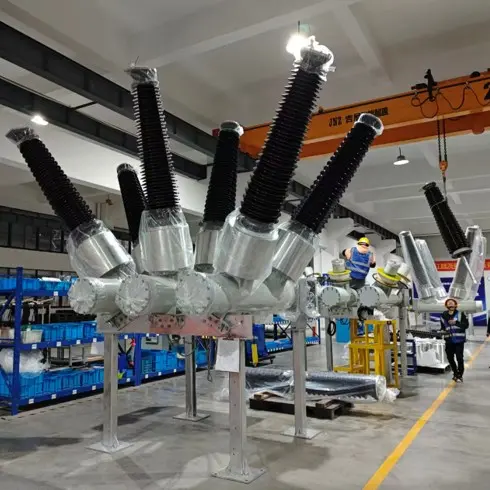
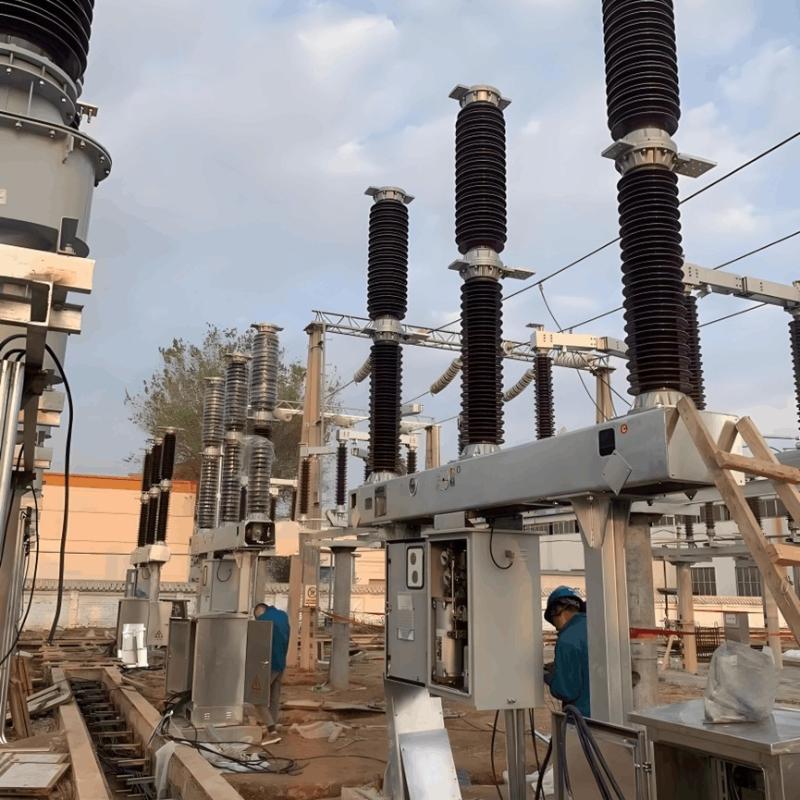
In dead-tank SF6 circuit breakers for the 40.5kV–252kV voltage range, pure spring operating mechanisms have become the absolute mainstream. This is not because the spring mechanism's output energy has increased, but because revolutionary advancements in arc-quenching technology have significantly reduced the operating energy demand — thereby highlighting the spring mechanism's substantial advantages in reliability and maintenance-free operation.
The reasons can be analyzed from three dimensions: "technical prerequisite," "inherent advantages of the spring mechanism," and "structural compatibility."
1. Technical Prerequisite: Self-Blast Arc-Quenching Technology Significantly Reduces "Operating Energy"
-
Early Puffer-Type Arc Quenching (High Operating Energy Demand): Early SF6 circuit breakers predominantly employed the "puffer" arc-quenching principle. During opening, the operating mechanism was required to exert enormous mechanical force to forcibly compress SF6 gas, generating a high-pressure gas flow to extinguish the arc. This approach demanded extremely high operating energy. At higher voltage levels, the energy output of spring mechanisms was simply insufficient, necessitating the use of complex, high-power hydraulic or pneumatic mechanisms.
-
Modern Self-Blast Arc Quenching (Dramatically Reduced Operating Energy): Modern 40.5kV–252kV SF6 circuit breakers have fully adopted "self-blast (thermal expansion + auxiliary puffer)" arc-quenching technology. This ingeniously utilizes the substantial heat generated by the short-circuit arc itself to cause rapid thermal expansion and pressure rise in the SF6 gas — effectively "blowing itself out." As a result, the operating mechanism only needs to provide minimal energy (primarily to overcome mechanical friction, opening spring force, and minor auxiliary puffer effort). The operating energy is significantly reduced (with some designs achieving reductions of 40%–50%), falling precisely within the mature output energy range of pure spring mechanisms.
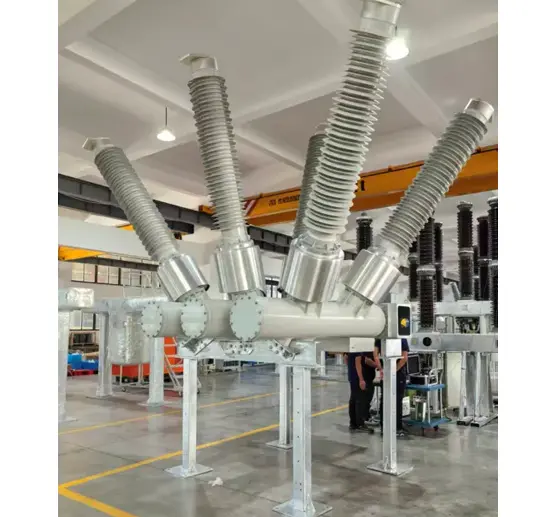
Physical Photograph of RHD-170 Dead-Tank SF₆ Circuit Breaker
2. Inherent Advantages of Pure Spring Operating Mechanisms
Once operating energy is no longer the bottleneck, the advantages of pure spring mechanisms become overwhelmingly evident:
-
No Leakage Risks, Extremely High Reliability: Hydraulic mechanisms are prone to oil leakage, hydraulic valve sticking, and pressure loss due to seepage. Pneumatic mechanisms are susceptible to gas leakage and air compressor failures. Pure spring mechanisms, being purely mechanical transmissions (gears, cams, linkages, springs), have no high-pressure fluid leakage issues, significantly reducing the probability of failure-to-operate and maloperation.
-
Excellent Environmental Adaptability: The viscosity of hydraulic oil in hydraulic mechanisms increases substantially in extremely cold environments, causing sluggish operation or even failure to operate. Pneumatic mechanisms are prone to failure due to condensation and icing in gas lines. The mechanical performance of pure spring mechanisms is virtually unaffected by ambient temperature, making them particularly suitable for harsh outdoor environments.
-
Virtually "Maintenance-Free": Spring mechanisms have relatively simple structures with fewer components. Aside from periodic mechanical lubrication, they do not require frequent checks of oil levels, oil pressure, or pump operating status as hydraulic/pneumatic mechanisms do, resulting in extremely low lifecycle maintenance costs.
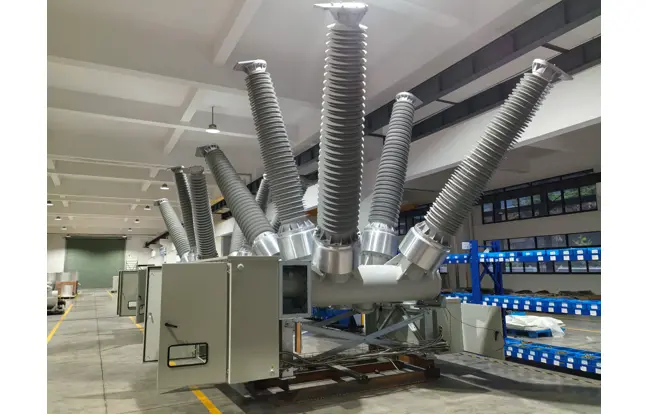
Physical Photograph of RHD-252 Dead-Tank SF₆ Circuit Breaker
3. Perfect Match with the "40.5kV–252kV Dead-Tank" Structure
-
Voltage Threshold: In the 40.5kV to 252kV range, the contact gaps and moving mass are moderate. Modern stored-energy springs and high-strength alloy materials fully meet the speed requirements for opening and closing operations. (Note: For 500kV or 800kV UHV circuit breakers, due to multiple breaks, longer travel, and extremely heavy moving parts, a considerable portion still employ hydraulic or hydraulically assisted spring mechanisms.)
-
Integration Requirements of Dead-Tank Circuit Breakers: The contacts of dead-tank circuit breakers are enclosed within a grounded metal tank, featuring a low center of gravity and a highly compact structure. Spring mechanisms are compact in size and are typically mounted directly at one end of the tank. Through a simple rotating main shaft, three-phase mechanical coupling (three-phase common enclosure or three-phase ganged operation) is easily achieved, with minimal transmission components and high mechanical efficiency — further reducing overall equipment footprint.
Conclusion
The widespread adoption of pure spring operating mechanisms in 40.5kV–252kV dead-tank SF6 circuit breakers is the result of the convergence of "physical energy reduction via self-blast interrupters" and "high reliability of pure mechanical structures." It achieves the most stable power system interruption with the minimal mechanical cost, representing the most mature and economical design direction for medium- and high-voltage switchgear today.
Rockwill Dead-Tank SF6 Circuit Breakers RHD Series exemplify this design philosophy. This series fully encloses all live parts within a grounded SF6-filled metal tank, enabling rapid arc extinction and efficient fault current interruption to comprehensively safeguard grid operation. The low-center-of-gravity design provides excellent seismic resistance, reliably coping with extreme climates and other harsh conditions. The equipment integrates bushings and current transformers, supporting multifunctional control such as measurement and protection. It is widely deployed in medium- and high-voltage distribution scenarios across power, metallurgical, transportation, and other industrial sectors.
Edited From:Garca

 Login