• Product
  • Suppliers
  • Manufacturers
  • Solutions
  • Free tools
  • Knowledges
  • Experts
  • Communities
Search


Free Expert Guides on Power Systems, Circuit Design & Electrical Troubleshooting

Access free engineering resources from IEE Business—covering power design, circuit layout, equipment selection, and troubleshooting. Expert-developed guides help engineers, procurement, and project teams make better decisions. Stay ahead on smart grids, renewables, efficiency, and AI tools. Improve reliability, reduce downtime, and enhance outcomes with real-world solutions. Explore our knowledge hub today.
Why use batteries to start generators instead of generator capacitors?
Using a battery to start a generator rather than using a capacitor or other methods is primarily because batteries provide a more reliable and stable source of energy during the starting process. Here are the detailed reasons:1. High Energy DensityHigh Energy Density of Batteries: Batteries can store a large amount of electrical energy and provide high currents over short periods, which is essential for meeting the high power demands of starting a generator.Low Energy Density of Capacitors: Whil
11/07/2024
Consult
Tip
Consult
Tip
What are the pros and cons of connecting two AC generators in parallel?
Advantages Improve the reliability of power supply systems: Multiple AC generators are connected in parallel to form a power grid, ensuring stable voltage and frequency of power supply, and can withstand the impact of large changes in load. Easy Maintenance: Multiple units can be used in parallel, allowing for centralized scheduling and distribution of active and reactive loads, making maintenance and repairs more convenient and timely. Economics: Depending on the load size, appropriate numbers
11/05/2024
Consult
Tip
Consult
Tip
What are the reasons for synchronous generators having more losses than induction motors?
Although both synchronous generators (Synchronous Generators) and induction motors (Induction Motors) operate based on the principle of electromagnetic induction, they differ in structure and working principles. These differences result in synchronous generators typically having higher losses compared to induction motors. Here is a detailed analysis of the reasons:1. Excitation System Losses Synchronous Generator: Synchronous generators require an independent excitation system to generate the ro
11/04/2024
Consult
Tip
Consult
Tip
What are the causes of overvoltage in a diesel generator?
Causes of Overvoltage in Diesel GeneratorsOvervoltage in diesel generators can be caused by various factors, including electrical system failures, control system issues, and load changes. Here are some common causes and their detailed explanations:1. Voltage Regulator FailureCauses: Faulty Voltage Regulator: The voltage regulator is a key component that controls the generator's output voltage. If the voltage regulator fails or is damaged, it can cause the output voltage to abnormally rise. Impro
10/30/2024
Consult
Tip
Consult
Tip
What is the voltage phase frequency sequence employed by Caterpillar in their 2 MW, 4160 volt diesel generator sets?
Caterpillar (Caterpillar) and Cummins (Cummins) diesel generator sets typically follow standard electrical specifications for voltage, frequency, and phase sequence, although specific configurations may vary. Below are some common electrical parameters for a Caterpillar 2 MW, 4160 Volt diesel generator set, as well as a comparison with Cummins units.Caterpillar 2 MW, 4160 Volt Diesel Generator Set1. Voltage Rated Voltage: 4160 Volts (V)2. Frequency Rated Frequency: 60 Hertz (Hz)3. Phase Sequence
10/28/2024
Consult
Tip
Consult
Tip
What course generator is under voltage?
Check and Adjust the Generator Load Loads that are too large or too small can both cause unstable voltage, and the load needs to be reasonably adjusted. Check the generator speed Low RPM can affect the output voltage, ensure that the generator's RPM is set to the rated value.Inspect the Excitation SystemInsufficient excitation current or failure of the excitation system can lead to a decrease in voltage. Check the excitation system and troubleshoot any faults.Maintenance of Generator Componen
10/24/2024
Consult
Tip
Consult
Tip
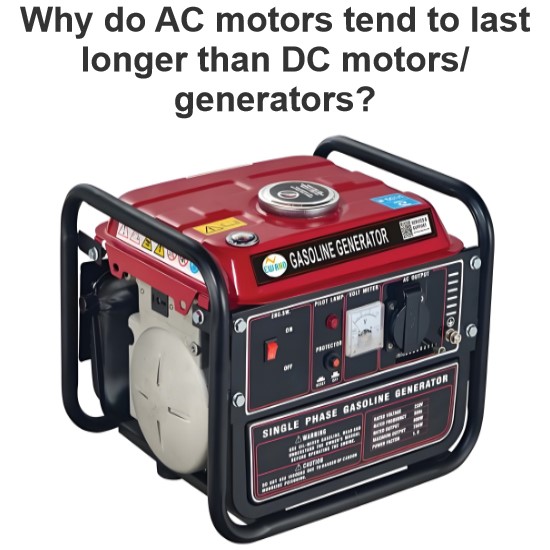
Why do AC motors tend to last longer than DC motors/generators?
Comparison of the service life of AC motors with DC motors/generatorsAn Overview of Life Span DifferencesThe service life of AC motors is generally considered longer than that of DC motors, mainly due to differences in their structure and working principles. Specifically, DC motors typically include brushes and commutators, components that can wear out during operation and affect the motor's lifespan. In contrast, AC motors do not have these vulnerable parts, theoretically allowing for a longer
10/23/2024
Consult
Tip
Consult
Tip
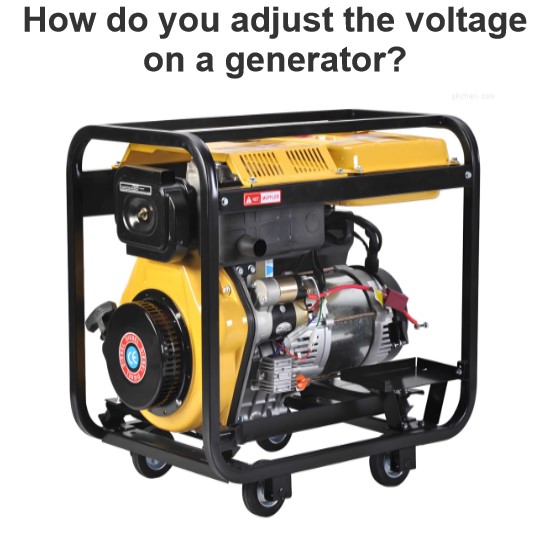
How do you adjust the voltage on a generator?
The adjustment of the generator's voltage usually needs to be operated according to the specific type of generator. Here are the voltage adjustment methods for several common types of generators:1.Alternating Current (AC) Generators1.1 Adjust the Excitation Current Principle: The voltage of an AC generator is primarily controlled by the excitation current. Increasing the excitation current can raise the output voltage, while reducing it will lower the output voltage.Steps Shut down the generator
10/23/2024
Consult
Tip
Consult
Tip
How are DC generators used?
How to use a DC generatorDirect current generators are an important type of mechanical equipment that have a wide range of applications in various industries. Proper use of direct current generators not only ensures their efficient operation but also extends their service life. Here are several aspects to pay attention to when using direct current generators:1.Installation and Debugging Installation Location: DC generators should be installed on a flat, shock-absorbing, and torsion-resistant sup
10/18/2024
Consult
Tip
Consult
Tip
What is the difference between the use of electromagnets in generators and permanent magnets in DC motors?
The electromagnet used in generators and the permanent magnet used in DC motors have the following differences:I. In terms of working principleElectromagnetIn generators, electromagnets usually generate a magnetic field through energized coils. When the rotor of the generator rotates, the change in the magnetic field will induce an electromotive force in the stator winding, thereby generating current. For example, in large AC generators, electromagnets can control the strength of the magnetic fi
10/17/2024
Consult
Tip
Consult
Tip
Send inquiry
+86
Click to upload file
Download
Get the IEE Business Application
Use the IEE-Business app to find equipment, obtain solutions, connect with experts, and participate in industry collaboration anytime, anywhere—fully supporting the development of your power projects and business.