• Product
  • Suppliers
  • Manufacturers
  • Solutions
  • Free tools
  • Knowledges
  • Experts
  • Communities
Search


Free Expert Guides on Power Systems, Circuit Design & Electrical Troubleshooting

Access free engineering resources from IEE Business—covering power design, circuit layout, equipment selection, and troubleshooting. Expert-developed guides help engineers, procurement, and project teams make better decisions. Stay ahead on smart grids, renewables, efficiency, and AI tools. Improve reliability, reduce downtime, and enhance outcomes with real-world solutions. Explore our knowledge hub today.
PN Junction Bias
PN Junction Diode DefinitionA PN junction diode is defined as a semiconductor device that allows current to flow in one direction in forward bias and blocks current in reverse bias.Forward BiasIn forward bias, the p-type region is connected to the positive terminal and the n-type to the negative terminal, reducing the depletion layer and allowing current flow.Reverse BiasIn reverse bias, the p-type region is connected to the negative terminal and the n-type to the positive terminal, increasing t
08/27/2024
Consult
Tip
Consult
Tip
Current Density in Metal and Semiconductor
Current Density DefinitionCurrent density is defined as the electric current per unit area of a conductor’s cross-section, denoted by J.Formula for Current DensityThe current density in a metal is calculated using J = I/A, where I is the current and A is the cross-sectional area.Semiconductor Current FlowIn semiconductors, current density is due to both electrons and holes, which move in opposite directions but contribute to the same direction of current.Current Density in MetalImagine a conduct
08/26/2024
Consult
Tip
Consult
Tip
What is the Conductivity of Semiconductor?
What is the Conductivity of Semiconductor?Conductivity DefinitionThe conductivity of a semiconductor is defined as its ability to conduct electricity, which is moderate due to its intermediate free electron concentration.Role of Electrons and HolesIn semiconductors, both free electrons and holes act as charge carriers, enabling electrical conduction.Temperature EffectsConductivity of semiconductors increases with temperature because higher temperatures generate more free electrons and holes.Ener
08/26/2024
Consult
Tip
Consult
Tip
What are the  Applications of Hall Effect ?
What are the Applications of Hall Effect ?Hall Effect DefinitionThe Hall effect is defined as the deflection of charge carriers in a current-carrying conductor when placed in a magnetic field.Determine the Type of SemiconductorThe direction of the Hall voltage helps identify if a semiconductor is n-type or p-type.Calculate the Carrier ConcentrationThe Hall effect is used to find the concentration of electrons and holes in a semiconductor.Determine the Mobility (Hall Mobility)The Hall coefficient
08/26/2024
Consult
Tip
Consult
Tip
What is Semiconductor Physics?
What is Semiconductor Physics?Semiconductor Physics DefinitionSemiconductor physics is defined as the study of materials with electrical conductivity between conductors and insulators, primarily involving elements like silicon and germanium.Properties of SemiconductorsSemiconductors have moderate resistivity and a negative temperature coefficient of resistance, meaning their resistance decreases with increasing temperature.Covalent BondingThe valence electrons in semiconductor atoms take a vital
08/26/2024
Consult
Tip
Consult
Tip
What is Silicon Semiconductor?
What is Silicon Semiconductor?Silicon Semiconductor DefinitionA silicon semiconductor is defined as a material that has an electrical conductivity value between that of a conductor and an insulator, and whose conductivity can be altered by introducing impurities or applying external fields or light. Silicon is the most widely used semiconductor material in modern electronics, especially in power devices, integrated circuits, photovoltaic cells, and transistors.Thermal and Electrical PropertiesSi
08/26/2024
Consult
Tip
Consult
Tip
What is Gallium Arsenide Semiconductor?
What is Gallium Arsenide Semiconductor?GaAs Semiconductor DefinitionA GaAs semiconductor is defined as a compound of gallium and arsenic from the III-V group, used in various electronic and optoelectronic devices. Direct Band GapGaAs has a direct band gap of 1.424 eV at 300 K, enabling it to emit light, essential for LEDs, laser diodes, and solar cells.Preparation of GaAs semiconductorThere are several methods for producing GaAs semiconductors, depending on the desired purity, quality, and appli
08/26/2024
Consult
Tip
Consult
Tip
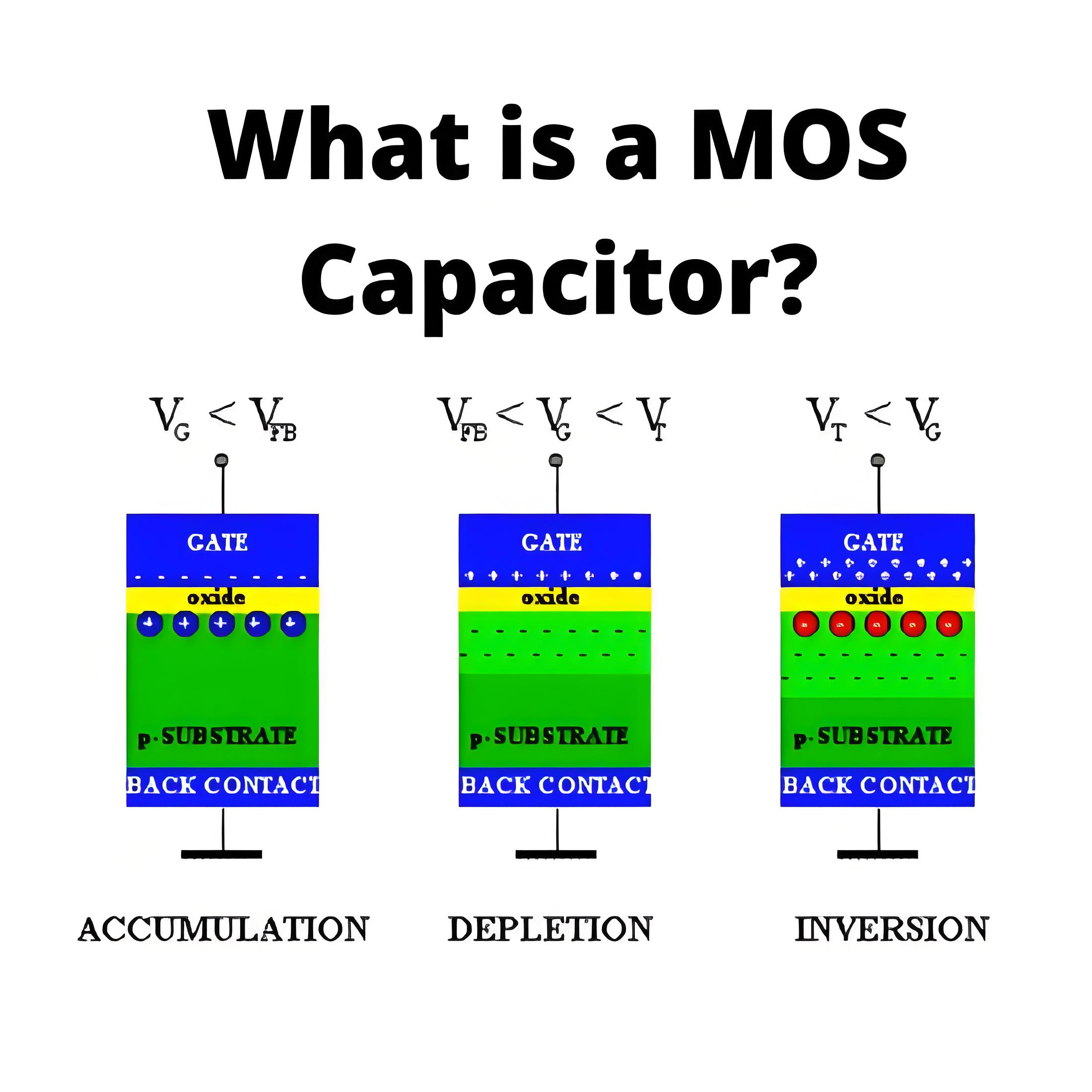
What is a MOS Capacitor?
What is a MOS Capacitor?MOS Capacitor DefinedMOS stands for Metal Oxide Semiconductor. An MOS capacitor comprises a semiconductor body or substrate, an insulator, and a metal gate. Typically, the gate is made from heavily doped n+ poly-silicon that functions like metal. Silicon dioxide (SiO2) serves as the dielectric material between the capacitor plates, where the metal and semiconductor layers act as the two plates. The capacitance of an MOS capacitor varies with the voltage applied to its gat
08/26/2024
Consult
Tip
Consult
Tip
What is Electrical Conductance?
What is Electrical Conductance?The definition of conductivityThis property determines how easily the current flows through the conductor. As we all know, resistance is a property of a conductor that resists current flowing through it. This means that the conductivity is the reciprocal number of resistance. In general, the conductivity is expressed asThe definition of conductivityConductivity is defined as the ability of a material to conduct an electric current and is determined by its specific
08/26/2024
Consult
Tip
Consult
Tip
Mobility of Charge Carrier
Mobility of Charge Carrier DefinitionMobility of charge carriers is defined as the ratio of drift velocity to the applied electric field in a conductor. Drift velocity depends on two factors: the intensity of the electric field and the conductor’s mobility. For the same electric field, different metals will have different drift velocities due to their unique mobility of charge carriers.In metals, the band of valence electrons may not be completely filled, allowing free electrons to move. These f
08/26/2024
Consult
Tip
Consult
Tip
Send inquiry
+86
Click to upload file

IEE Business will not sell or share your personal information.

Download
Get the IEE Business Application
Use the IEE-Business app to find equipment, obtain solutions, connect with experts, and participate in industry collaboration anytime, anywhere—fully supporting the development of your power projects and business.