• Product
  • Suppliers
  • Manufacturers
  • Solutions
  • Free tools
  • Knowledges
  • Experts
  • Communities
Search


Free Expert Guides on Power Systems, Circuit Design & Electrical Troubleshooting

Access free engineering resources from IEE Business—covering power design, circuit layout, equipment selection, and troubleshooting. Expert-developed guides help engineers, procurement, and project teams make better decisions. Stay ahead on smart grids, renewables, efficiency, and AI tools. Improve reliability, reduce downtime, and enhance outcomes with real-world solutions. Explore our knowledge hub today.
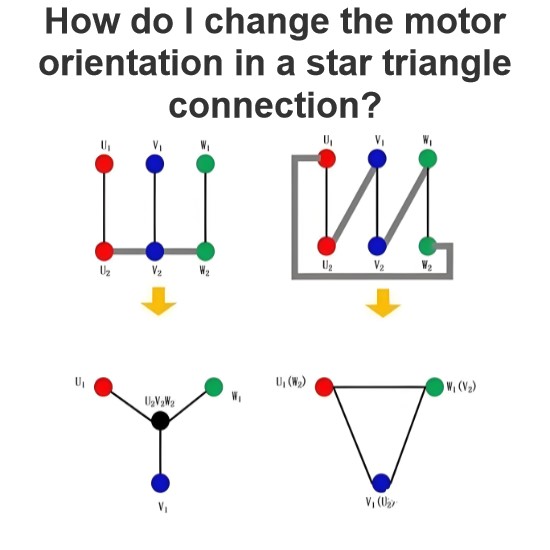
How do I change the motor orientation in a star triangle connection?
In a Star-Delta or Y-delta connection, changing the direction of the motor can be achieved by changing the phase sequence applied to the motor windings. The direction of the motor depends on the power supply phase sequence, that is, the order in which the three phases of the power supply reach the motor winding. The following are the specific operation steps and principles:Star connection (Star/Y connection)Star connection principle: In a star connection, one end of the three windings is connect
09/28/2024
Consult
Tip
Consult
Tip
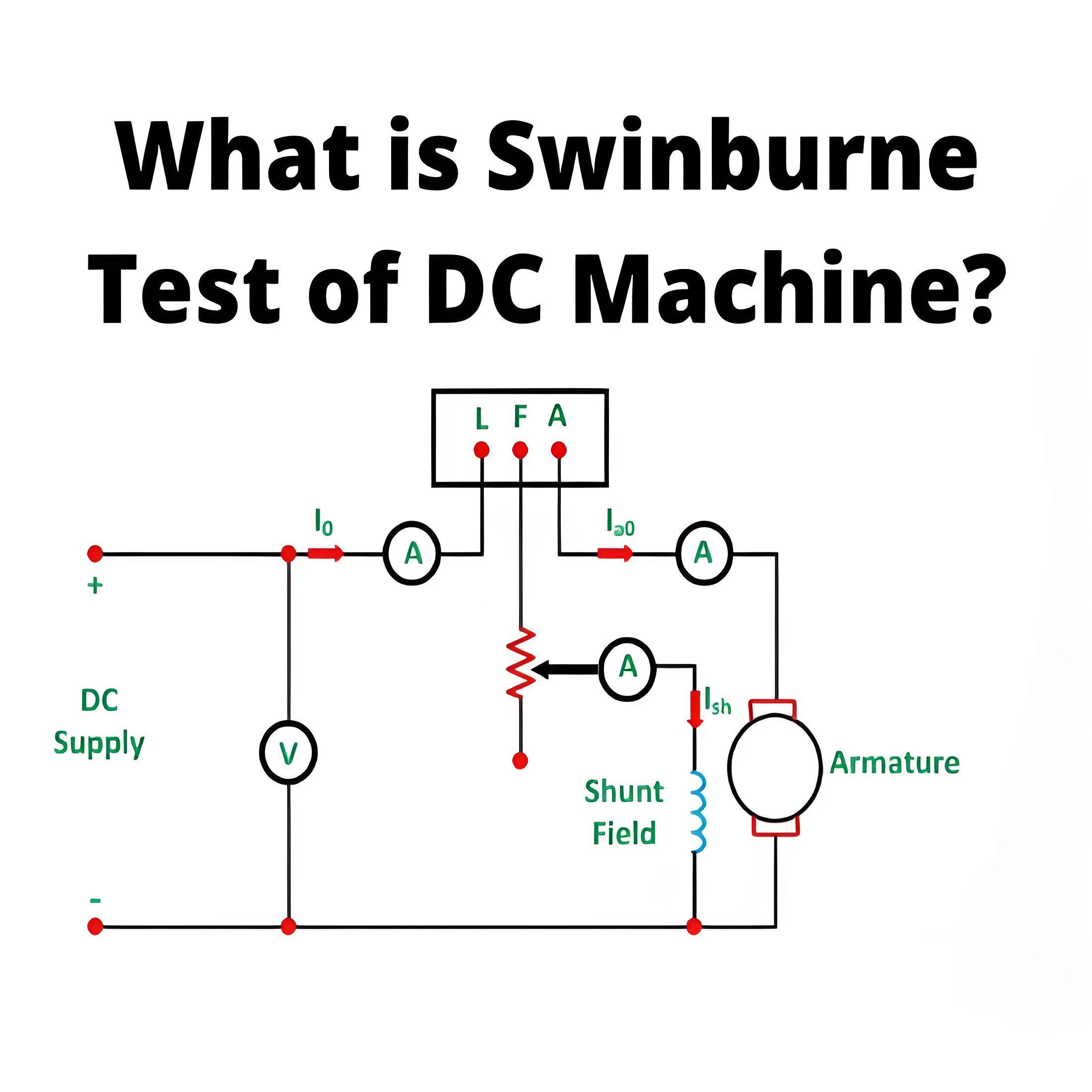
What is Swinburne Test of DC Machine?
What is Swinburne Test of DC Machine?Swinburne Test DefinitionThe Swinburne test is an indirect method for testing DC machines, named after Sir James Swinburne. It’s a simple and common test for shunt and compound wound DC machines with constant flux. This test pre-determines the machine’s efficiency at any load by running it as either a motor or generator and measuring no load losses separately.The circuit setup for Swinburne’s test uses a shunt regulator to adjust the machine’s speed to the ra
08/17/2024
Consult
Tip
Consult
Tip
What is the Starting of DC Motor?
What is the Starting of DC Motor?Starting current definitionThe starting current in a DC motor is defined as the initial large current that flows when the motor starts and needs to be limited to prevent damage.The action of counterelectromotive forceThe back electromotive force is the voltage generated by the rotation of the motor, which is the opposite of the supply voltage and helps regulate the starting current.Starting method of DC motorThe main method of limiting the starting current involv
08/17/2024
Consult
Tip
Consult
Tip
What is a  Four Point Starter ?
What is a Four Point Starter ?4 Point Starter DefinitionA 4 point starter protects the armature of DC shunt motor or compound wound DC motor from the high starting currents that occur when the motor starts.The 4 point starter has a lot of constructional and functional similarity to a 3 point starter, but this special device has an additional point and coil in its construction (as the name suggests). This brings about some difference in its functionality, though the basic operational characterist
08/17/2024
Consult
Tip
Consult
Tip
What are the Three Point Starter ?
What are the Three Point Starter ?3 point initiator definitionA 3-point starter is a device that helps start and regulate a DC motor by managing an initial high current.The general electromotive force equation of the motor is:Where E=Supply Voltage; Eb=Back EMF; Ia=Armature Current; and Ra=Armature Resistance. Since at starting Eb = 0, then E = Ia.Ra.Starter diagramComponents such as OFF, RUN and connection points are marked on the starter diagram, illustrating its structure and function.Constru
08/17/2024
Consult
Tip
Consult
Tip
Speed Control of a Synchronous Motor
Synchronous Motor DefinitionSynchronous motors are defined as constant speed motors that run at the synchronous speed of the supply. They are typically used for constant speed operations and to improve the power factor under no load conditions. Synchronous motors also have fewer losses compared to induction motors of the same rating.The speed of a synchronous motor is given byWhere, f = supply frequency and p = number of poles.The synchronous speed depends on the supply frequency and the number
08/16/2024
Consult
Tip
Consult
Tip
Construction of a Synchronous Motor
Synchronous Motor DefinitionA synchronous motor is defined as a motor that runs at synchronous speed, determined by supply frequency and the number of poles.Where, Ns = synchronous speed, f = supply frequency and p = number of poles.Stator ComponentsStator FrameThe stator frame is the outer part of the motor, made from cast iron. It protects all the internal components of the motor. Stator CoreThe stator core is made from thin silicon laminations with an insulating surface coating. This reduces
08/16/2024
Consult
Tip
Consult
Tip
What is  Synchronous Motor Starting?
Synchronous Motor DefinitionA synchronous motor is defined as a machine whose rotor speed is synchronized with the frequency of the current supply; it requires external methods for starting.f = supply frequency and p = number of poles.Self-Starting ChallengeDue to alternating magnetic forces that fail to move the rotor from a standstill, synchronous motors are not self-starting.Starting Methods of Synchronous MotorStarting a Synchronous Motor Using an Induction MotorBefore starting the synchrono
08/16/2024
Consult
Tip
Consult
Tip
What is a  Rotating Magnetic Field?
What is a Rotating Magnetic Field?Rotating field definitionWhen a three-phase power supply is applied to a three-phase distributed winding in a rotating machine, a rotating magnetic field is generated.Although the vector sum of the three currents in a balanced three-phase system is zero at any moment, the resultant magnetic field produced by these currents is not zero. Instead, it has a constant non-zero value that rotates over time.The magnetic flux produced by the current in each phase can be
08/16/2024
Consult
Tip
Consult
Tip
What is The Synchronous Motor Model Diagram?
What is The Synchronous Motor Model Diagram?Synchronous Motor DefinitionA synchronous motor is defined as an AC motor where the shaft rotation matches the frequency of the supply current.Synchronous Motor Circuit DiagramThe synchronous motor circuit diagram includes terminal voltage, effective resistance, leakage reactance, fictitious reactance, and synchronous reactance.Counter EMFCounter EMF is the voltage induced in the stator winding due to the rotating magnetic field, which opposes the appl
08/16/2024
Consult
Tip
Consult
Tip
Send inquiry
+86
Click to upload file
Download
Get the IEE Business Application
Use the IEE-Business app to find equipment, obtain solutions, connect with experts, and participate in industry collaboration anytime, anywhere—fully supporting the development of your power projects and business.