• Product
  • Suppliers
  • Manufacturers
  • Solutions
  • Free tools
  • Knowledges
  • Experts
  • Communities
Search


Free Expert Guides on Power Systems, Circuit Design & Electrical Troubleshooting

Access free engineering resources from IEE Business—covering power design, circuit layout, equipment selection, and troubleshooting. Expert-developed guides help engineers, procurement, and project teams make better decisions. Stay ahead on smart grids, renewables, efficiency, and AI tools. Improve reliability, reduce downtime, and enhance outcomes with real-world solutions. Explore our knowledge hub today.
Quality Standards for Core Maintenance of Power Transformers
Transformer Core Inspection and Assembly Requirements The iron core should be flat with intact insulation coating, tightly stacked laminations, and no curling or waviness at the edges of silicon steel sheets. All core surfaces must be free of oil, dirt, and impurities. There should be no short circuits or bridging between laminations, and joint gaps must meet specifications. Good insulation must be maintained between the core and upper/lower clamping plates, square iron pieces, pressure plates,
12/17/2025
Consult
Tip
Consult
Tip
Analysis and Resolution of Abnormal Multi-Point Grounding in Power Transformer Cores
The existence of multi-point grounding in transformer cores causes two major problems: firstly, it can lead to local short-circuit overheating in the core, and in severe cases, cause localized burning damage to the core; secondly, circulating currents generated in the normal core grounding wire can cause localized overheating in the transformer and potentially lead to discharge-type faults. Therefore, multi-point grounding faults in power transformer cores directly threaten the daily operation o
12/13/2025
Consult
Tip
Consult
Tip
SST Transformer Core Loss Calculation and Winding Optimization Guide
SST High-Frequency Isolated Transformer Core Design and Calculation Material Characteristics Impact:Core material exhibits varying loss behavior under different temperatures, frequencies, and flux densities. These characteristics form the foundation of overall core loss and require precise understanding of nonlinear properties. Stray Magnetic Field Interference:High-frequency stray magnetic fields around windings can induce additional core losses. If not properly managed, these parasitic losses
10/27/2025
Consult
Tip
Consult
Tip
Upgrade Traditional Transformers: Amorphous or Solid-State?
I. Core Innovation: A Dual Revolution in Materials and StructureTwo key innovations:Material Innovation: Amorphous AlloyWhat it is: A metallic material formed by ultra-rapid solidification, featuring a disordered, non-crystalline atomic structure.Key Advantage: Extremely low core loss (no-load loss), which is 60%–80% lower than that of traditional silicon steel transformers.Why it matters: No-load loss occurs continuously, 24/7, throughout a transformer’s lifecycle. For transformers with low loa
10/27/2025
Consult
Tip
Consult
Tip
3D Wound-Core Transformers in China: Technical Trends for Utility Companies
Technical Requirements and Development Trends for Distribution Transformers Low losses, especially low no-load losses; highlighting energy-saving performance. Low noise, particularly during no-load operation, to meet environmental protection standards. Fully sealed designto prevent transformer oil from contacting external air, enabling maintenance-free operation. Integrated protection devices within the tank, achieving miniaturization; reducing transformer size for easier on-site installation. C
10/20/2025
Consult
Tip
Consult
Tip
How Silicon Steel Minimizes Transformer Core Loss
Why Transformers Use Silicon Steel Laminations to Reduce Eddy Current LossTransformers rely on efficient magnetic cores to transfer energy between windings with minimal loss. One of the most critical design choices is the use of laminated silicon steel sheets—not solid iron or plain steel—for the core. This decision directly addresses a major source of inefficiency: eddy current loss.What Is Eddy Current Loss?When a transformer operates under alternating current (AC), the primary winding generat
10/20/2025
Consult
Tip
Consult
Tip
What is a  Transformer Core?
What is a Transformer Core?Transformer Core DefinitionA vital component of the transformer, it is responsible for providing the magnetic circuit to direct the magnetic field and convert the electromagnetic energy from the primary side to the secondary side. The design and quality of the core directly affect the efficiency, performance and life of the transformer.The role of the iron core Providing magnetic circuit: The iron core provides a low reluctance path for the magnetic field in the transf
08/10/2024
Consult
Tip
Consult
Tip
What is a Core Transformer?
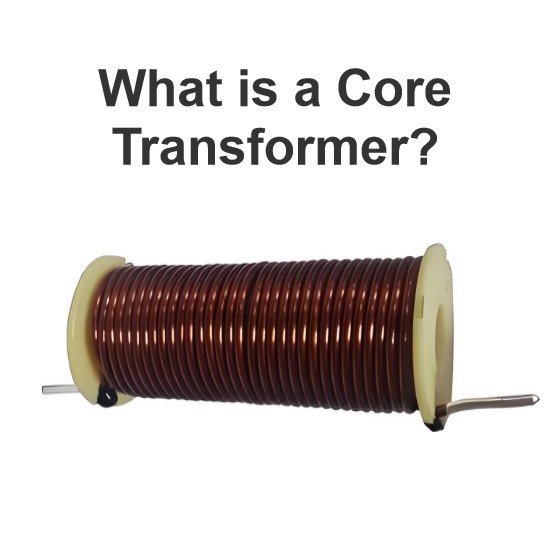
What is a Core Transformer?Air Core Transformer DefinitionAn air core transformer is defined as a transformer that uses air instead of a ferromagnetic core to link the magnetic flux between its windings.Principle of OperationIt operates on electromagnetic induction, where an alternating current in the primary coil induces an emf in the secondary coil.Construction TypesAir core transformers can be cylindrical, with wires wound on a non-metallic cylinder, or toroidal, with wires wound around a pla
08/08/2024
Consult
Tip
Consult
Tip
What is a Core Transformer?
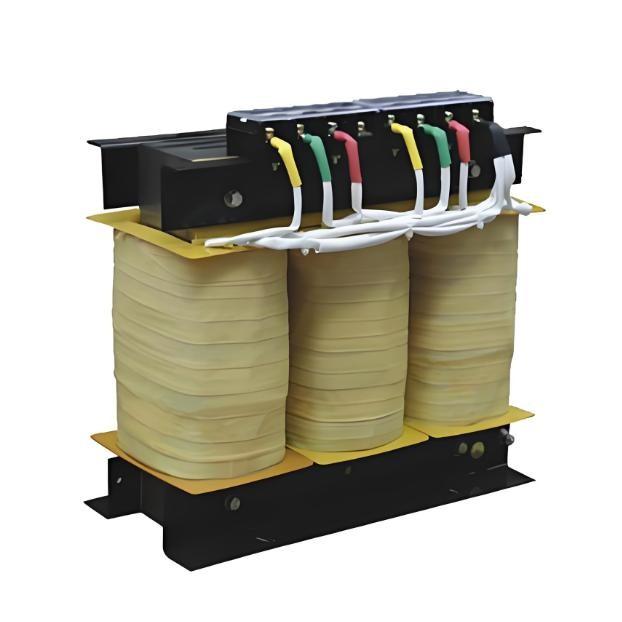
What is a Core Transformer?Core Type Transformer DefinitionA core type transformer is defined as a transformer with a rectangular magnetic core and cylindrical windings, primarily used for efficient electrical power transformation.Construction DetailsIt features laminated silicon steel sheets in the core to reduce energy loss and concentric windings to facilitate effective power distribution.Voltage AdjustmentEquipped with tap changers, it allows flexibility in voltage output to adapt to differe
08/06/2024
Consult
Tip
Consult
Tip
Send inquiry
+86
Click to upload file
Download
Get the IEE Business Application
Use the IEE-Business app to find equipment, obtain solutions, connect with experts, and participate in industry collaboration anytime, anywhere—fully supporting the development of your power projects and business.