• Product
  • Suppliers
  • Manufacturers
  • Solutions
  • Free tools
  • Knowledges
  • Experts
  • Communities
Search


Free Expert Guides on Power Systems, Circuit Design & Electrical Troubleshooting

Access free engineering resources from IEE Business—covering power design, circuit layout, equipment selection, and troubleshooting. Expert-developed guides help engineers, procurement, and project teams make better decisions. Stay ahead on smart grids, renewables, efficiency, and AI tools. Improve reliability, reduce downtime, and enhance outcomes with real-world solutions. Explore our knowledge hub today.
 Programmable Logic Controllers (PLCs): Basics, Types & Applications
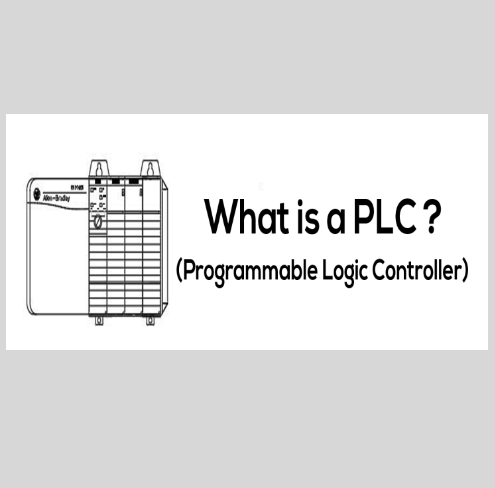
What is a PLC?PLC stands for “Programmable Logic Controller.” A PLC is a computer specially designed to operate reliably in harsh industrial environments, such as extreme temperatures and wet, dry, and/or dusty conditions. PLCs are used to automate industrial processes such as a manufacturing plant’s assembly line, an ore processing plant, or a wastewater treatment plant.PLCs share many features of the personal computer you have at home. They both have a power supply, a CPU (Central Processing U
03/28/2024
Consult
Tip
Consult
Tip
Steady State Error: What is it? (Steady-State Gain, Value & Formula)
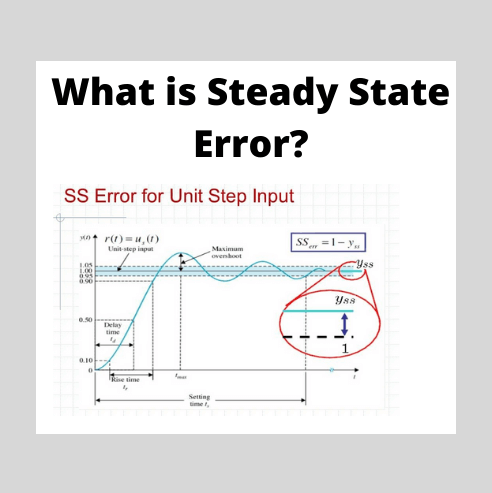
What is Steady State Error?Steady-state error is defined as the difference between the desired value and the actual value of a system output in the limit as time goes to infinity (i.e. when the response of the control system has reached steady-state).Steady-state error is a property of the input/output response for a linear system. In general, a good control system will be one that has a low steady-state error.First, we will discuss the steady-state error in a first-order transfer function by an
03/28/2024
Consult
Tip
Consult
Tip
 How to Find the DC Gain of a Transfer Function (Examples Included)
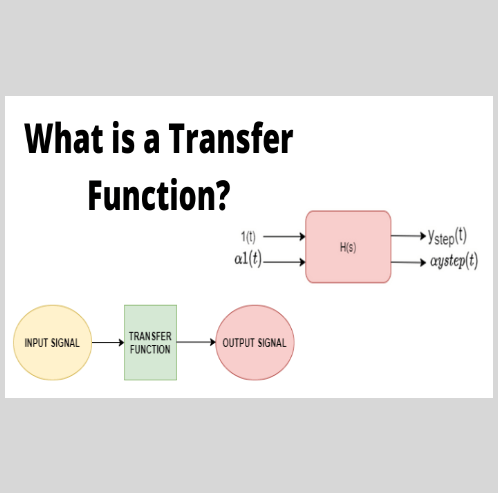
What is a Transfer Function?A transfer function describes the relationship between the output signal of a control system and the input signal. A block diagram is a visualization of the control system that uses blocks to represent the transfer function and arrows representing the different input and output signals. Transfer Function The transfer function is a convenient representation of a linear time-invariant dynamical system. Mathematically the transfer function is a function of complex v
03/28/2024
Consult
Tip
Consult
Tip
Rise Time: What is it? (Equation And How To Calculate It)
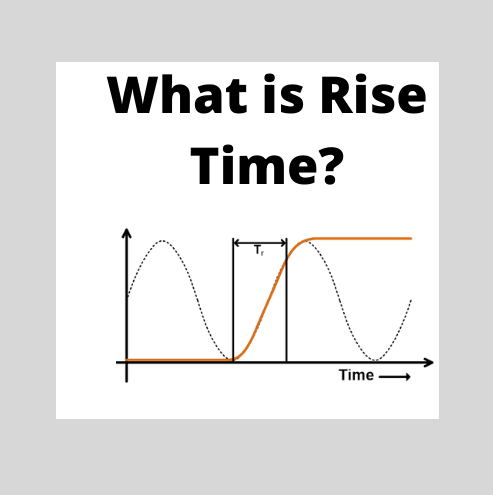
What is Rise Time?Rise time is defined as the time taken for a signal to cross from a specified low value to a specified high value. In analog and digital electronics, the specified lower value and specified higher value are 10% and 90% of the final or steady-state value. So the rise time is typically defined as how long it takes for a signal to go from 10% to 90% of its final value.The rise time is an essential parameter in analog and digital systems. It describes the time taken for the output
03/28/2024
Consult
Tip
Consult
Tip
Send inquiry
+86
Click to upload file
Download
Get the IEE Business Application
Use the IEE-Business app to find equipment, obtain solutions, connect with experts, and participate in industry collaboration anytime, anywhere—fully supporting the development of your power projects and business.