• Product
  • Suppliers
  • Manufacturers
  • Solutions
  • Free tools
  • Knowledges
  • Experts
  • Communities
Search


Free Expert Guides on Power Systems, Circuit Design & Electrical Troubleshooting

Access free engineering resources from IEE Business—covering power design, circuit layout, equipment selection, and troubleshooting. Expert-developed guides help engineers, procurement, and project teams make better decisions. Stay ahead on smart grids, renewables, efficiency, and AI tools. Improve reliability, reduce downtime, and enhance outcomes with real-world solutions. Explore our knowledge hub today.
What are the potential problems that can arise when connecting an AC microgrid to a DC distribution system?
When connecting an AC microgrid to a DC distribution system, several potential issues may arise. Here's a detailed analysis of these problems:1. Power Quality Issues Voltage Fluctuations and Stability: Voltage fluctuations in AC microgrids can affect the stability of DC distribution systems. DC systems have higher requirements for voltage stability, and any fluctuations can lead to a decline in system performance or equipment damage. Harmonic Pollution: Nonlinear loads in AC microgrids can gener
11/15/2024
Consult
Tip
Consult
Tip
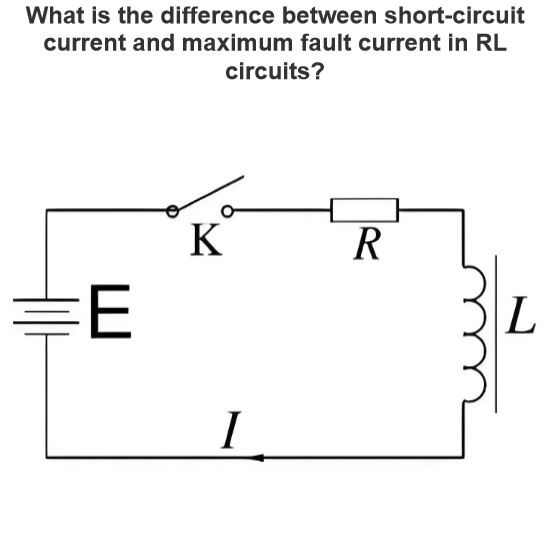
What is the difference between short-circuit current and maximum fault current in RL circuits?
Differences Between Short-Circuit Current and Maximum Fault Current in RL CircuitsIn power systems and circuit analysis, short-circuit current and maximum fault current are two important concepts that describe different aspects of circuit behavior during faults. Here are the detailed differences:1. Short-Circuit CurrentDefinitionShort-Circuit Current refers to the current that flows through the short-circuit point when a short circuit occurs in the circuit. A short circuit typically happens when
11/14/2024
Consult
Tip
Consult
Tip
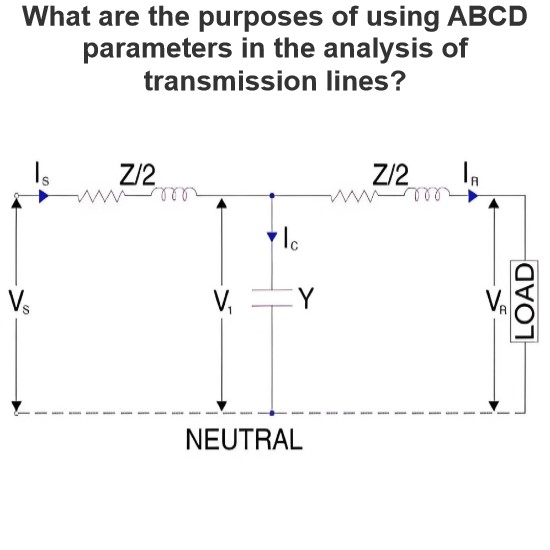
What are the purposes of using ABCD parameters in the analysis of transmission lines?
Purpose of UsingZ,Y, andABCD Parameters in Transmission Line Analysis.In transmission line analysis, the use ofZ (impedance),Y (admittance), andABCD parameters serves to conveniently describe and analyze the behavior of transmission lines. Each set of parameters has its specific applications and advantages. Below is a detailed explanation of the purpose of each parameter:1. Impedance Parameters (Z)PurposeDescribe Input Characteristics: Impedance parameters are used to describe the input impedanc
11/14/2024
Consult
Tip
Consult
Tip
What are the ways of electricity frequency regulation?
Frequency regulation (Frequency Regulation) is an essential task in power systems, aimed at maintaining the stability of grid frequency. The frequency of a power system typically needs to be kept within a specific range, such as 50 Hz or 60 Hz, to ensure the proper operation of all electrical equipment. Here are several common methods of frequency regulation:1. Primary Frequency ControlPrinciple: Primary frequency control is achieved by automatically adjusting the output power of generating unit
11/01/2024
Consult
Tip
Consult
Tip
How do I determine the input/output impedance of circuits that have transistors or other active components?
Determining the input/output impedance of circuits with transistors or other active components is an important step to understand the performance and matching characteristics of the circuit. Here are some common methods and techniques for determining these impedances:1. Analytical MethodsInput ImpedanceSmall-Signal Model: Use the small-signal model of the transistor (such as common-emitter, common-base, common-collector, etc.) to analyze the input impedance.Common-Emitter Amplifier: The input im
10/28/2024
Consult
Tip
Consult
Tip
Why does earthing have no returning path in electricity?
In electrical systems, grounding (grounding) primarily serves to provide a safe path for fault currents to be directed to the earth, protecting equipment and personnel. However, grounding is not the normal return path for current because there are distinct differences in function and design between grounding and the normal return path. Here are some key reasons:1. Safety Purpose1.1 Fault Current Dissipation Fault Protection: The primary purpose of grounding is to provide a low-impedance path for
10/25/2024
Consult
Tip
Consult
Tip
How do I reduce neutral to earth voltage?
Reducing the neutral-to-ground voltage (NGV) is an important measure to improve the stability and safety of electrical systems. High NGV can lead to equipment failure, electromagnetic interference, and safety hazards. Below are some common methods and techniques to reduce the neutral-to-ground voltage:1. Improve the Grounding System1.1 Optimize the Grounding GridGrounding Grid Design: Ensure the grounding grid is designed properly, using a sufficient number and length of grounding electrodes to
10/25/2024
Consult
Tip
Consult
Tip
In electricity, what is the meaning of the word “bypass”?
Basic concept In electricity, "bypass" refers to providing an alternative path for electric current to bypass a certain element, circuit, or part of a device. This alternative path is usually connected in parallel with the main path. When certain conditions are met (such as a signal of a specific frequency or a current exceeding a certain amplitude), the current will preferentially or partially pass through the bypass. Application scenarios Principle: In electronic circuits, a capacitor is
10/24/2024
Consult
Tip
Consult
Tip
Why do you need a neutral conductor in a cable?
In a three-phase system, when supplying power to a three-phase appliance with a star (Y-type) connected heating load where each phase draws different current values, it is typically necessary to include a neutral conductor (Neutral Conductor) in the cable. Below are two main reasons why a neutral conductor is needed:1. Balancing Unbalanced LoadsUnbalanced Load SituationIn practical applications, perfectly balanced three-phase loads are rare. If the three-phase appliance draws different current v
10/21/2024
Consult
Tip
Consult
Tip
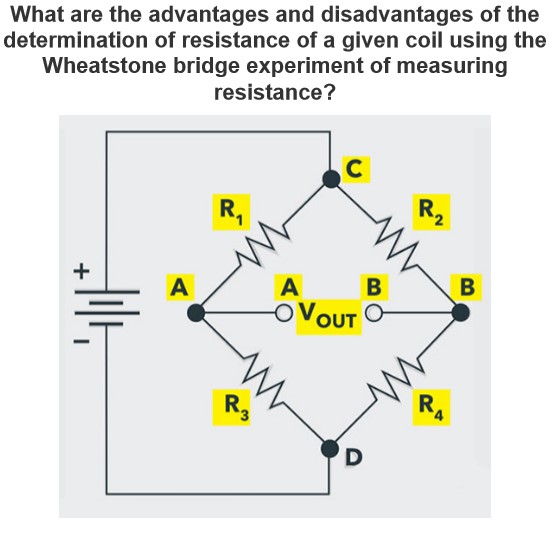
What are the advantages and disadvantages of using Wheatstone bridge to measure resistance experiments?
Advantages and Disadvantages of Measuring the Resistance of a Given Coil with a Wheatstone Bridge1. Advantages(I) High precision and accuracyThe Wheatstone bridge is based on the principle of proportional measurement, measuring by comparing known and unknown resistances (in this case, the unknown resistance is the resistance of the given coil). This method of measurement is highly sensitive to changes in resistance values and can achieve a high degree of measurement accuracy. For example, under
10/12/2024
Consult
Tip
Consult
Tip
Send inquiry
+86
Click to upload file
Download
Get the IEE Business Application
Use the IEE-Business app to find equipment, obtain solutions, connect with experts, and participate in industry collaboration anytime, anywhere—fully supporting the development of your power projects and business.