• Product
  • Suppliers
  • Manufacturers
  • Solutions
  • Free tools
  • Knowledges
  • Experts
  • Communities
Search


Free Expert Guides on Power Systems, Circuit Design & Electrical Troubleshooting

Access free engineering resources from IEE Business—covering power design, circuit layout, equipment selection, and troubleshooting. Expert-developed guides help engineers, procurement, and project teams make better decisions. Stay ahead on smart grids, renewables, efficiency, and AI tools. Improve reliability, reduce downtime, and enhance outcomes with real-world solutions. Explore our knowledge hub today.
How does a capacitor work in AC circuits with the aid of a diagram?
The working principle of capacitors in AC circuitsThe working principle of a capacitor in an AC circuit mainly involves its response and processing to AC signals. Here are some key roles and mechanisms of a capacitor in an AC circuit:The basic working principle of capacitorsCapacitor is an electronic component capable of storing electric charge. It consists of two conductors (usually metal plates) and an insulating medium between them. When a voltage is applied across the two conductors of a cap
10/16/2024
Consult
Tip
Consult
Tip
What is the difference between a running and a starting capacitor?
The running capacitor and the starting capacitor mainly have the following differences:I. In terms of usage Starting capacitor Mainly used to provide a momentary high current when the motor starts, helping the motor overcome the inertia of the stationary state and start smoothly. For example, in a single-phase asynchronous motor, the starting capacitor is connected in series with the starting winding. At the moment the motor starts, a rotating magnetic field with a large phase difference is ge
10/16/2024
Consult
Tip
Consult
Tip
What are the factors that determine how much current flows in a circuit?
The amount of current flowing in a circuit is primarily determined by several factors:1. VoltagePower Source: The voltage provided in the circuit is the main driving force of current flow. According to Ohm's Law I=V/RcurrentIis directly proportional to voltageV. This means that the higher the voltage, the larger the current in the circuit (assuming the resistance remains constant).2. Resistance Circuit Elements: Resistive elements in the circuit (such as resistors, bulbs, motors, etc.) affect th
10/15/2024
Consult
Tip
Consult
Tip
What is the effect of capacitance on the output of a voltage doubler circuit?
Capacitors play a crucial role in voltage multiplier circuits, significantly impacting the output voltage, waveform, efficiency, and circuit stability. Here are specific effects of capacitors on the output of a voltage multiplier circuit:Effect of Output VoltageThe size of the capacitor directly affects the magnitude of the output voltage. With the same capacitance, the larger the output voltage, the larger the capacitance. If the capacitance is too small, the output voltage will become unstable
10/15/2024
Consult
Tip
Consult
Tip
How can you get 220 volts?
Here are several ways to obtain 220 volts:I. Using power generation equipmentSmall generator You can purchase a small gasoline or diesel generator. When 220 volts is needed, start the generator. It drives the generator to generate electricity by burning fuel to drive the engine. For example, in some construction sites, field operation places or in emergency situations when there is a power outage, a small generator can provide 220 volts of alternating current to meet the power needs of equipment
10/15/2024
Consult
Tip
Consult
Tip
How does the flow of electricity through the ground cause a fire hazard?
Electric current passing through the ground (i.e., through a grounding path) can pose a fire hazard mainly because the current generates heat when traveling through unintended paths. This heat can potentially ignite flammable materials nearby. Below are some mechanisms by which electric current passing through the ground can cause a fire hazard:1. Overcurrent Short Circuit: If the current travels through a path not designed to carry the intended current strength (such as the ground), it can resu
10/14/2024
Consult
Tip
Consult
Tip
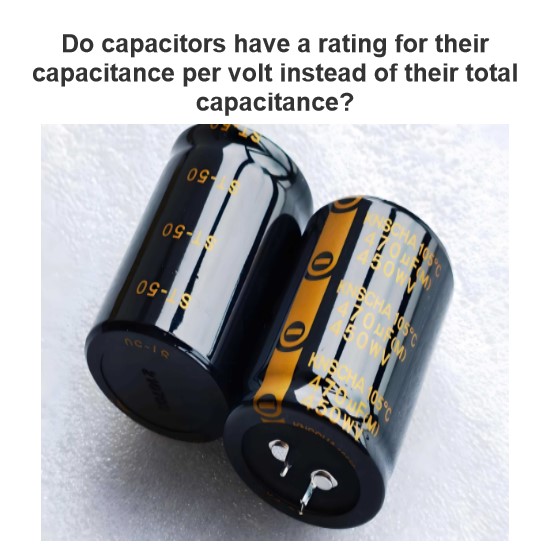
 Do capacitors have a rating for their capacitance per volt instead of their total capacitance?
The rated capacitanceof a capacitor refers to the capacitance value of the capacitor at a given voltage, but it is not a "capacitance per volt" value; instead, it refers to the total capacitance of the capacitor. Here are some clarifications:1. Capacitance ValueThe capacitance value of a capacitor is an inherent property, usually measured in farads (F). Common units include microfarads (μF), nanofarads (nF), and picofarads (pF). The capacitance value reflects the capacitor’s ability to store ele
10/12/2024
Consult
Tip
Consult
Tip
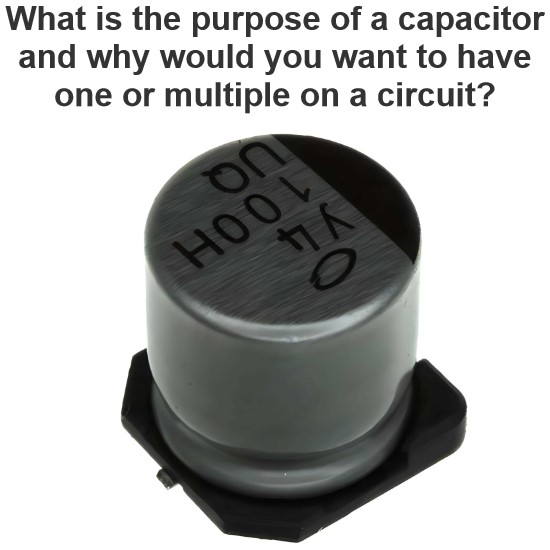
What is the purpose of a capacitor and why would you want to have one or multiple on a circuit?
In circuit design, using multiple capacitor values can achieve more comprehensive circuit performance optimization.Improved Filtering EffectUsing capacitors with different capacitance values can filter out noise at different frequencies. A large capacitor removes low-frequency noise, while a small capacitor eliminates high-frequency noise. When used together, they can adapt to both high and low frequency filtering needs, improving the filtering effect.Preventing Skin EffectMultiple capacitors in
10/12/2024
Consult
Tip
Consult
Tip
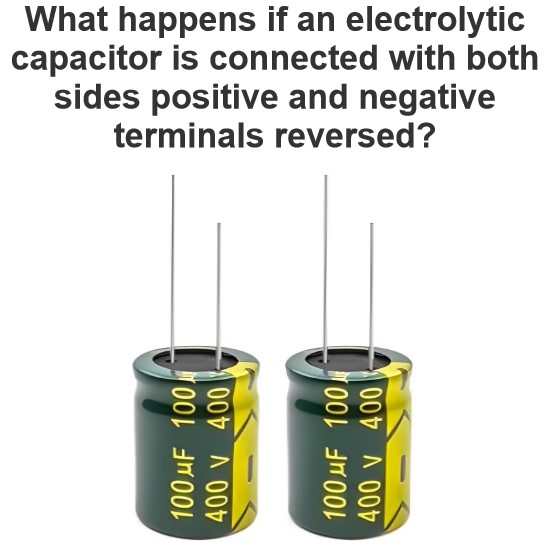
What happens if an electrolytic capacitor is connected with both sides positive and negative terminals reversed?
If the positive and negative terminals of an electrolytic capacitor are connected in reverse, i.e., reverse-biased, it can lead to a series of problems and potentially damage the capacitor. Electrolytic capacitors are polarized capacitors that contain an electrolyte. The positive terminal is typically a metal foil or a metal foil coated with an oxide layer, while the negative terminal is usually made of metal powder or carbon. The electrolyte serves to isolate the positive and negative terminals
10/08/2024
Consult
Tip
Consult
Tip
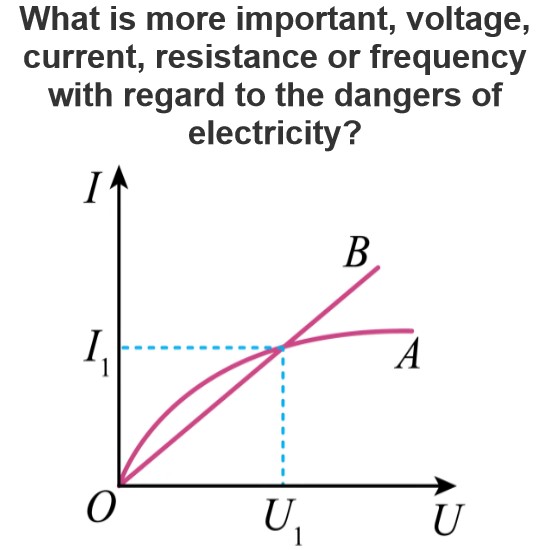
What is more important, voltage, current, resistance or frequency with regard to the dangers of electricity?
When assessing the dangers associated with electricity, voltage, current, resistance, and frequency are all important factors, but their significance depends on the specific context. Understanding the role of each parameter in electrical hazards can help better comprehend potential risks. Below is a discussion of the importance of these factors:Voltage (Voltage) Definition: Voltage is the force that drives current through a circuit. Importance: Higher voltage means there is more energy available
10/08/2024
Consult
Tip
Consult
Tip
Send inquiry
+86
Click to upload file
Download
Get the IEE Business Application
Use the IEE-Business app to find equipment, obtain solutions, connect with experts, and participate in industry collaboration anytime, anywhere—fully supporting the development of your power projects and business.