• Product
  • Suppliers
  • Manufacturers
  • Solutions
  • Free tools
  • Knowledges
  • Experts
  • Communities
Search


Free Expert Guides on Power Systems, Circuit Design & Electrical Troubleshooting

Access free engineering resources from IEE Business—covering power design, circuit layout, equipment selection, and troubleshooting. Expert-developed guides help engineers, procurement, and project teams make better decisions. Stay ahead on smart grids, renewables, efficiency, and AI tools. Improve reliability, reduce downtime, and enhance outcomes with real-world solutions. Explore our knowledge hub today.
Independent Voltage and Current Sources
A voltage source is a device that provides a constant or varying electric potential difference between its terminals. A current source is a device that provides a constant or varying electric current through its terminals. Both voltage and current sources are essential for powering various electrical circuits and devices.However, not all sources are the same. Depending on how they behave and interact with other circuit elements, sources can be classified into two main categories: independent and
03/09/2024
Consult
Tip
Consult
Tip
Temperature Coefficient of Resistance (Formula And Examples)
What is the Temperature Coefficient of Resistance?The temperature coefficient of resistancemeasures changes in the electrical resistance of any substance per degree of temperature change.Let us take a conductor having a resistance of R0 at 0oC and Rt at toC, respectively.From the equation of resistance variation with temperature, we getThis αo is called the temperature coefficient of resistance of that substance at 0oC.From the above equation, it is clear that the change in electrical resistance
03/09/2024
Consult
Tip
Consult
Tip
Resistances in Series and Resistances in Parallel
More than one electrical resistance can be connected either in series or in parallel in addition to that, more than two resistances can also be connected in combination of series and parallel both. Here we will discuss mainly about series and parallel combination.Resistances in SeriesSuppose you have three different types of resistors – R1, R2 and R3– and you connect them end to end as shown in the figure below, then it would be referred as resistances in series. In case of series connection, th
03/09/2024
Consult
Tip
Consult
Tip
Resistivity Laws of Resistance and Unit of Resistivity
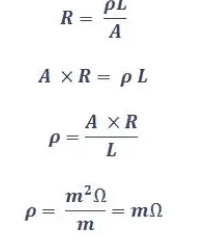
Resistivity or Coefficient of ResistanceResistivity or Coefficient of Resistance is a property of substance, due to which the substance offers opposition to the flow of current through it. Resistivity or Coefficient of Resistance of any substance can easily be calculated from the formula derived fromLaws of Resistance.Laws of ResistanceThe resistance of any substance depends on the following factors, Lengthof the substance. Cross sectional areaof the substance. Thenature of materialof the substa
03/09/2024
Consult
Tip
Consult
Tip
Resistance Variation with Temperature
There are some materials mainly metals, such as silver, copper, aluminum, which have plenty of free electrons. Hence this type of materials can conduct current easily that means they are least resistive. But the resistivity of these materials is highly dependable upon their temperature. Generally metals offer more electrical resistance if temperature is increased. On the other hand the resistance offered by a non-metallic substance normally decreases with increase of temperature.If we take a pie
03/09/2024
Consult
Tip
Consult
Tip
Electrical Reactance: What is it?
What is Reactance?Reactance (also known as electrical reactance) is defined as the opposition to the flow of current from a circuit element due to its inductance and capacitance. Greater reactance leads to smaller currents for the same applied voltage. Reactance is similar to electric resistance, although it differs in several respects.When an alternating current passes through the electric circuit or element, the phase, and amplitude of current will change. The reactance is used to compute this
03/09/2024
Consult
Tip
Consult
Tip
How to Calculate Equivalent Resistance
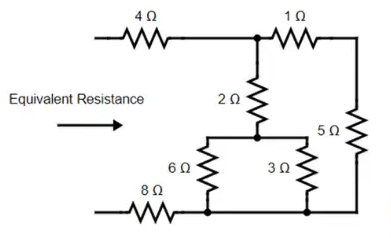
What is Equivalent Resistance?The equivalent resistance is defined as a point where the total resistance is measured in a parallel or series circuit (in either the whole circuit or in a part of the circuit). The equivalent resistance is defined between two terminals or nodes of the network. Equivalent resistance may sound complicated, but it’s just a technical way to say “total resistance”.In the equivalent resistance of a network, a single resistor could substitute the complete network so that
03/09/2024
Consult
Tip
Consult
Tip
Nature of Electricity and Concept of Electricity
Electricity is the most common form of energy. Electricity is used for various applications such as lighting, transportation, cooking, communication, production of various goods in factories and much more. None of us exactly know that what is electricity. The concept of electricity and theories behind it, can be developed by observing its different behaviors. For observing nature of electricity, it is necessary to study the structure of matters. Every substance in this universe is made up of ext
03/09/2024
Consult
Tip
Consult
Tip
What is Electricity and How Electricity is Generated and Used
There are some inventions that changed human civilization. The first invention was the wheel, the second invention was electricity, the third invention was telecommunications, and the fourth invention was the computer. We will discuss the basic introduction of electricity. Each substance in this universe is made of plenty of atoms and each atom has the same number of negative electrons and positive protons.As a result, we can say that each neutral substance has the same number of electrons and p
03/09/2024
Consult
Tip
Consult
Tip
What is the Si System of Units?
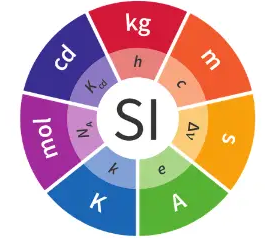
Units are defined as those tools using which we can measure any physical quantities effectively. For example, if we want to measure length then that can be measured in meters, centimeters, feet etc, again if we have to measure mass then that can be measured in kilograms, grams etc. So from the above example we can say that there are many units which can be used to measure a particular quantity.Now if we take the other physical quantities also then there are many units available for a particular
03/09/2024
Consult
Tip
Consult
Tip
Send inquiry
+86
Click to upload file
Download
Get the IEE Business Application
Use the IEE-Business app to find equipment, obtain solutions, connect with experts, and participate in industry collaboration anytime, anywhere—fully supporting the development of your power projects and business.