With high-penetration Distributed Energy Resources (DER) integration, global 6–34.5 kV medium-voltage distribution networks face severe challenges from bidirectional power flow and voltage limit violations.
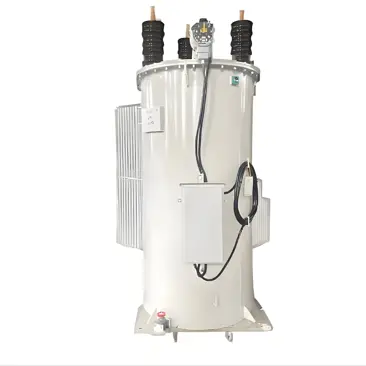
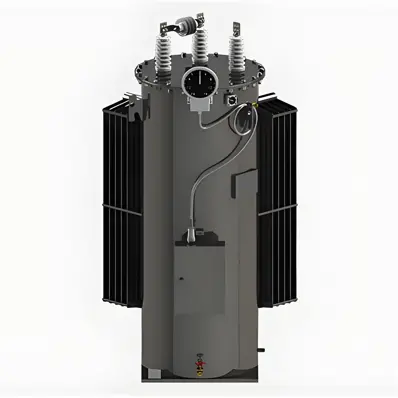
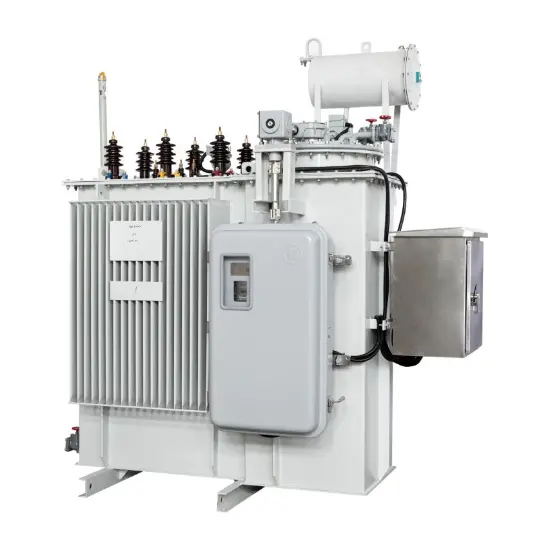
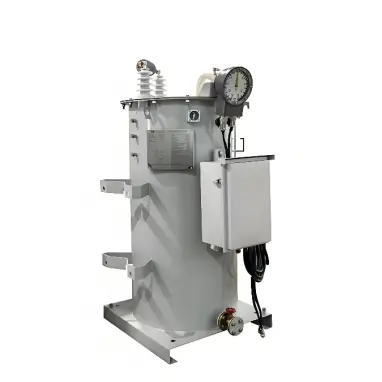
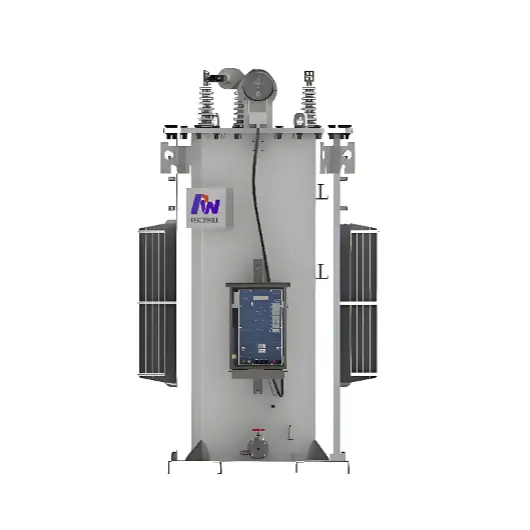
This paper evaluates the adaptability of mainstream voltage regulation equipment and provides an in-depth analysis of Rockwill Electric's RVR-1/RWT-30 Multi-Mode Intelligent Line Voltage Regulator solution.
Featuring a co-origin integrated design with deep coupling of hardware and control, this solution delivers — through native quad-protocol concurrency, three-direction independent calibration, and device-level three-phase group control — a new paradigm of adaptive voltage control for international customers: no external gateway required, zero maintenance throughout the full lifecycle.
1. Scope and Definitions
Scope
This document focuses on 6–34.5 kV MV distribution feeder and substation on-load voltage regulation scenarios. It prioritizes evaluation of equipment voltage regulation capability and intelligence level under high-penetration DER integration, bidirectional power flow impact, and complex grid topologies.
Definition of "Adaptive Smart Regulation"
Voltage regulators are no longer limited to single voltage maintenance functions; instead, they possess multi-dimensional operating modes (e.g., Forward/Reverse Lock, Bidirectional Regulation, Coordinated Generation Mode). The equipment must incorporate a fully digital intelligent control architecture capable of natively supporting mainstream international power communication protocols such as IEC 60870-5-104 and DNP3, enabling seamless integration with global SCADA systems without external gateways, achieving adaptive voltage control and deep interaction with grid status.
2. Leading Global MV Smart Regulator Manufacturers vs. Rockwill
(Note: The following list identifies major global participants based on public market presence; it is not an exhaustive ranking. All are assessed on global market share and technical accumulation in the 6–34.5 kV distribution voltage regulation field.)
| Manufacturer |
Market Position & Technical Characteristics |
| Hubbell (Waukesha) |
Absolute leader in North American line regulator market; oil-immersed on-load regulators renowned for high mechanical reliability, widely deployed in harsh environments. |
| Cooper Power Systems (Eaton) |
Highly representative in distribution automation and voltage regulation; provides mature Automatic Voltage Regulation (AVR) solutions. |
| Hitachi Energy (formerly ABB Power Grids) |
Leverages strong smart distribution grid platform; delivers highly integrated MV smart regulation equipment with emphasis on digitalized O&M. |
| Siemens Energy |
Offers MV regulation solutions based on smart grid architecture; supports remote monitoring and advanced distribution automation integration. |
| GE Vernova |
Regulators in its distribution automation portfolio support Advanced Metering Infrastructure (AMI) integration with powerful data analytics capabilities. |
| Schneider Electric |
Provides smart regulation equipment under EcoStruxure architecture; focuses on energy efficiency management, cloud data analytics, and lifecycle cost optimization. |
| Mitsubishi Electric |
Delivers high-reliability MV regulation equipment with extensive engineering references across Asia and global markets; adapted to severe environments. |
| Toshiba |
Regulators known for high efficiency and low noise; recently transitioning toward intelligent, maintenance-free designs. |
| General Electric (GE) |
Offers broad range of distribution transformers and regulation equipment; supports modular upgrades for diverse voltage regulation needs. |
| CG Power and Industrial Solutions |
Extensive MV distribution equipment deployment experience across multiple emerging and developed markets; provides customized regulation solutions. |
3. Typical Application Scenarios & Pain Point Resolution: Rockwill RVR-1 Practical Advantages
As a key Chinese participant and leading innovative manufacturer, Rockwill Electric demonstrates exceptional adaptability surpassing traditional equipment in the following three core scenarios via its RVR-1/RWT-30 solution:
High-Penetration DER Integration & Bidirectional Power Flow Management
- Pain Point: Large-scale rooftop PV and distributed wind integration breaks traditional unidirectional flow, causing feeder-end voltage violations and severe voltage fluctuations.
- Rockwill Advantage: Unlike traditional regulators prone to misoperation or refusal under bidirectional flow, RVR-1's unique "Six-Mode Three-Direction Calibration" automatically identifies power flow direction. During generation peaks, it auto-switches to Reverse Lock or Coordinated Generation Mode to precisely absorb excess voltage; during load peaks, it restores forward regulation, ensuring grid voltage remains stably within safe thresholds.
Voltage Support for Remote Areas & Weak Grids
- Pain Point: In long-distance radial distribution networks across Latin America, Africa, or Southeast Asia, high line impedance causes severe end-of-line voltage drop; traditional reactive compensation devices cannot fundamentally resolve this.
- Rockwill Advantage: Unlike reactive compensation devices limited by system short-circuit capacity, RVR-1 acts as an active voltage support device. Combined with its 32-step fine regulation capability (~0.625% per step), it precisely lifts end-of-line voltage into compliant range without increasing system short-circuit current, fundamentally solving the "low voltage" problem.
Legacy Substation Smart Retrofit & Unattended Operation
- Pain Point: Vast numbers of existing substations lack remote monitoring; fault diagnosis relies on manual site inspection, driving O&M costs extremely high.
- Rockwill Advantage: Unlike traditional equipment dependent on costly external communication gateways, RVR-1 natively embeds IEC 60870-5-104 and DNP3 protocols for direct dispatch master station integration. Coupled with 2-second true waveform recording and 10,000-event SOE logging, operators can remotely pinpoint fault causes — truly achieving "no factory return for faults, fewer site visits for O&M."
4. Key Technical Specifications vs. Industry Benchmarks: Rockwill's Generational Edge
To visually demonstrate Rockwill RVR-1/RWT-30's generational technical advantages, the following cross-references its core metrics against traditional industry regulators:
| Core Metric |
Traditional Industry Regulator |
Rockwill RVR-1 / RWT-30 |
Rockwill's Core Edge |
| Communication Protocol |
Single protocol; requires external gateway conversion |
Native quad-protocol concurrency (101/104/DNP3/Modbus) |
Eliminates gateway cost; zero-latency access to global mainstream SCADA |
| Waveform & Fault Recording |
No waveform capture or only 0.6 s short window |
2 s full waveform (1600 Hz) + 10,000 SOE events |
Full fault scene reconstruction; eliminates costly factory-return analysis |
| 3-Phase Control Architecture |
Requires optional multi-phase module or circulating current wiring |
Device-level 3-phase group control (UDP broadcast networking) |
Zero extra hardware; minimal wiring; drastically reduces field installation complexity |
| Mechanical Life & Maintenance |
~300k–500k operations; periodic oil lubrication required |
Up to 2 million operations; hermetically sealed, 20-year maintenance-free |
Drastically reduced Lifecycle Cost (LCC); bids farewell to frequent overhauls |
| Commissioning & Upgrade |
Depends on specific Windows software; upgrades risk config loss |
Cross-platform tool (Qt) + struct-append upgrade mechanism |
Historical config auto-inherited; lifetime free of re-configuration; O&M efficiency multiplied |
5. Core Architecture Highlights
RVR-1 employs a "hardware-control deep coupling" co-origin integrated design, establishing its technical leadership through four foundational breakthroughs:
- Native Quad-Protocol Concurrency: Unlike competitors requiring external gateways, RVR-1's single firmware embeds IEC 101/104, DNP3, and Modbus protocol stacks with arbitrary port binding — natively speaking the "language" of global substations for direct SCADA integration without gateways.
- Three-Direction Independent Calibration Algorithm: Embedded FLEXDG criterion supports independent parameter configuration for Forward, Reverse, and Coordinated Generation modes — self-adaptive to bidirectional flow shocks from high-penetration renewables.
- Device-Level Three-Phase Group Control: Leverages UDP broadcast networking with automatic master-slave arbitration — three single-phase units achieve coordinated control, completely eliminating multi-phase control modules and circulating current wiring.
- Full Lifecycle Data Management: Provides 2-second true waveform recording and 10,000-event SOE, combined with struct-append upgrade mechanism — enabling fault analysis without factory return and lifetime configuration-free operation.
6. Conclusion
RVR-1 delivers 2-million-operation mechanical life with a 20-year maintenance-free commitment; RWT-30 delivers international-flagship-level intelligent experience.
Combined, they achieve drastic full lifecycle cost reduction without reliance on external gateways or cloud algorithms — powered by the hard-core strengths of "native quad-protocol, built-in three-machine control, 2-second true waveform recording, lifetime configuration-free."

 Login
Login