• Product
  • Suppliers
  • Manufacturers
  • Solutions
  • Free tools
  • Knowledges
  • Experts
  • Communities
Search


End-to-End Power Project Solutions for the Global Energy Market

IEE Business provides end-to-end power project solutions for the global market — from financing and procurement to engineering, construction, and commissioning. We support utilities, developers, and industries with integrated services across renewable, thermal, and grid infrastructure projects, ensuring efficiency, compliance, and timely delivery worldwide.
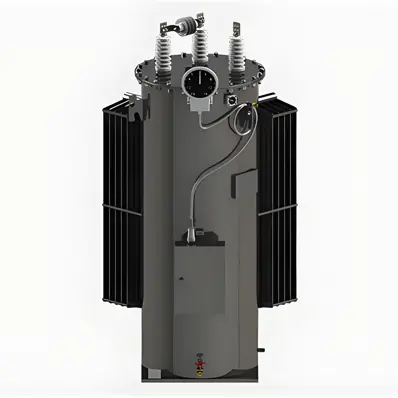
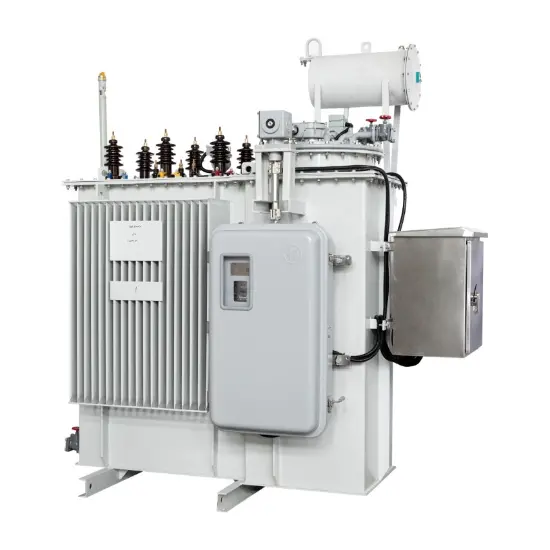
Step Voltage Regulator Solutions for Southeast Asia: Empowering Grids and Enhancing Voltage Stability

Ⅰ. Southeast Asia Power Sector: Status and Demand Analysis Grid Weakness and Energy Access Challenges Over 35 million people in Southeast Asia still lack electricity access. Remote areas rely on diesel generators (e.g., Padua Village, Indonesia), experiencing unstable supply and high costs. Tropical climate leads to high line losses. Integration of photovoltaic (PV) systems and electric vehicles (EVs) exacerbates three-phase voltage imbalance issues in distribution grids. Demand for New Ener
18yrs 500-1000 employees 108000m²+m² US$150,000,000+ China
Chat now
Send inquiry
06/24/2025
Chat now
Send inquiry

Innovative Solutions of Step Voltage Regulators in Power Distribution Systems

1 Executive SummaryVoltage Management Challenges in Modern Distribution Networks: Long-distance feeders causing voltage drop; Distributed energy resource (DER) integration leading to bidirectional power flow; Load fluctuations causing frequent voltage variations.Technical Features of Step Voltage Regulators (SVRs): Employs tap-changing technology to alter transformer winding turns ratio, achieving a ±10% voltage adjustment range (typically in 32 steps, 0.625% per step); Core advantage
18yrs 500-1000 employees 108000m²+m² US$150,000,000+ China
Chat now
Send inquiry
06/24/2025
Chat now
Send inquiry

Comprehensive Solution for Replacing RS Series Stepping Voltage Regulators

Ⅰ. Analysis of Original Equipment Specifications and System Requirements AssessmentCore Features (ABB RS Series Stepping Voltage Regulator): Voltage Regulation Range: 100V-440V AC input, output 0.7-1.0 times rated voltage (e.g., 400V input yields 280-400V output). Control Interface: Supports 4-20mA analog signal or RS485 digital communication (Modbus protocol), default parameters: 9600 baud rate, no parity, 8 data bits, 1 stop bit. Load Capability: 5A-16A RMS current, suitable for high-power ste
18yrs 500-1000 employees 108000m²+m² US$150,000,000+ China
Chat now
Send inquiry
06/23/2025
Chat now
Send inquiry

Step Voltage Regulator Solutions for Enhancing Rural Distribution Network Stability and Efficiency

Ⅰ. Technical Principle and Core Advantages1. Working PrincipleThe 32-step voltage regulator is a tap-switching type voltage regulation device that adjusts voltage by automatically switching the tap positions of series windings:• Boost/Buck Mode: A Reversing Switch selects the relative polarity of the series and parallel windings, achieving a ±10% voltage regulation range.• 32-Step Fine Regulation: Each step adjusts the voltage by 0.625% (32 steps total), preventing a
18yrs 500-1000 employees 108000m²+m² US$150,000,000+ China
Chat now
Send inquiry
06/23/2025
Chat now
Send inquiry

Enhanced Power Stability: 32-Step Voltage Regulator Solution for Industrial and Energy Applications

Ⅰ. Working Principle of 32-Step Voltage Regulator(I) Basic Concepts and Control Principles Core Function: Based on discrete control principles, it achieves output voltage regulation through precise voltage gradations. Control Strategy Difference: Unlike traditional continuous-feedback regulators, it uses 32 fixed voltage levels for accurate adjustments, enabling rapid switching to preset levels.(II) Structural Implementation and Case Studies Mechanical Solution Principle: Utilizes an autotrans
18yrs 500-1000 employees 108000m²+m² US$150,000,000+ China
Chat now
Send inquiry
06/23/2025
Chat now
Send inquiry

Analysis of Advantages and Solutions for Single-Phase Distribution Transformers Compared to Traditional Transformers

1. Structural Principles and Efficiency Advantages1.1 Structural Differences Affecting EfficiencySingle-phase distribution transformers and three-phase transformers exhibit significant structural differences. Single-phase transformers typically adopt an E-type or wound core structure, while three-phase transformers use a three-phase core or group structure. This structural variation directly impacts efficiency: The wound core in single-phase transformers optimizes magnetic flux distribution, red
14yrs 100-500 10000+m² US$150,000,000+ China
Chat now
Send inquiry
06/19/2025
Chat now
Send inquiry

Integrated Solution for Single Phase Distribution Transformers in Renewable Energy Scenarios: Technical Innovation and Multi-Scenario Application

1. Background and ChallengesThe distributed integration of renewable energy sources (photovoltaics (PV), wind power, energy storage) imposes new demands on distribution transformers: Volatility Handling:Renewable energy output is weather-dependent, requiring transformers to possess high overload capacity and dynamic regulation capabilities. Harmonic Suppression:Power electronic devices (inverters, charging piles) introduce harmonics, leading to increased losses and equipment aging. Multi-Scenari
14yrs 100-500 10000+m² US$150,000,000+ China
Chat now
Send inquiry
06/19/2025
Chat now
Send inquiry

Single-Phase Transformer Solutions for SE Asia: Voltage, Climate & Grid Needs

1. Core Challenges in the Southeast Asian Power Environment​1.1 ​Diversity of Voltage Standards​Complex voltages across Southeast Asia: Residential use often 220V/230V single-phase; industrial zones require 380V three-phase, but non-standard voltages like 415V exist in remote areas.High-voltage input (HV): Typically 6.6kV / 11kV / 22kV (some countries like Indonesia use 20kV).Low-voltage output (LV): Standardly 230V or 240V (single-phase two-wire or three-wire system).1.2 ​Climate and Grid Condi
14yrs 100-500 10000+m² US$150,000,000+ China
Chat now
Send inquiry
06/19/2025
Chat now
Send inquiry

Innovative Application Solutions for Single-Phase Distribution Transformers in U.S. Rural and Suburban Grid Modernization

1 Rural Grid Challenges and Technical Advantages of Single-Phase TransformersThe U.S. rural and suburban grid faces critical challenges: aging infrastructure and low load density result in inefficient power supply, with line losses reaching 7%–12%—significantly higher than urban grids (4%–6%). Over 60% of rural areas exceed the 300-meter power supply radius standard, causing widespread voltage instability (peak voltage drops of 15%–20%). Three-phase transf
18yrs 500-1000 employees 108000m²+m² US$150,000,000+ China
Chat now
Send inquiry
06/19/2025
Chat now
Send inquiry

Single-Phase Distribution Transformers: The Key to Flexible and Efficient Deployment of EV Charging Infrastructure

Single-Phase Distribution Transformers: The Key to Flexible and Efficient Deployment of EV Charging InfrastructureAmid the rapid deployment of EV charging infrastructure, overcoming grid limitations and achieving cost-effective flexible layouts has become critical. Traditional three-phase power supply solutions often face challenges like lengthy installation cycles and extensive modifications, particularly struggling in imbalanced distributed scenarios. Single-phase distribution transformers are
18yrs 500-1000 employees 108000m²+m² US$150,000,000+ China
Chat now
Send inquiry
06/19/2025
Chat now
Send inquiry
Send inquiry
+86
Click to upload file
Download
Get the IEE Business Application
Use the IEE-Business app to find equipment, obtain solutions, connect with experts, and participate in industry collaboration anytime, anywhere—fully supporting the development of your power projects and business.