I. Solution Overview
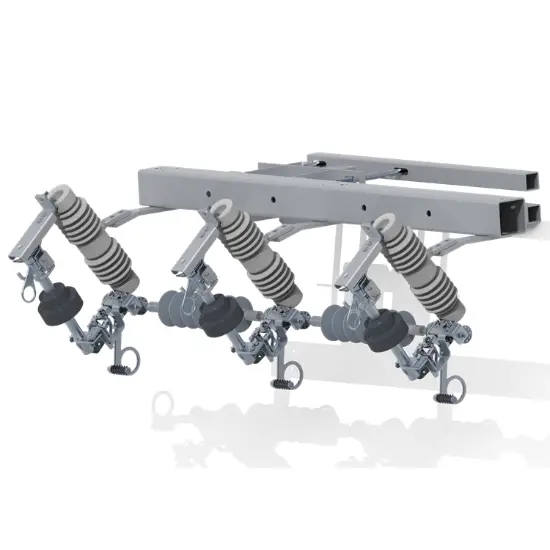
This solution addresses the protection needs of DC systems (particularly rail transit traction power supply) against short-circuit faults by proposing a DC circuit breaker solution based on optimized mechanical breaker structure. It achieves arc-free interruption through capacitor voltage control, combining low on-state loss and high reliability, making it suitable for frequent operation scenarios.
II. Core Principle
Utilizes a fast mechanical switch topology combined with pre-charged capacitors and arresters:
Steady-State Operation: Current flows through the mechanical switch (main circuit), with on-state resistance at the micro-ohm level, resulting in extremely low loss.
Fault Interruption:
• Upon detecting a short-circuit fault, the mechanical switch is triggered to open rapidly.
• The capacitor module is engaged, controlling the voltage across the mechanical switch to remain below the arc ignition threshold, enabling arc-free interruption.
• The short-circuit current is diverted to the parallel capacitor and arrester loop, where the arrester absorbs energy and suppresses overvoltage.
III. Technical Parameters
Parameter Item |
Value/Characteristic |
Interruption Time |
<10 ms |
Rated Current |
800A - 5000A (customizable) |
On-State Loss |
μΩ-level resistance, typical value ≤50 μΩ |
Operation Frequency |
≥200 switching operations daily |
Applicable Voltage Level |
DC 1.5kV/3kV (rail transit) |
IV. Applicable Scenarios
• Rail transit traction power supply systems: Meets requirements for frequent switching and low loss.
• Urban DC distribution networks: Medium and low-voltage DC system fault protection.
• Industrial DC power systems: Applications demanding high reliability.
V. Advantages and Limitations
Advantages:
Low On-State Loss: Mechanical switch remains conductive during normal operation, avoiding semiconductor heating issues.
Controlled Cost: No need for all-solid-state switching devices, making it more cost-effective than hybrid circuit breakers.
Arc-Free Interruption: Active arc suppression via capacitor voltage control extends switch lifespan.
Limitations:
Capacitance Requirements: High-voltage capacitor modules are bulky, requiring optimized design based on system voltage.
Current Transfer Time: Relies on arrester energy consumption, resulting in slightly slower short-circuit current transfer compared to all-solid-state solutions.
Maintenance Needs: Mechanical components require periodic maintenance, though less frequently than traditional circuit breakers.
VI. Implementation Recommendations
Capacitor Selection: Use multi-module parallel capacitor groups to balance voltage control precision and size constraints.
Drive Optimization: Equip with high-speed actuation mechanisms (e.g., electromagnetic repulsion mechanisms) to ensure interruption response <2 ms.
Arrester Configuration: Select nonlinear resistors (MOVs) with energy absorption capacity calculated based on system short-circuit capacity.
VII. Summary
This solution combines mechanical structure innovation with capacitor voltage control to achieve low cost, low loss, and arc-free interruption in DC circuit breakers. It is particularly suitable for high-frequency operation scenarios like rail transit, providing a reliable path for fault protection in medium and low-voltage DC systems.

 Login