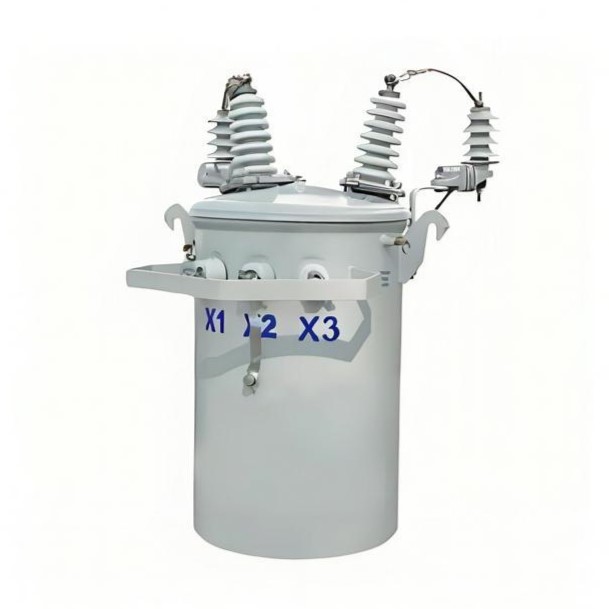
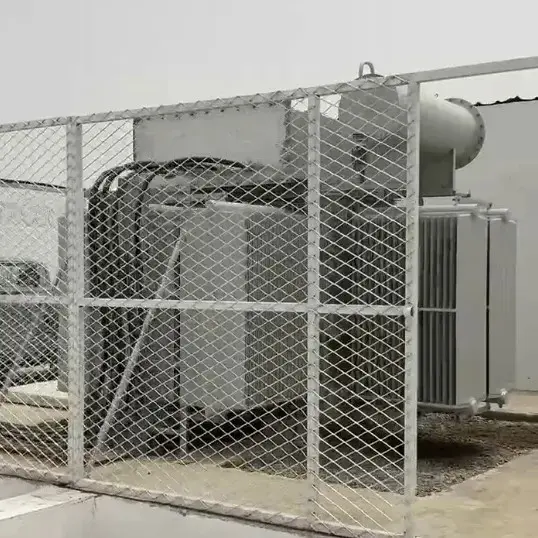
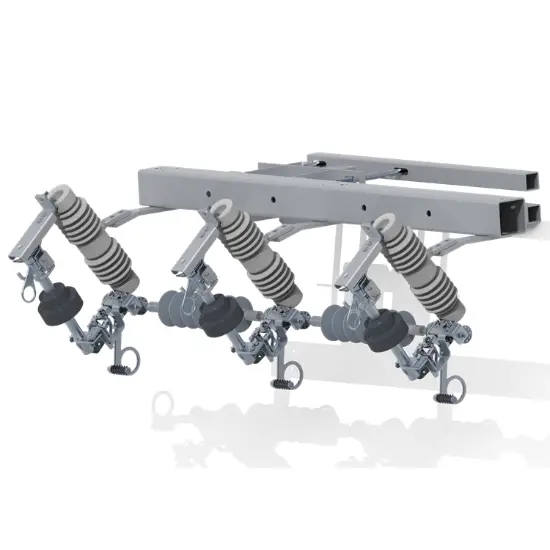
Discover how step voltage regulators improve power distribution – stabilize grid voltage, reduce losses, and enhance power quality.

1. Background and Challenges
The distributed integration of renewable energy sources (photovoltaics (PV), wind power, energy storage) imposes new demands on distribution transformers:
Volatility Handling:Renewable energy output is weather-dependent, requiring transformers to possess high overload capacity and dynamic regulation capabilities.
Harmonic Suppression:Power electronic devices (inverters, charging piles) introduce harmonics, leading to increased losses and equipment aging.
Multi-Scenario Adaptability:Need to be compatible with diverse scenarios like residential PV, EV charging piles, and microgrids, supporting customized voltage/capacity.
Efficiency Requirements:Stringent global efficiency standards (e.g., EU IE4, China Class 1 Efficiency) demand over 40% reduction in no-load loss.
2. Solution Design
2.1 High-Reliability Design
Material Innovation:
Core: Amorphous alloy (no-load loss ≤0.3 kW/1000 kVA) or high-permeability silicon steel to reduce eddy current loss.
Windings: Oxygen-free copper wire (purity ≥99.99%) to reduce load loss.
Insulation Technology:Vacuum Pressure Impregnation (VPI) process, achieving IP65 protection rating, resistant to humidity >95% and low temperatures down to -40°C.
Structural Optimization:Oval/circular core design, improving space utilization by 20%, suitable for compact installations (e.g., rooftop PV).
2.2 Intelligent Control and Protection
Dynamic Voltage Regulation:
Utilizes AI algorithms to predict load fluctuations, automatically adjusting tap positions (±10% voltage range) to stabilize output voltage.
Supports remote monitoring and fault diagnosis (e.g., partial discharge detection), with response time <100ms.
Harmonic Mitigation:
Built-in LC filters or active damping technology suppress THD (Total Harmonic Distortion) to <3%.
Overload Protection:
150% short-time overload capacity lasting 2 hours, accommodating renewable energy output peaks.
2.3 Multi-Scenario Application Solutions
Scenario |
Customized Solution |
Technical Parameters |
Residential PV |
Dual-winding isolation design, anti-backflow protection |
Input Voltage: 0.4kV DC; Output Voltage: 220V AC |
EV Charging |
Wide voltage input (300V–500V), supports fast-charging mode |
Efficiency ≥98.5%, Protection Rating IP54 |
Microgrid |
Parallel operation of multiple units, adaptive power allocation |
Capacity Customization: 0.5–800kVA |
Industrial Energy Storage |
High-frequency isolation (3kV insulation), suppresses DC components |
Frequency Compatibility: 50/60Hz dual-mode |
2.4 Efficiency and Environmental Optimization
Low-Loss Design:
No-load loss reduced by 40% compared to traditional silicon steel transformers; Full-load efficiency ≥98.5%.
Eco-friendly Process:
Eliminates epoxy resin/fluorides; utilizes biodegradable insulating oil (compliant with IEC 61039).
Thermal Management:
Forced-air cooling + temperature control system, temperature rise ≤100K, extending lifespan to 25 years.
3. Summary of Innovations
Multi-objective Cooperative Control:
Employs a Gaussian Mixture Model (GMM) fusion strategy to balance voltage stability with loss minimization.
Customization Flexibility:
Supports modular customization of voltage, capacity, protection rating (IP00–IP65), and interface protocols.
Renewable Energy Adaptability:
PV Scenarios: Anti-backflow and islanding protection.
Wind Power Scenarios: Anti-vibration design (amplitude ≤0.1mm).
4. Application Cases
China Distributed PV Project:
Deployed 500 units of 20kVA single-phase transformers with integrated intelligent voltage regulation. PV curtailment rate reduced by 12%; payback period shortened to 5 years.
California Fast-Charging Station:
Custom 100kVA transformers (Input: 480V AC, Output: 240V DC). Charging efficiency increased by 15%; harmonics suppressed to 2%.
5. Future Directions
Wide Bandgap Semiconductor Integration:
Adoption of SiC/GaN devices to increase switching frequency, reducing volume by 30%.
Digital Twin O&M:
IoT-based lifespan prediction models to reduce O&M costs by 25%.
Policy-Driven Market:
Global renewable energy transformer market growing at 15% CAGR, projected to exceed $10 billion USD by 2030.