Thailand tropical GIS: 316L stainless, C5-M coating, anti-condensation, AI monitoring. 5→15 year MTBF, 85% fewer failures. Substation transmission solution.

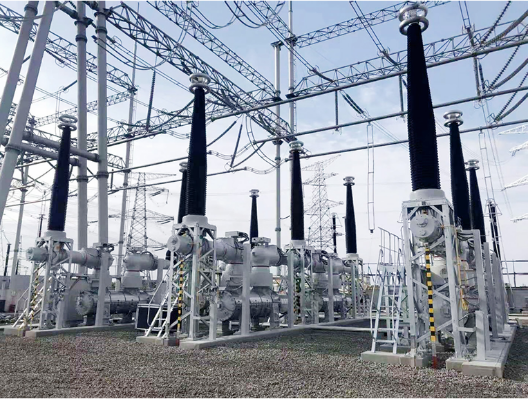
Thailand's tropical climate poses severe challenges for power infrastructure. To address grid reliability, High Voltage Gas Insulated Switchgear (HV GIS) was prioritized over traditional AIS due to its resilience in extreme conditions. With coastal salt spray corrosion and humidity exceeding 80%, HV GIS solutions must balance compact design, material durability, and smart monitoring.
Corrosion-Resistant Materials:
High Voltage Gas Insulated Switchgear (HV GIS) enclosures use 316L stainless steel and C5-M coatings, passing 2,000-hour salt spray tests (ISO 9227).
Galvanized supports (IP65) prevent salt ingress, critical for HV GIS longevity in Thailand's coastal zones.
Compact Design:
HV GIS hybrid insulation (SF₆/N₂) reduces exposed surfaces by 60%, minimizing condensation risks.
Fluororubber seals (-40°C to 150°C) ensure High Voltage Gas Insulated Switchgear stability during temperature swings.
Anti-Condensation Systems:
HV GIS integrates humidity sensors and MIL-STD-810G filters, blocking 99% of salt particles at ventilation ports.
Active dehumidification triggers at >70% humidity, a necessity for High Voltage Gas Insulated Switchgear in tropical climates.
Surface Treatments:
HV GIS components undergo Sa2.5 sandblasting and 3-layer coatings, extending salt spray resistance to 3,000 hours (ASTM B117).
Real-Time Analytics:
Cloud-based tracking of HV GIS parameters (SF₆ density, partial discharge) achieves 95% fault prediction accuracy.
AI models forecast corrosion trends, enabling proactive HV GIS maintenance 6 months in advance.
Maintenance Protocols:
Biannual coating checks ensure High Voltage Gas Insulated Switchgear adhesion ≥95% in coastal sites.
On-site Q-Lab Q-FOG chambers validate spare parts, aligning with HV GIS lifecycle requirements.
High Voltage Gas Insulated Switchgear (HV GIS) MTBF increased from 5 to 15 years, with 85% fewer salt spray failures.
Bangkok substations recorded 0 condensation events (GIS internal humidity <50%).
40% lower HV GIS maintenance costs via reduced coating replacements and outage losses.
HV GIS compact design enables 50% space savings for Thailand's 1.2GW Andaman Sea wind farm transmission.