1. Background and pain point analysis of the plan
- Geographic challenge: Tanzania has numerous lakes and islands (such as Lake Victoria and the Indian Ocean coast), with high salt spray and humidity environments, and ordinary equipment is prone to corrosion.
- Climate challenge: perennial high temperatures (often exceeding 40 ℃) place extremely high demands on battery life and heat dissipation.
- Energy situation: Remote areas have no power grid coverage or rely on expensive diesel power generation (cost 0.4-0.6/kWh); The existing power grid experiences significant voltage fluctuations and frequent power outages.
- Demand upgrade: shifting from simple lighting to productive electricity use (irrigation, refrigeration, small-scale processing), requiring more stable high-power output.
2. Core product selection (based on documentation)
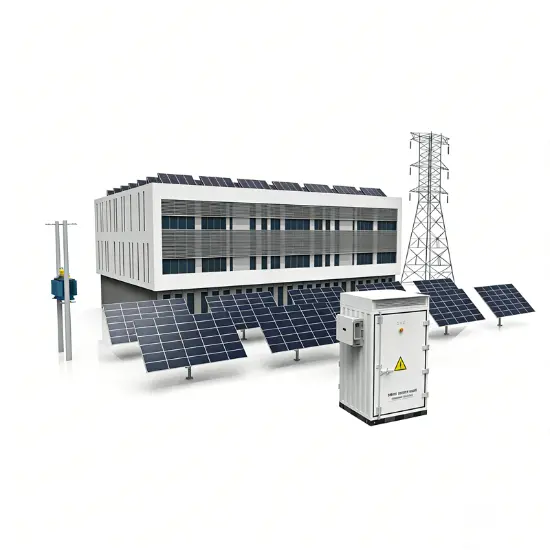
This scheme uses the BESS-T series optical storage integrated machine as the core energy unit, paired with MPPT-12 controller and SiC PCS inverter.
2.1 Core Energy Storage Unit: BESS-T 125-271-120W Optical Storage Integrated Machine
- Applicable scenarios: Village level microgrids, island community centers, and medium-sized mining camps.
- Key parameter matching for Tanzanian environment:
- High temperature adaptability: The working temperature range is -30 to 60 ° C (automatic derating for temperatures above 45 ° C), perfectly adapting to the tropical high temperatures in Tanzania without the need for additional air conditioning energy consumption.
- Security protection: IP55 protection level+aerosol fire protection module+explosion-proof cabinet. Provide top-level protection against fire risks during high temperature and dry seasons.
- Long life battery: Built in 271kWh LFP (lithium iron phosphate) battery cluster, with long cycle life and better high-temperature resistance than lead-acid batteries, reducing the cost of replacement throughout the entire life cycle.
- Intelligent temperature control: adopting the Dry Self Cooling intelligent thermal management system to reduce maintenance requirements and avoid the risk of liquid cooling leakage.
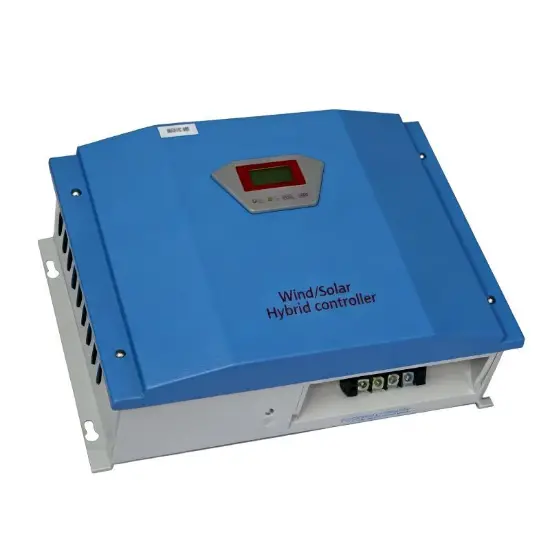
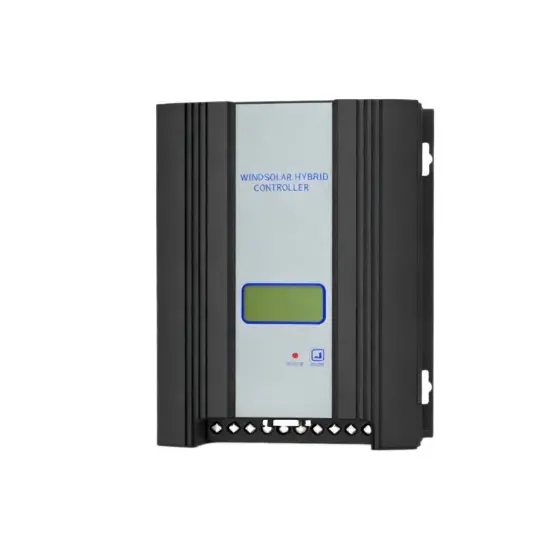
2.2 Photovoltaic access unit: MPPT-12 controller
- Targeted advantages:
- Anti corrosion design: IP66 protection+C5 level anti-corrosion coating. This is a "killer move" function aimed at the high salt spray environment of Tanzania's coastal islands and lake areas, preventing equipment from quickly rusting and failing.
- Efficient tracking: 4-channel MPPT, maximum input voltage of 900V, ensuring maximum power generation even when component efficiency decreases due to weak light or high temperature in the morning and evening.
- Flexible string configuration: Supports 12 photovoltaic inputs, suitable for roof/bracket installation in different orientations and terrains.
2.3 Power Conversion Unit: SiC PCS Industrial Energy Storage Converter
- Targeted advantages:
- High efficiency: The maximum efficiency is ≥1%, reducing energy conversion losses, which is crucial for off grid systems where every kilowatt hour of electricity is precious.
- Wide voltage compatibility: The DC side voltage range is 600-950V, perfectly matching the characteristics of LFP batteries.
- Off grid Black Start: Capable of Black Start. When the system is completely powered off, it can autonomously establish microgrid voltage without relying on external power grids, which is very suitable for areas without electricity.
- Unbalanced load support: Supports 100% three-phase unbalanced loads, suitable for rural users with uneven distribution of single-phase loads (such as household lighting and television).
3.System topology and operational strategy
3.1 System Architecture Diagram
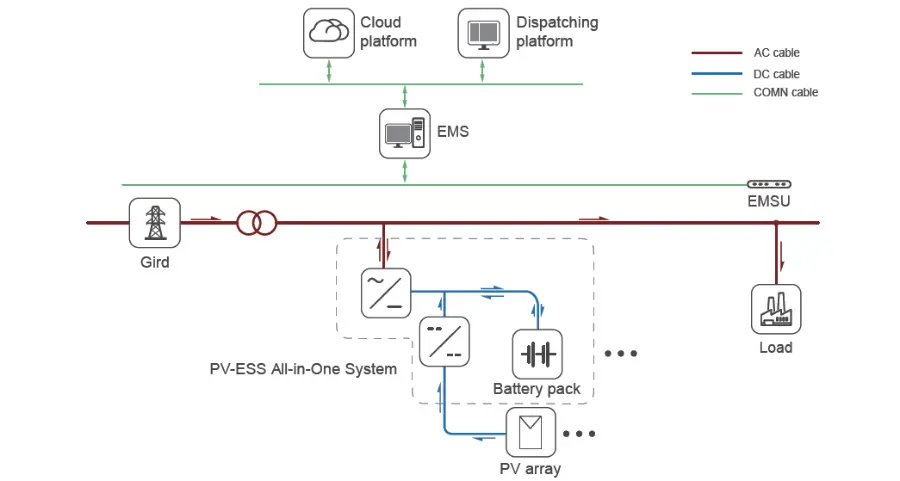
3.2 Intelligent operation strategy (24-hour cycle)
Based on the EMS intelligent scheduling strategy in the document, customized for the Tanzanian scenario:
1. Solar Priority:
When there is sufficient sunlight during the day, photovoltaic power is directly supplied to loads such as water pumps and grinders, and excess electricity is stored in BESS-T batteries.
2. Peak Shaving&Night Supply:
After sunset or on rainy days, the battery discharges to supply the load.
For commercial users, battery power supply is mandatory during periods of high electricity prices (if any) or high diesel power generation costs.
3. Hybrid Mode - For islands/mining areas:
The system prioritizes the use of photovoltaics and batteries.
When the battery SOC is lower than the set value (such as 20%) and there is no photovoltaic power, the diesel generator will automatically start to supplement power and charge the battery, significantly reducing diesel consumption (expected to save 60% -80%).
4. Off Grid Black Start:
In completely unpowered areas, the system can directly establish microgrid voltage, achieving "plug and play" functionality.
5. Emergency Power:
When the main power source (grid or diesel generator) fails, it switches to off grid mode in milliseconds to ensure that critical loads (such as clinic refrigerators and communication base stations) are not powered off.
4. Core competitiveness for the Tanzanian market
Table
|
Evaluation Dimension
|
Traditional Solution/Competitor
|
This Solution (Based on Documented Products)
|
Tanzania Market Value
|
|
Environmental Adaptability
|
General IP54, no special anti-corrosion function
|
IP66 + C5 Anti-corrosion (BESS), IP55 Explosion-proof
|
Top Choice for Islands/Lake Areas: Addresses high-salt- mist corrosion pain points, extends equipment service life by 3-5 years.
|
|
High-Temperature Performance
|
Requires air conditioning for heat dissipation, high energy consumption
|
Dry self-cooling + Wide temperature range of 60℃
|
No additional air conditioning investment required; reduces operation and maintenance difficulty, adapts to inland high temperatures.
|
|
Safety
|
Basic protection
|
Aerosol fire protection + Level 2 lightning protection + Explosion-proof cabinet
|
Complies with REA's strict safety standards; reduces fire insurance costs and enhances government trustworthiness.
|
|
Load Adaptability
|
Requires three-phase balance
|
100% support for three-phase unbalance
|
Perfectly matches rural decentralized single-phase loads; no complex balancing required.
|
|
Operation and Maintenance (O&M) Costs
|
Frequent on-site maintenance required
|
Remote monitoring (Cloud/EMS) + Modular hot-swap
|
Reduces the frequency of technicians going to the countryside; enables 4G remote fault diagnosis, lowering OPEX.
|
|
Scalability
|
Fixed capacity
|
AC parallel expansion + Wide voltage compatibility
|
Flexibly add PCS and battery modules as village power consumption increases, protecting initial investment.
|
5.Deployment suggestions for typical application scenarios
Scenario A: Tanzania Island Microgrid (such as the island clusters on Lake Victoria/Indian Ocean)
- Configuration: Multiple BESS-T in parallel+large capacity PV array+retrofitting of existing diesel generators.
- Key point: Utilize the C5 anti-corrosion properties of MPPT-12 to resist sea breeze and salt spray; Replace expensive diesel with a hybrid mode of diesel solar energy storage.
- Benefit: The cost of electricity has decreased from 0.5/kWh to below 0.2/kWh.
Scenario B: Rural productive electricity center (Gaita area/agricultural area)
- Configuration: Single BESS-T+rooftop/ground mounted photovoltaic.
- Key point: Provide stable power supply for grinding machines, irrigation pumps, and cold storage. Utilize the black start function to ensure independent operation in areas without power grids.
- Benefits: Improve the efficiency of agricultural product processing, increase farmers' income, and support the PAYG fee model.
Scenario C: Power supply for mining camp
- Configuration: Multiple machines are connected in parallel to form a megawatt level microgrid.
- Key point: Utilize high overload capacity (1.1 times long-term/1.25 times short-term) to cope with the start-up impact of mining equipment; IP55 dustproof and adaptable to mining environment.
- Benefit: Ensure continuous production of the mine and reduce downtime losses caused by power outages.
6.Implementation and operation suggestions
- Localized warehousing: It is recommended to establish a spare parts warehouse in Dar es Salaam, stock MPPT controllers and PCS modules, and utilize the "hot plug maintenance" feature mentioned in the document to achieve fault repair within 24 hours.
- Digital operation: Deploy the Cloud Platform and Dispatching Platform mentioned in the document, monitor the status of power stations in each village in real-time through 4G network, and achieve preventive maintenance.
- Training Empowerment: Utilizing the "easy on-site installation" feature of the system, train local technical personnel in basic installation and reset operations, reducing reliance on external experts.
- Financial integration: Combining the long lifespan and high reliability data of the system, apply for green credit from banks or REAs, promote Pay As You Go (PAYG) leasing model, and lower the initial threshold for users.
7.Summary
This solution fully utilizes the core advantages of the PV-ESS All in One System in the document, such as high integration, high protection level (IP55/IP66/C5), wide temperature range (-30~60 ° C), and intelligent EMS management, to accurately solve the four major problems faced by the off grid market in Tanzania, including corrosion, high temperature, difficult operation and maintenance, and high cost.
This is not only a set of hardware equipment, but also a "profitable, sustainable, and highly reliable" energy infrastructure solution that fully aligns with Tanzania's electrification strategy goals for 2026 and beyond. It is an ideal choice for participating in REA bidding and commercial project implementation.