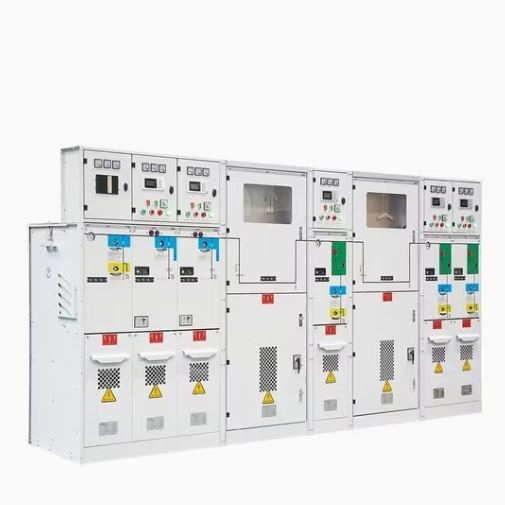
Southeast Asia’s rapidly growing power demand (GDP growth >5% annually) combined with extreme climatic conditions—high temperature, humidity, and salt spray corrosion—necessitates balancing lifecycle costs with climate resilience in switchgear selection. This article analyzes the optimal cost-performance solutions between GIS and AIS.
I. GIS vs. AIS Cost Comparison Model (Southeast Asia Context)
1. Initial Investment Costs
| Cost Type |
GIS Solution |
AIS Solution |
| Equipment Procurement |
High (40-60% > AIS) |
Low (baseline) |
| Installation Space |
Saves 60% land (urban-critical) |
Requires large substation |
| Moisture Protection |
Built-in (no extra cost) |
Needs dehumidification (+15% cost) |
Note: GIS offers higher value in land-scarce urban areas (e.g., Bangkok, Ho Chi Minh City), while AIS suits suburban/industrial zones.
2. Long-Term Operational Costs
GIS Advantages:
Extended maintenance cycles (2 years vs. 1 year for AIS)
Lower failure rates (SF₆ insulation stability > air)
AIS Advantages:
Lower spare part costs (simple structure, local repairability)
Zero SF₆ handling fees (critical amid tightening environmental regulations)
Cost Inflection Point: GIS excels in high-load hubs (>10-year operation) for lower TCO, while AIS is economical for distributed nodes (<5 years).
II. Environmental Adaptation Technical Solutions
1. AIS Moisture Reinforcement (for RH >80%)
Triple-Layer Protection:
Structural: Aluminum moisture-proof pads + detachable supports (20cm elevation)
Airflow: Dual dehumidification ducts + smart dehumidifier synchronization
Sealing: Sponge gaskets + moisture-proof cable glands (IP54 rating)
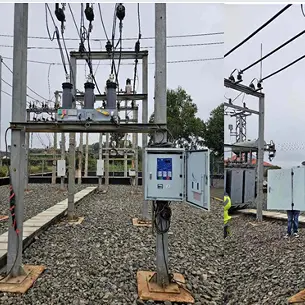
Case Study: Coastal Vietnamese factories reduced condensation failures by 90% with reinforced AIS.
2. GIS Optimization for Humid Climates
Real-time SF₆micro-water monitoring (prevents gas liquefaction in heat)
Silver-plated copper busbars (salt spray corrosion resistance, validated in Philippine projects)
III. Scenario-Based Selection Framework
Typical Cases:
IV. Emerging Trends: Hybrid Solutions & Localization
GIS-AIS Hybrid Deployment:
GIS at core substations (space compression) + reinforced AIS for branches (Jakarta pilot) .
Localized Production:
AIS assembly in Thailand/Vietnam (30% lower labor vs. China)
USD-denominated contracts in Cambodia (80% USD circulation) mitigate forex risks .
Conclusion: Optimal Cost = Geographic Adaptation × Lifecycle Calculation
GIS: Ideal for land-constrained, high-load hubs (ROI >8 years).
Reinforced AIS: Mainstream choice in manufacturing hubs (Vietnam/Cambodia), covering 90% of projects via moisture-proof upgrades .

 Login